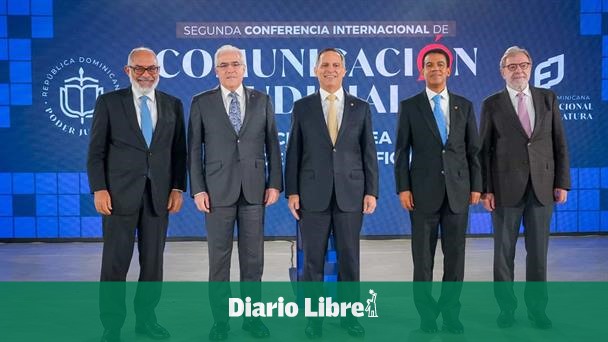
By highlighting that without independent justice there is no democracy and not without one free public opinion and able to express himself, journalists and national and international judges stood out this Wednesday during the first day of the Second Judicial Communication Conference the role and relationship that the media and the judiciary must have to counteract the millions of content that are spread without verify in the current digital age.
For the Spanish journalist and writer Juan Luis Cebrianthe post-truth and fake news has always existed, but now with the difference that “they have a formidable capacity for expression” and reach readers very quickly, so the challenge is to generate a informed public opinion and that the judicial decisions are understood by citizens.
The Dominican journalist Alicia Ortega agreed with Cebrián and said that the great challenge is the speed of the “voices” that the data has facilitated and that justice and journalists they need time to verify.
However, he assured that the promptness with which access to dubious content does not intimidate her, but rather challenges her and encourages her to seek protect the truth and the people’s rights.
“He algorithm rewards incendiary,” he lamented, which is why he said the journalists They must make a double effort to confirm information and create it that is interesting to readers.
“Our task in investigative journalism is to make the complex understandable, contextualize it and have a way to sustain that truth that is disseminated,” he indicated.
The judge of the Constitutional Court of Colombia, Juan Carlos Cortesreported that this court has regulated with a ruling the use of artificial intelligence With a guideline that it should not replace human reasoning, it cannot displace the judge in a decision.
“Well, it’s a first step of course because everything is yet to be built, in justice we have to use the technologies we ourselves use them in benefit of the people to realize rights,” Cortes considered.
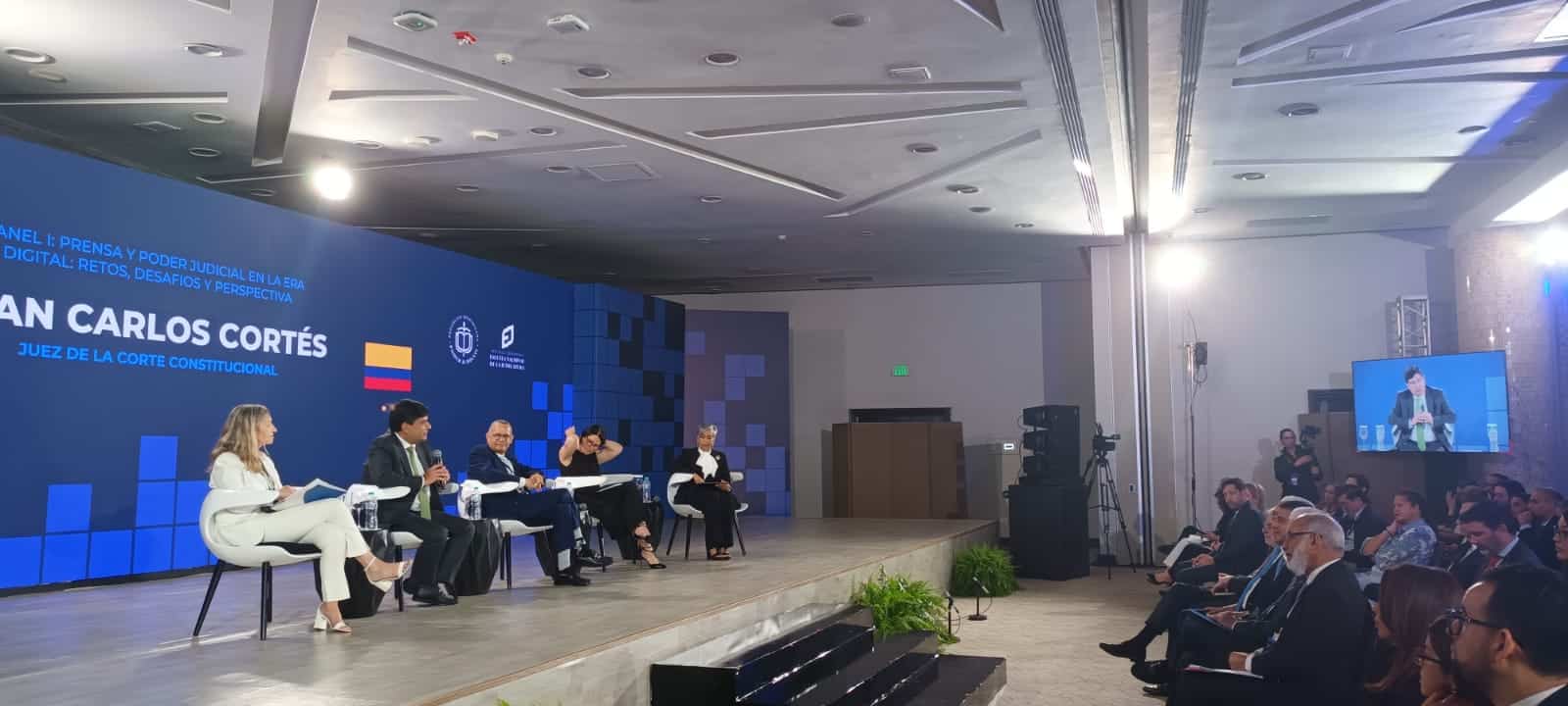
Cortes participated with Alicia Ortega in it Press and Judiciary panel in the Digital Age: Challenges, Challenges and Perspectives.
About the judicial decisionsOrtega understands that these must be clear, with less considerations and “flattened” so that all journalists and ordinary citizens can understand them.
Regulate and stop vulgar extortion
The journalist Fausto Rosariodirector of the digital newspaper Acento, also spoke at the Press and Judiciary panel in the Digital Age: Challenges, Challenges and Perspectives, about what is happening with content creators who are dedicated to “vulgar extortion“and affects ministers and even judges “also blackmailed because there are people who engage in telephone espionage and persecute magistrates in particular, seeking to do business.”
He said that this crime is practiced in the country “on the basis of deteriorating the democratic level in the dominican society and deteriorate the capacity of the media that have ethical responsibility to exercise the function of inform responsibly”.
When questioning this practice, he maintained that it is necessary to update the Law 6132 of Expression and Dissemination of Thought so that there are consequences. In that sense, he agreed that there should be an alliance between the Judiciary and the formal media so that due process and court decisions are respected.
Rosario also maintained that the economic sustainability of the media has been lost because the private sector “has shied away from the responsibility of advertising as a normal way of supporting the media” in the Dominican Republic and “around the world.”
Isabel Duelo also participated in the panel, international consultant to the Judiciary in matters of communication in Argentina, who considered that it is necessary to educate in the judicial area and that the vocation and passion for the truth “should never be lost.”
Justice and journalismvital for democracy
José Roberto Dutriz, former president of the Society Interamericana de Prensa, stated that he journalism, justice and democracy They play a vital role, but the relationship between the three “is delicate and deeply independent.”
He added that without transparent justice he journalism loses essential access and that “without journalism “freedom, justice is isolated from public scrutiny and without both, democracy erodes.”
Justice of the future with innovation
In delivering a brief opening speech to the Second Judicial Communication Conferencethe president of the Supreme Court of Justice, Henry Molinaassured that the Judiciary is building the justice of the future with innovationfirm decisions based on data, ethics, openness, clear language and communication that strengthens public trust.
When evaluating the Judicial Communication Conference, Henry Molina stated that it is not only about publish databut citizens need understand the reason for the decisions and the meaning of the reforms.
“A justice oriented people do not wait for the conflict to break out: inform, guide and orient them beforehand; that’s why judicial communication is also a democratic defense and the rule of law,” stated the presiding judge of the SCJ.
He opening act It was also headed by the magistrate Francisco Ortega Polancojudge of the Second Chamber of the SCJ and national director of the “Dr. Adriano Miguel Tejada” Justice and Communication Chair, of the National School of the Judiciary, as well as Persio Maldonadopresident of the Dominican Newspaper Society.