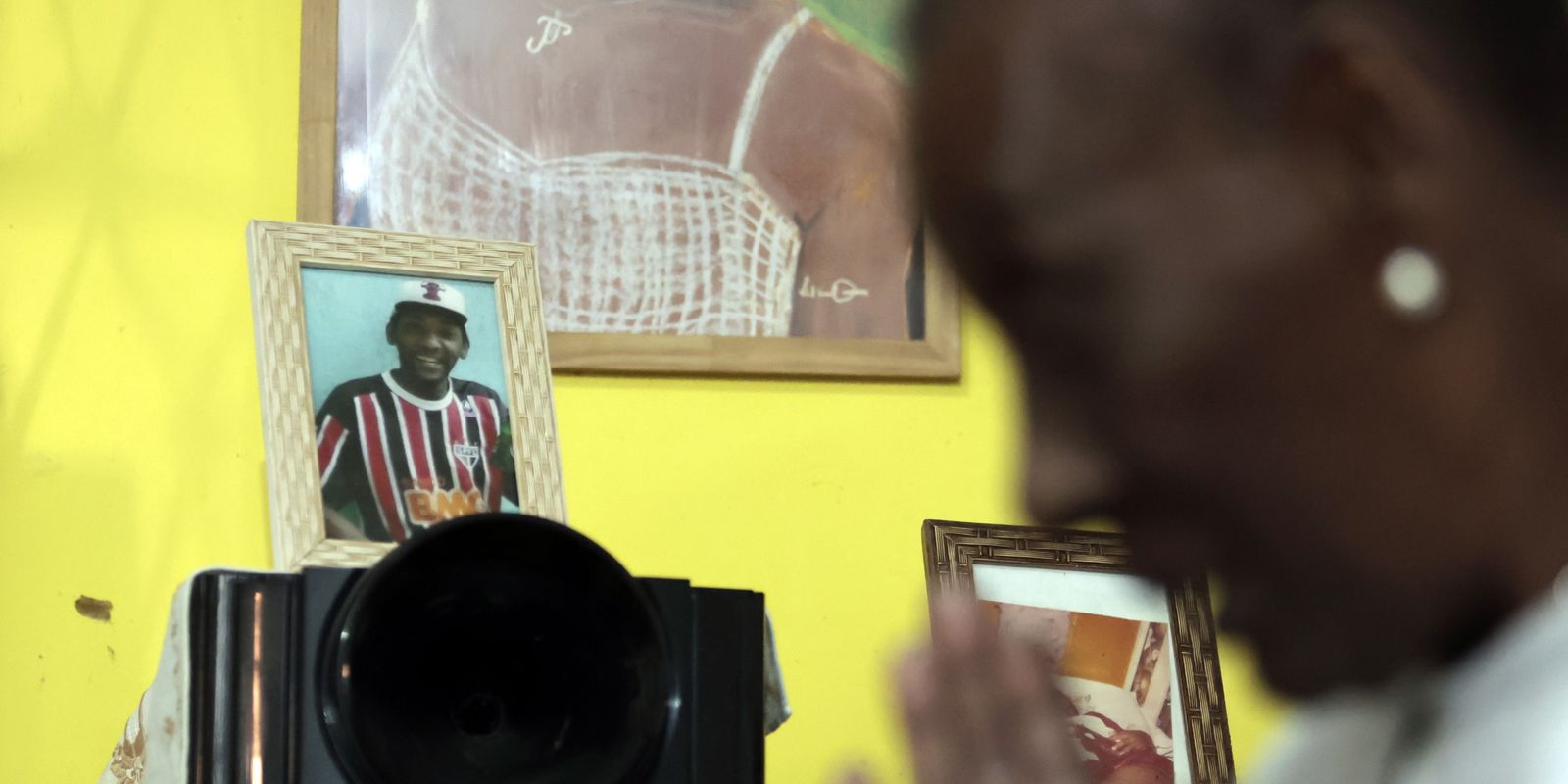
The murder of a loved one is just one of the pains to which the families of the jackets are subjected. Beyond mourning, They also need to face the delay of the judiciary in the processes of indemnity, liability and criminalization And often end up also impoverished or sick.
It was no different with the Families of the slaughter of Osasco, Itapevi and Barueri, a violent episode that caused the death of 19 people and turning ten on Wednesday (13). Many of these families were not even compensated after the crime, committed by military police. This is the case of Zilda Maria de Jesus, mother of Fernando Luiz de Paula, who was murdered in a barueri barin Greater Sao Paulo.
Without receiving any compensation, Dona Zilda still faced charges of the defendants’ lawyers during the case judgment in the criminal sphere. This situation is also faced by several other mothers of jackets. “We don’t even have the right to keep the mourning,” she told the report of Brazil agency. “I’m already dead, daughter,” he added, talking about the loss of the child and on the wear and tear of the whole process of mourning and searching for justice.
“It is important to have this dimension of the multiple impacts and the various violence that these families suffer beyond the greater violence that is the exclusion of the family member. These victims left mothers, have left companions, left children. And these families suffered very severe facts, impoverishment and serious illness. (UNIFESP) In the area of human rights.
Carla is also coordinator of the project UNIFESP Human Rights Clinicin Osasco (SP). The clinic is a Unifesp project that works in support of the mothers of the victims of the slaughter of Osasco, Itapevi and Barueri and that develops research and produces knowledge about state violence. The initiative brings together not only academic knowledge, but also the experience of people who fight against this violence. Dona Zilda, for example, is one of Unifesp’s fellows.
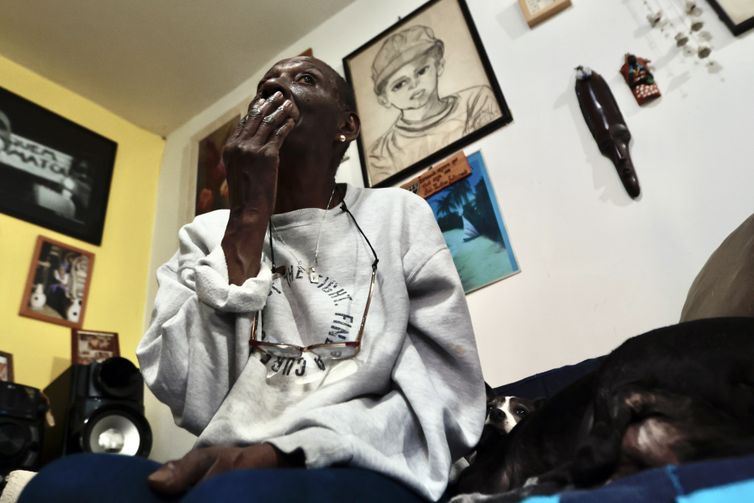
Zilda Maria de Jesus, mother of Fernando Luiz de Paula, murdered in slaughter for ten years – Photo: Paulo Pinto/Agência Brasil
Another factor that contributes to these impacts – and even affects the health of the victims of the victims – is the delay in court proceedings. “The delay generates a lot of frustration because sometimes people get exhausted,” says Carla Osmo. “The whole process is very violent, very exhausting, including the delay [do Judiciário]. There are several sufferings that families have and one of them is the lack of some kind of response from the state. And this omission of the state also has a meaning of devaluation of the event and devaluation of life, leaving [essas famílias] A little on the sidelines, “he adds.
In addition, she explained, these families still suffer stigmatization for having a family member killed by a police officer. “There is fear of the police and the feeling that life has no value or that the state gives no importance to the existence of that person who died either to the lives of family members [daquela vítima]. They are very severe damage. ”
Liability
To relieve this pain and also in search of your rights, many of these families end up seeking in court a recognition of the state’s responsibility for these deaths.
“It is not just the individual agents who were convicted who had responsibility [sobre as mortes]. The state has institutional responsibility for the slaughter. And looking at this is very important because it helps us to think that these slaves are inserted into a history of episodes of state violence and even collective executions in the state of São Paulo, ”says Unifesp professor.
In general, families enter individual proceedings to seek this liability either through lawyers or the Public Defender’s Office. “We began to follow up a set of processes [relacionados à Chacina de Osasco, Itapevi e de Barueri]. And today we have a list of 16 processes [tramitando em âmbito civil]. You may have others. But finally, this is the number we have, ”he says.
Of this total of proceedings that ask for the responsibility of the State and compensation to the families of the victims, ten were moved by relatives of the victims and one of them by a slaughter survivor. Five lawsuits are in secret, so it is not possible to know more details about them.
Among the processes that are not under confidential, only two reached the execution phase, but without compensation being paid so far. “These processes that ask for the responsibility of the state are processes that continue to be processed with immense slowness. Among these 11 processes, we have an average of six or seven years without being completed. Two of these processes, one from 2018 and another 2020, did not even have a sentence or a decision of the first instance. There are research that points out that this excessive delay happens during the execution stage, after already having a definitive sentence,” says Carla.
“We have no basis to claim that it is a delay outside the standard in the São Paulo judiciary, but it is a delay that is absolutely mismatch with the severity of violence and the size of damage caused to families, especially given that part of the victims’ mothers – and certainly the grandparents – they are elderly people and that several victims have left children children. coordinator.
The monitoring and study that has been done by the UNIFESP Human Rights Clinic in relation to these processes also demonstrates another difficulty faced by families: The state always disputes decisions, which increases the time for families to be reimbursed.
“The state’s law disputes the demands of families in the proceedings, bringing an excessive requirement for evidence to determine the payment of pension, formal employment and economic dependence of family members in relation to the victim, as well as to be reimbursed the spending that the family had with the funeral. Sometimes raises an unfounded suspicion that the victim could exercise an unlawful activity. Always a very low remuneration for your work. and argues in favor of setting low value to compensation for moral damages to avoid a ‘unjust’ enrichment of families, as if the suffering of families were smaller just because they are poor, “says Carla Osmo.
Ten years
After ten years of these events, Carla Osmo says that the sensation, for families, is that violence continues to perpetuate.
“This one doesn’t answer is very violent,” says the teacher. “They [mães da vítimas] They insist on saying that time does not appear: it is as if it has happened now. The anguish of waiting generates suffering, but at the same time, the timeliness of suffering, which makes it appear that the violence of death has happened now, ”he adds.
Although the memory of this event is still painful for families, The coordinator argues that it is important to continue to talk about the slaughter to prevent new violence from continuing to occur in the country. “The erasure is related to the continuity and persistence of state violence. The erasure of what was state violence in these several episodes of collective or massacres that took place in the state of São Paulo is related to the continuity of violence,” he says.
Sought by Brazil agencythe São Paulo Public Security Secretariat reported that the Police Inquiry established by the State Department of Homicides and Protection of Persons (DHPP) to investigate the case was completed in December of the same year, “with the identification and indictments of eight people – seven military police and one GCM [guarda civil metropolitano]”According to the secretary,” all PMs involved in the case were expelled from the corporation. “