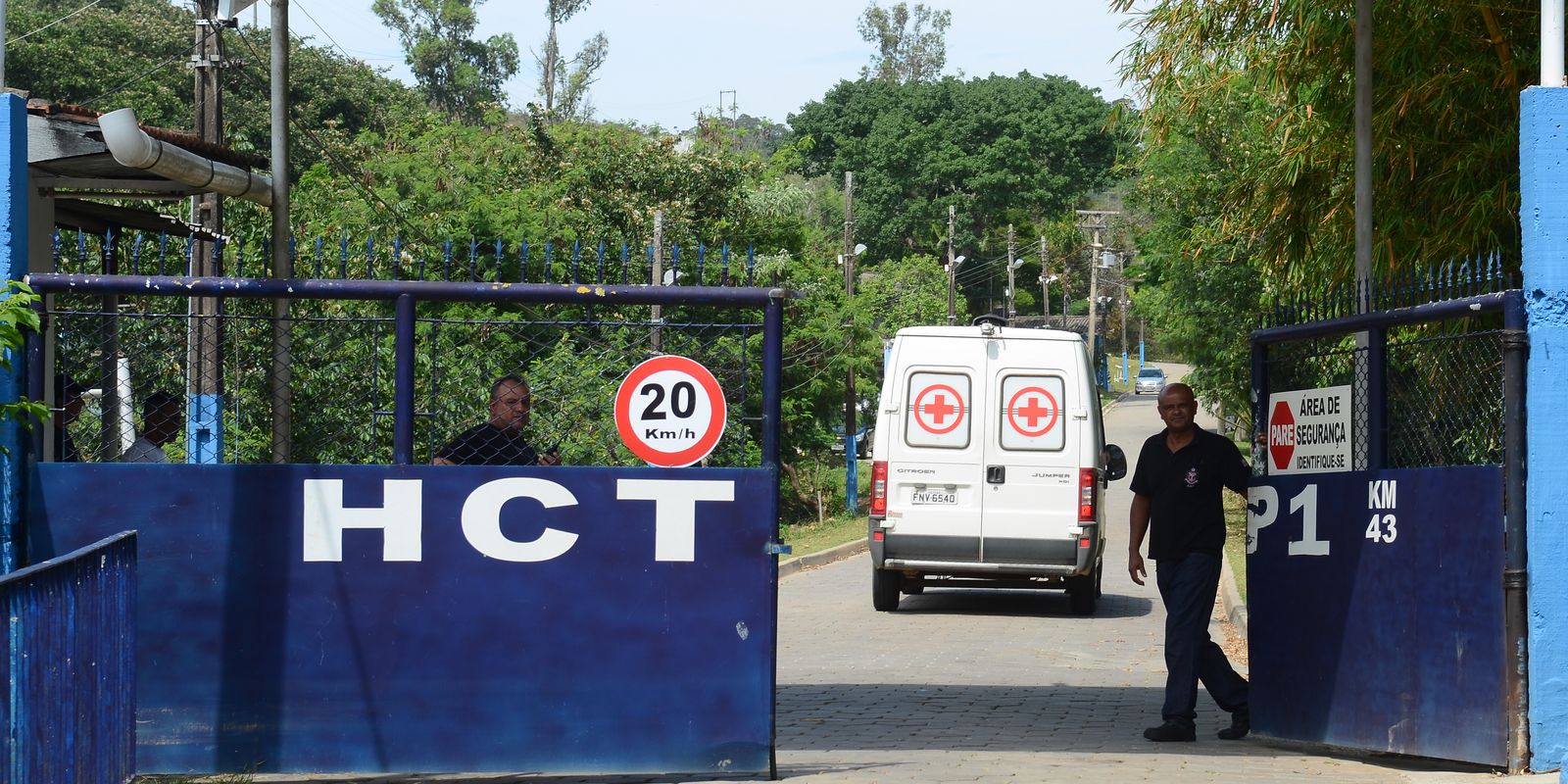
INonsters in judicial asylums in the country, carried out by the Federal Council of Psychology (CFP), revealed the use of electric shock, forced medicalization, physical and psychological violence, punitive isolation and other torture practices and violations. The conclusions are in National Inspection Report: Deinstitutionalization of Judicial Asylumslaunched this Monday (28) by the entity, in partnership with the National Council of Justice (CNJ).
“It is a public and technical denunciation that opens what Brazil insists on hiding through the walls and bars of psychiatric custody and treatment establishments: the continuity of torture practices, abandonment, forced medicalization and the incarceration that can be equivalent, in practice, with perpetual arrests,” said CFP president Alessandra Almeida, during the report of the report.
Judicial asylums are intended for people with mental disorder or psychosocial disability in conflict with the law and are in the focus of Resolution No. 487/2023 of the National Council of Justice (CNJ), which created the antimanicomial policy of the judiciary and indicated the need to close these places.
According to Almeida, a context of systematic and institutionalized violations was observed in asylum institutions, such as physical and chemical containments without clinical support, physical and verbal aggression, punitive isolation, violation of family bonds and absence of denunciation channels.
The inspection identified 2,053 people with psychosocial disabilities in conflict with the law still institutionalized in these places of asylum – which is centered on exclusion and isolation.
“These are practices that frontally contradict the prescription of health care and care that should be directed to this population, as established by Law 10.216/2001 [Lei da Reforma Psiquiátrica]International conventions of which Brazil is a signatory and a series of devices and normatives that guide mental health policy in the country, ”he said.
>> Follow the channel of Brazil agency on WhatsApp
CFP teams made a face -to -face inspection at 42 institutions, from January to March 2025, in 21 federative units from the five regions of the country. Performed ten years after the first diagnosis made by the entity on the subject, the new report concluded that these places continue to reproduce “the worst of prison with the worst of the hospice.”
“Negligence, the logic of punishment, violation and state abandonment that results in perpetual arrests are marks of these institutions,” said the entity.
The document also points out that institutions have problems such as degraded infrastructure, severe restrictions on circulation, lack of accessibility and overcrowding; Access to drinking water and food is limited and unhealthy; And basic items are missing for personal hygiene and bedding. According to the CFP, various forms of precarious work were also identified.
Racism and Capacitism
“When we look at the judicial asylums, we see people who are not punished for what they did but for what they fear they can do. This is the concept of hazardousness, a subjective and frequently skewed, racialized and capacitist notion,” said the president of the board.
Based on Franz Fanon’s thought, she mentioned that psychiatry can serve as a tool for oppression when treating subjects as problems to be corrected and not as people to be understood. “Fanon, who was a psychiatrist and revolutionary, already warned that coloniality inhabits the discourses of normality, diagnosis and control.”
“In Brazil, this coloniality expresses itself acutely in the lives of black, poor, peripheral and psychic suffering. Ana Flauzina [doutora em Direito] It states that the Brazilian prison system is a system of disappearing black bodies, a technology of slow and silent death, ”he added.
Also mentioning Carla Akotirene, author of the work intersectionality, Alessandra Almeida emphasizes the intersections between race, gender, class and disability in the context of the construction of what would be a “dangerous subject”.
“This makes us reaffirm that, at least, for the analysis, investigations and psychological practices, it is no longer possible – given the social complexities imposed – that we do not use intersectionality as an important element of our praxis,” he concluded.