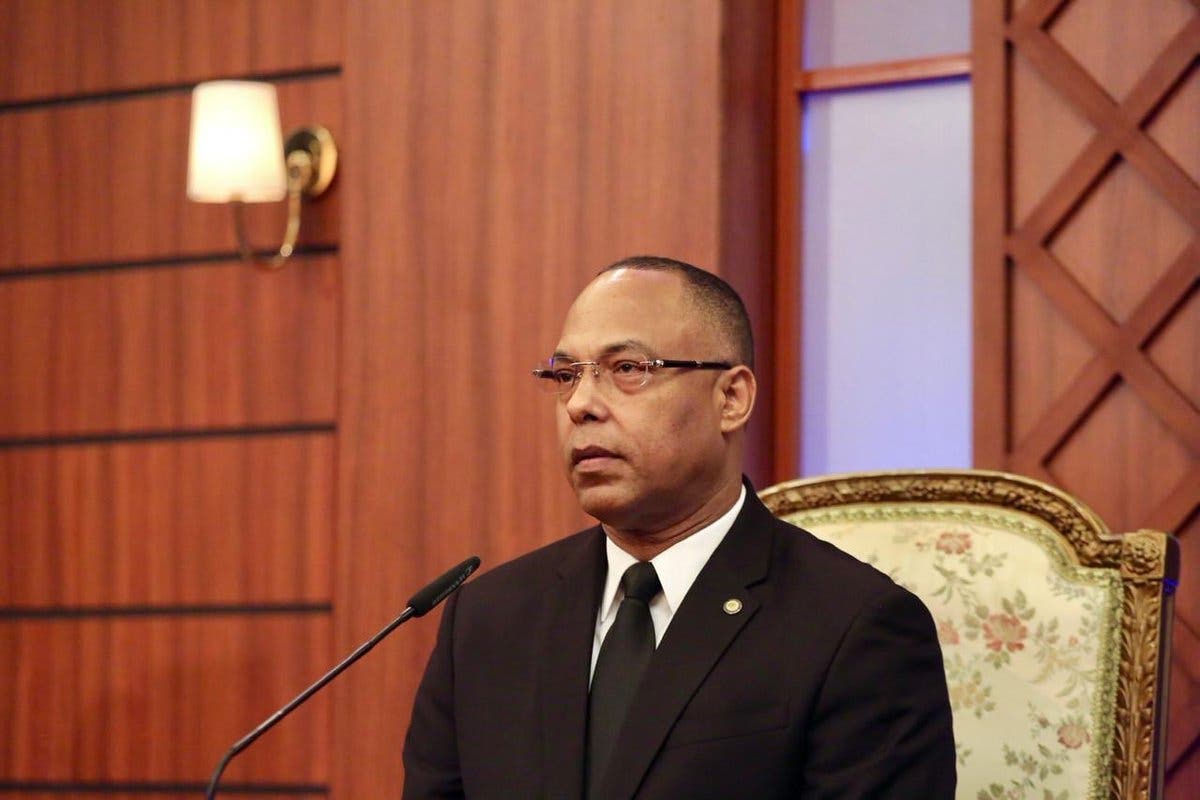
Santo Domingo.- The president of the Third Criminal Chamber of the Court of Appeal of the National District, Pedro Antonio Sánchez Rivera, candidate for judge of the Supreme Court of Justice (SCJ), stated this Thursday that “the greatest incentive for corruption and deviant behavior is crime without sanction,” when officially presenting his nomination before the National Council of the Judiciary (CNM).
He pointed out that no society can stand on impunity and that the role of justice is to ensure that the law produces real consequences.
Justice versus impunity
Sánchez Rivera warned that “nothing produces greater social imbalance than injustice,” and reiterated that the criminal trial must be oral, public and in person. He indicated that punishment is an indispensable mechanism to contain violence and prevent crime.
The magistrate maintained that when justice is delayed, weakened or does not act in the face of abuse of power, “due process is broken, citizen trust is eroded and democracy is put at risk.”
You may also be interested in:
He assured that the Judiciary must be “a firm guardian of justice, not a spectator,” and that the role of the judge involves deciding independently, even in the face of unequal forces and resources.
Ethical commitment and institutional vision
During his presentation before the CNM, Sánchez Rivera expressed that being a judge “is a privilege, but also a commitment,” and stated that he aspires to the SCJ with the conviction that he has the preparation, vocation and ethical solvency necessary “to continue serving God, the country and the people.”
He stressed that the Constitution, the law and fundamental rights “cannot be subject to negotiation or pressure.”
The postulant called to exercise justice with wisdom, prudence and humility, remembering that “justice has a human face and must be protected without hesitation.”
Judicial career and academic training
Sánchez Rivera has a PhD in Law from the Autonomous University of Santo Domingo (UASD), where he graduated in 1989 and later taught for 25 years. He was also a professor at the National School of the Judiciary, the School of the Public Prosecutor’s Office and the Bar Association.
He recalled that he entered the Judiciary in 1998 as a First Instance judge of the Ninth Chamber of the National District, and that in 2003 he was promoted to the Criminal Chamber of the Court of Appeal, a court in which he has developed most of his judicial career.
He also highlighted that his training includes various degrees, postgraduate degrees, specialties and master’s degrees, as well as national and international recognitions, including his distinction as Professor of the Year at the UASD and his declaration as a Distinguished Visitor and Guest by the Government of Mexico after his conference “Oral Trials: The human face of justice.”