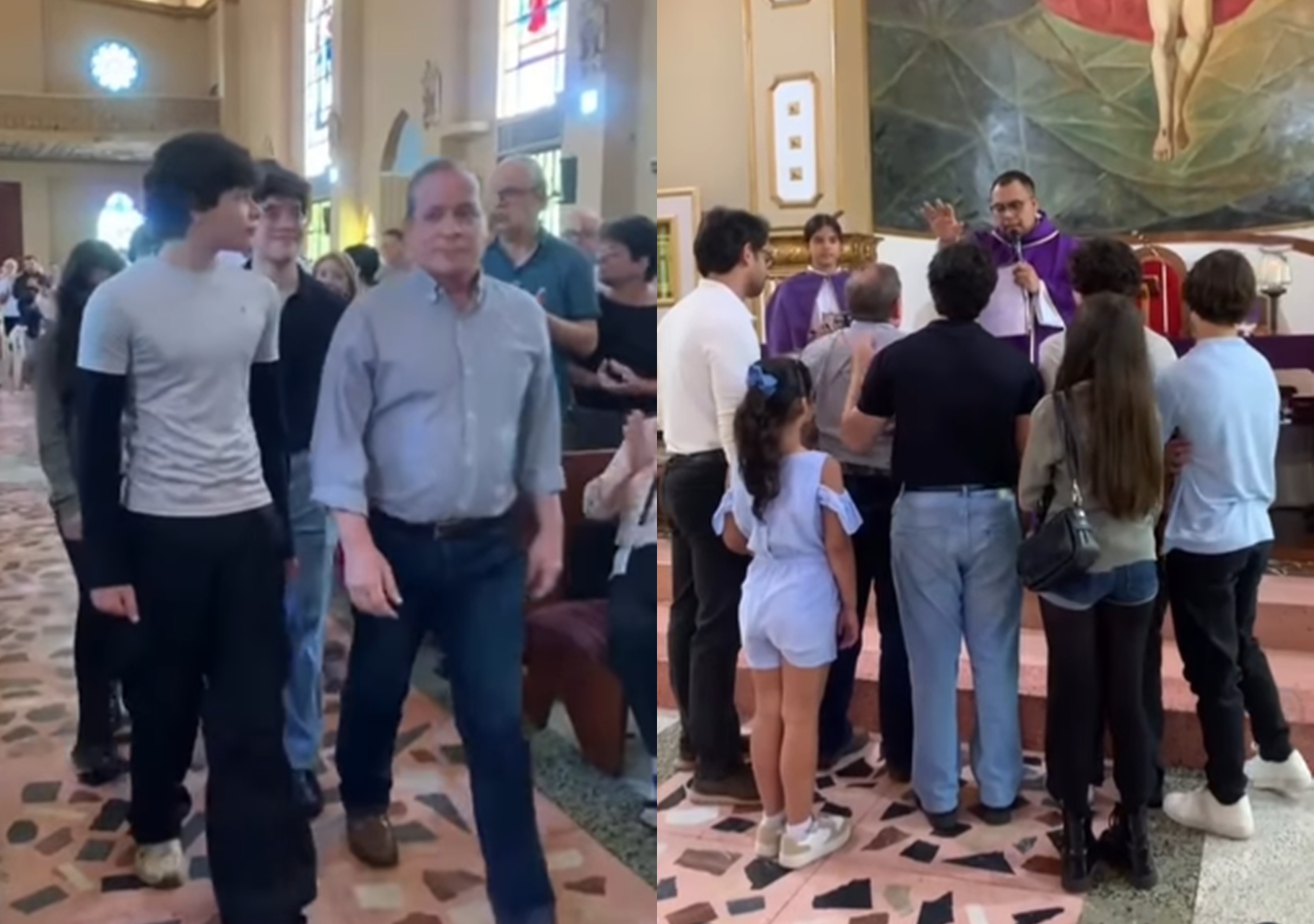
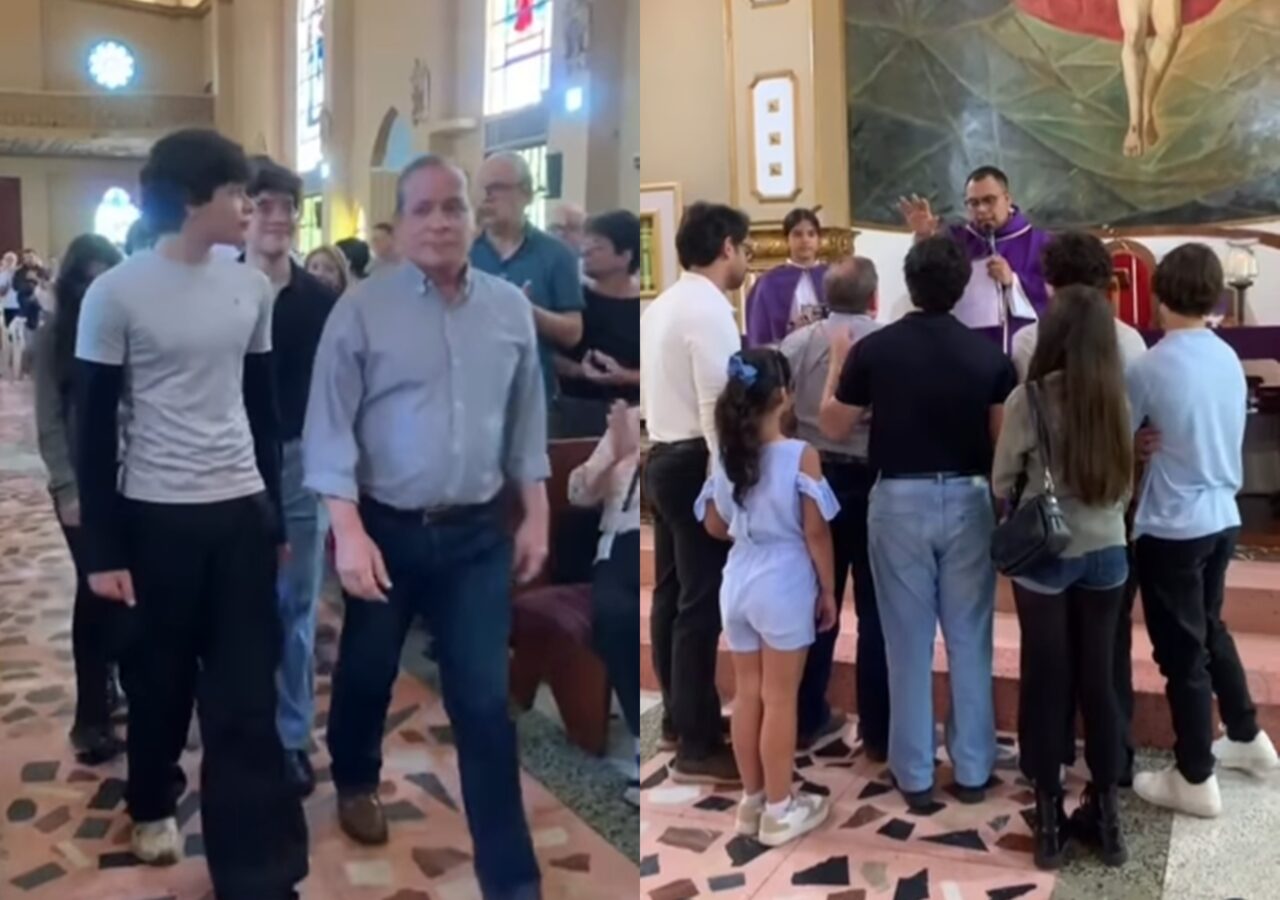
With loud applause it was received by opposition leader Juan Pablo Guanipa along with his six children in a church in Maracaibo, Zulia state, two days after being released following the approval of the Amnesty Law.
In a video published on the social networks of Primero Justicia, the political party where he is active, They are seen walking towards the altar, where Guanipa hugs the priest and receives his blessing.
Juan Pablo Guanipa, who was under house arrest, maintains broad support in the state of Zulia. In the 2017 regional elections won the governorship with around 700,000 votesdefeating the then psuvista candidate Francisco Arias Cárdenas.
However, Chavismo stripped him of his position after he refused to take the oath of office before the national constituent assembly, chaired by Delcy Rodríguez. The leader argued that This step was not contemplated in the Constitution of the Republicin addition to questioning the choice of this body.
Fight for free elections
The opposition leader, a close ally of María Corina Machado, assured on Friday that will work to create the conditions that allow a democratic solution to the Venezuelan crisis through an electoral process.
Those were his first statements to the press, from the Basilica of Our Lady of the Rosary in Chiquinquirá. There, supporters welcomed him with slogans and applause.
Guanipa affirmed that it is up to the opposition to fight to create the conditions that allow reach a democratic solution to the crisis.
Although he maintained that “The ideal would be to respect” the victory of President-elect Edmundo González in the 2024 presidential electionsconsidered that this scenario does not seem likely.
“Political realism that also has to do with the presence of the United States in Venezuela “It tells us that this is not going to be the case,” express.
Given this, he raised the need to “lay the foundations” that function as a pressure mechanism to achieve political change through electoral means. Among the conditions he mentioned the restitution of political parties to their natural leaders, after the interventions of the Supreme Court of Justice and the appointment of new rectors in the National Electoral Council.
The elected governor of Zulia criticized that The Amnesty Law is “exclusive” and demanded the release of all political prisoners, as well as the return of Venezuelans in exile.
The law establishes a period that spans from 1999 to 2026, but delimits 13 specific political situations since 2002. This does not include arrests that occurred in at least 15 of the last 27 years, as well as cases linked to military operations.