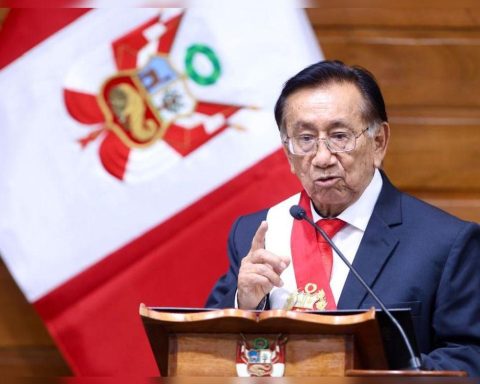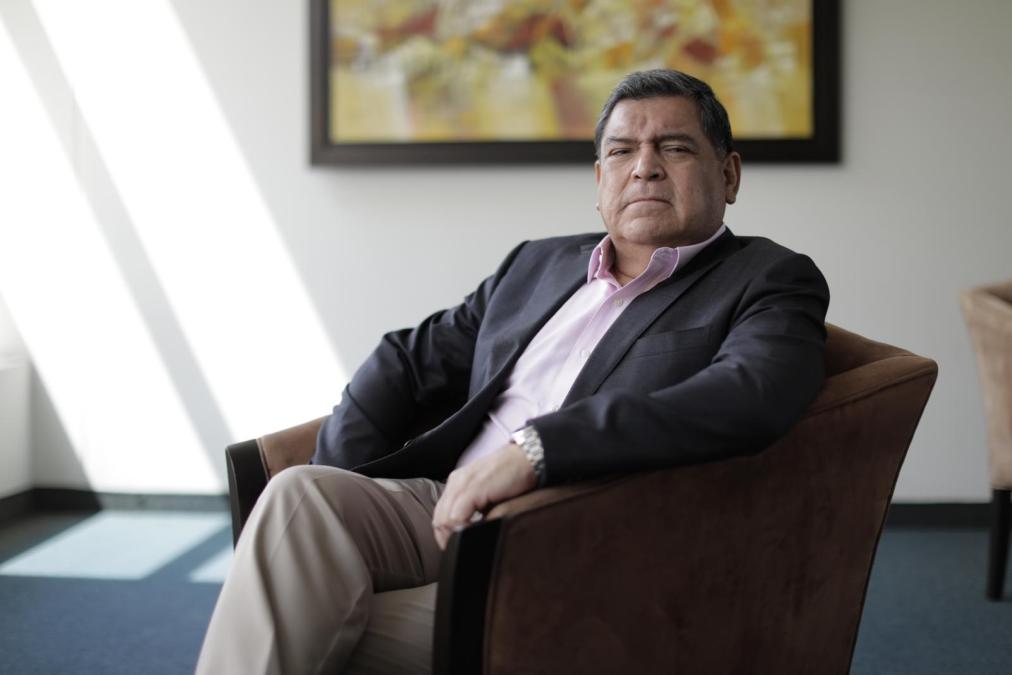
Former head of the SBS and former director of BCR, Juan José Marthanshe said that for this year a historical record of exports is projected, while the international prices of the products that make up our importing basket are decreasing. He warned that signals of prudence are required in fiscal management.
What is your expectation about the performance of the economy for this second semester?
The problem goes beyond what happens in the second semester. The BCR estimates that for quinquenio 2022-2026, private investment will grow only 0.7%, if this is validated, our average annual growth of GDP would be only 2.3%; With which, the five -year period would be lost. Therefore, we have to rethink our institutionality, governance, state quality and infrastructure. The public sector, which we have entrusted to be part of the solution, is sick.
Will the external sector continue to blow in favor of Peru?
It is the sector that is allowing the Peruvian economy to float. If there are no major changes in the world environment, this year our exports could reach a historical record of more than US $ 80,000 million, and the commercial balance would exceed US $ 26,000 million. Mineral prices, where copper and gold explain about half of the value of our exports, favor us as never before. In addition, our import basket reflects a fall in international prices at half of the levels registered two years ago in products such as corn and wheat. The terms of exchange are twice what we had in March 2009 and the triple of March 2001. We had never had such a favorable external front. Growing only 3% and presenting a fiscal deficit under these conditions is not very high.
What expects the impact of Trump’s policies in Peru?
The impact on the commercial field is always negotiable; On the other hand, the effects on the geopolitical and financial field are not. What worries me is the potential instability and its sequels about the credibility of the current international financial architecture. The IMF is losing validity, virtual currencies are offered that need serious regulations to avoid risks of money laundering and ignorance of the traceability of bank users. In addition, global banks parallel investment and commercial bank without barriers. I don’t think we face a catastrophe, but we must be attentive. The recommendation is simple: caution, diversify wallets and prepare contingency plans.
Trump approved the genius law, which demands that cryptocurrencies be backed by liquid assets such as the dollar and short -term treasure bonds, which seeks to consolidate the US currency as a global reserve currency, what will be the impact?
The “stablecoins” announced recently are cryptocurrencies that will be backed by the dollar and the United States Treasury bonds. It is paradoxical. The dollars lose value and their participation in the structure of the international reserves of the world’s central banks have fallen. A decade ago they explained almost 60%, today they approach only 40%. The dollar has depreciated more than 15% in just one semester. The United States is no longer considered an AAA economy, and the world increasingly discusses a global defolantization process. In Peru, the deposits in dollars in the bank reach 35% and could liquefy in half in less than a year. Everything indicates that a greater disdain is coming in our country in the coming months.
What is your opinion on the management of public finances on the internal front?
As is known, they concern the lack of lack of expenditure by the Congress aligned with the Executive. In a pre -election year, the Prudence and Fiscal Transparency Law should be applied with greater rigor to avoid the excesses we all know. Mineral prices have closed part of the fiscal gap and could come to meet the goal of 2% of GDP. The underlying problem is not whether the goal is fulfilled, but the low institutionality that allows the political class to do what you want with current public spending. The issue is that our collection per unit of GDP is structurally very low due to the presence of informality, which costs the State a loss of collection of around 9 percentage points of GDP. There is the problem. What Minister of Economy of the last 30 years has done something to mark general guidelines to find a solution to this structural problem? Nobody.
Does the increase in the remuneration of the president, which more than doubles her previous salary, is justified by her performance?
By no means. Many people look for public function to win the salaries that they could never reach on the private front. In addition, to lead the Executive or Legislative there are no well -designed requirements in terms of professional qualification and ethical behavior. And if any, they are not fulfilled. That denotes the lousy governance standards of the country.
What to do with Petroperú?
It is too turned to such an obvious problem. We are talking about a company that for years has not been able to be refloated. A broken company. We are talking about a company that costs thousands of dollars to Peruvians. I ask: When did this problem originate? Who signed the expansion contracts and then modernization of the Talara refinery? Who led to Petroperú’s departure from Fonafe’s supervisory sphere? Peru is not an oil country and fossil fuels do not have much perspective. Petroperú is the best sample of why there should not be these types of public companies in the country.
How do you evaluate the management of Minister Raúl Pérez Reyes?
It does not seem solely responsible for a potential breach of the fiscal goal. The impact of metal prices could approach compliance. However, the underlying problem, as I mentioned, is structural. It is true that the market expects signals of prudence and fiscal discipline. My recommendation would be to adopt a firmer position against the appetite of the political front. Let it get hard and receive the appreciation of many Peruvians.
The MEF attributes the low inflation of the country to the “responsible fiscal policy”, is this true?
At all. Low inflation responds to a combination of factors. First, to the solid performance of July (Velarde) and the BCR technicians. Secondly, to the proper management of the component imported from inflation as a result of maintaining a stable currency against the dollar. Thirdly, to the fall in international prices of our food import basket in the last two years. And, finally, to the relative normalization of global supply chains.
Take advantage of the new experience, receive by WhatsApp our enriched digital newspaper Peru21 Epaper. Now available in Yape! Find us in Yape Promos.
Recommended video