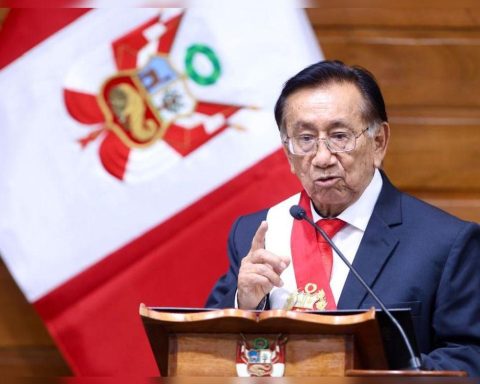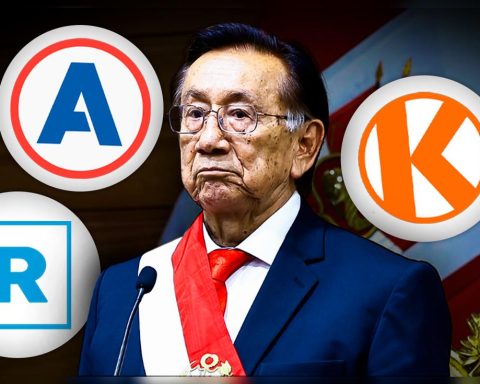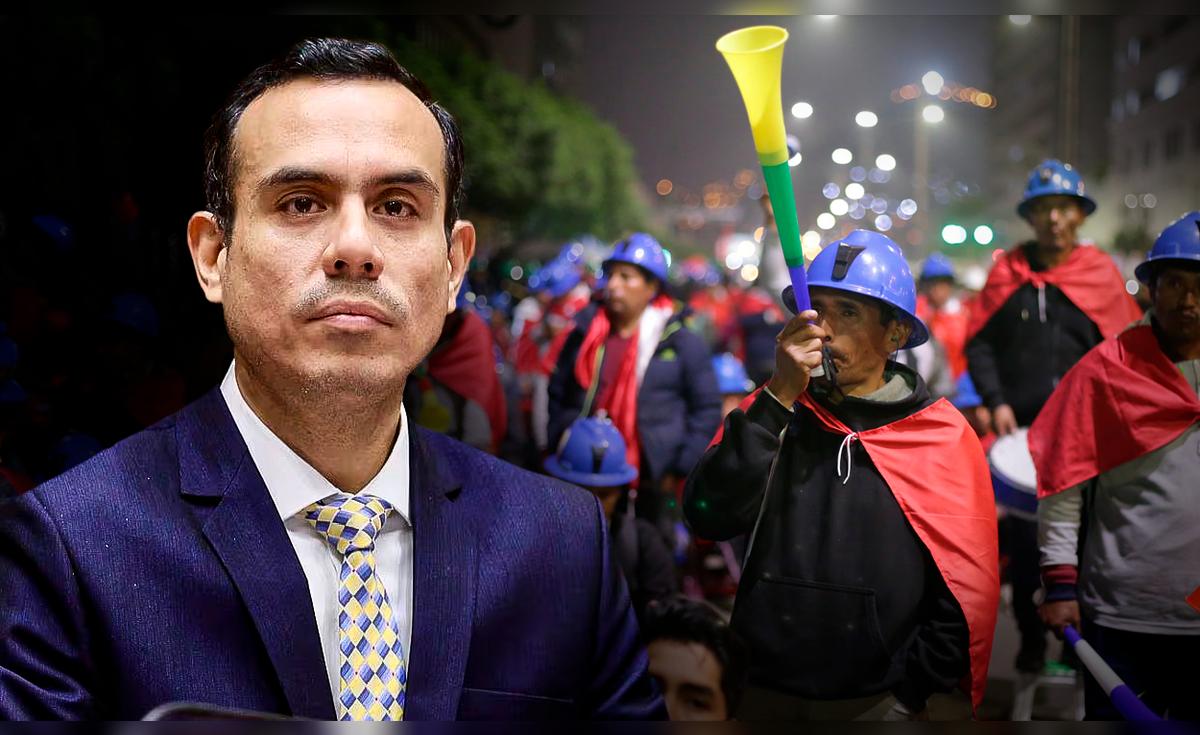
José Jerí, during his time as a congressman, voted twice to approve the expansion of the Comprehensive Mining Formalization Registry (Reinfo)a key tool for informal miners that seek to formalize. In his sessions in Parliament, he supported both the extension contemplated by law 31388 and the subsequent one provided for in law 32213.
listen to the newsText converted to audio
Artificial intelligence
Now, in his capacity as president, Jerí has changed his position: he has stated that he is not “satisfied” with the most recent version of Reinfo and indicates that the Executive will intervene in the legislative debate to present its own approach.
WE RECOMMEND YOU
PNP IS STILL UNDER THE SIGHT: THEY HAVE FACILITATED THE ESCAPE OF ÓSCAR ACUÑA | THE TRUTH IN DEPTH WITH PEDRO SALINAS
The context is relevant: the Energy and Mines Commission of the Congress recently approved an opinion to extend Reinfo until 2027, which once again put the future of mining formalization at the center of the debate. In addition, the Somos Perú bench, his party, They have supported the expansion.
First vote that extended the Reinfo until December 31, 2024
In the first relevant vote, José Jerí supported the Law 31388which extended the validity of the Reinfo until December 31, 2024. This law was approved on December 16, 2021, at a time when mining formalization was an urgent issue for many small miners.
Law 31388 modified Legislative Decree 1293 and allowed miners registered in Reinfo to continue with their formalization process beyond its initial expiration date. This support from Jerí was aligned with the defense of the right of informal miners to regularize their activities under state supervision.
In addition, the standard included a commitment for the Ministry of Energy and Mines (Minem) present new legislation for small mining. This approach sought to replace the Reinfo with a more permanent mechanism, through a “Small Mining and Artisanal Mining Law.”
Second vote: Law 32213 extended registration until January 30, 2025
Some time later, Jerí voted again in favor of a new extension, this time through the Law 32213 on November 29, 2024, which extended the Reinfo until January 30, 2025. This extension was proposed as part of a “transitional framework” while a broader law for artisanal mining was being discussed.
The purpose of Law 32213 was to provide institutional respite during the creation of the future ASM Law (Small Mining and Artisanal Mining Law), which would eventually replace Reinfo. In addition, this mechanism allowed, by supreme decree of the Minem, an additional extension of six months to be enabled if necessary.
This vote consolidated Jerí’s position in favor of keeping the Reinfo in force beyond its original expiration date, which for many was a sign of support for mining formalization as a legislative priority.
Somos Perú approved PL to expand Reinfo until 2027
The Congressional Energy and Mines Commission approved an opinion to extend the validity of the Reinfo until December 31, 2027. It also approved the reincorporation of previously excluded records so that they resume their formalization process.
This opinion was supported by 17 congressmen, with 3 against and 1 abstention, which reflects majority support, although not absolute consensus. From the Somos Perú bench, three were the congressmen who said yes to the expansion: Paul Gutiérrez Ticona, Héctor Valer Pinto and Elizabeth Medina Hermosilla. The vote has been criticized by sectors that warn about the risk of superficial formalization practices being repeated without effective control.
Congresswoman Diana Gonzales, in particular, criticized both the Government and President Jerí for not speaking out more firmly, especially when her own caucus backed a text that he now publicly rejects.
What is Reinfo?
He Reinfo is he Comprehensive Mining Formalization Registrya legal mechanism so that small and informal artisanal miners can formalize their activities under state supervision. It was created as part of Legislative Decree 1293.
Being registered with Reinfo allows miners to continue operating while they complete technical and administrative procedures to regularize their concessions, permits and production conditions. However, registration does not guarantee immediate formalization, as it depends on compliance with a series of requirements.
Critics of Reinfo point out that it can favor the illegal mining if it is not properly regulated. Some reports even warn that certain records could be perpetuated, creating a system vulnerable to abuse or illicit use of the formal mineralization framework.