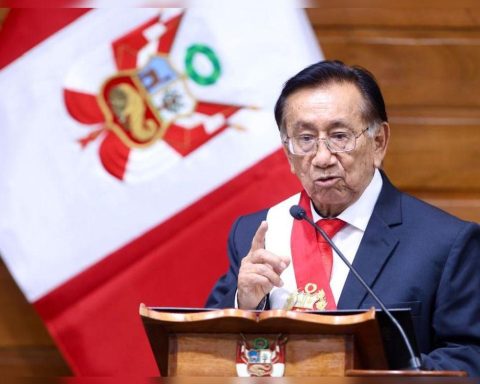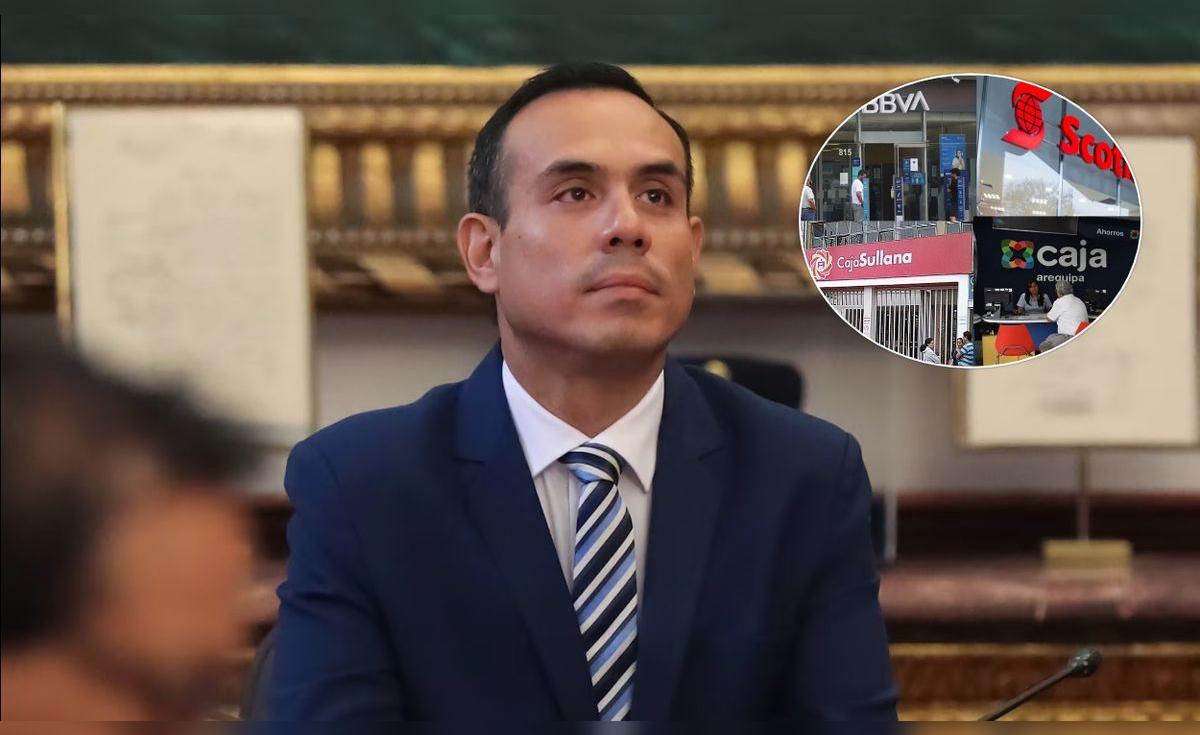
He Judiciary granted a precautionary measure to provisionally suspend the effects of the law that modified the management of municipal savings and credit banks, a rule promoted and signed by the president José Jerí. The decision was adopted by the Permanent Constitutional Court of Huancayo, after a lawsuit filed by the Caja Municipal de Ahorro y Crédito de Huancayo against the Congress and the Executive Branch.
The questioned provision had been incorporated into the Public Sector Debt Law for Fiscal Year 2026 (Law 32515), despite initially failing to get a second vote in the Congress. According to the report released by Panoramathe content of the norm was introduced in a different law, without direct relation to the operation of the municipal funds.
WE RECOMMEND YOU
POLITICAL RETALIATION AND ELECTIONS | WITHOUT SCRIPT WITH ROSA MARÍA PALACIOS
The report revealed that José Jerí had previously signed a law that favored the National Confederation of Merchants (Conaco), organization for which he worked as a lawyer years ago. That rule granted said union a seat on the boards of all the municipal funds of the country, which generated questions about an open conflict of interest.
As this initiative did not prosper, control over the boards came to be considered through the Vice Ministry of Production, under the orbit of the Executive headed by Jerí. According to Panoramathe change maintained political interference on the municipal fundsnow from the central governmentwhich raised concern about the interest in managing institutions that manage million-dollar funds.
In his resolution, the Judiciary maintained that the precautionary measure It was necessary to avoid irreversible damage. The court specified that, if the rule continued to be applied and its unconstitutionality was later determined, it would not be possible to fully reverse the effects produced on the autonomy of the municipal funds.
With the judicial decision, the legal effects of the challenged provision are suspended and the administrative, economic and institutional autonomy of the Huancayo Municipal Fund while the substance of the process is resolved. This case revives the debate about the limits of political power vis-à-vis municipal financial entities and the impact that the signing of Jeri in a law that ended up under judicial control.