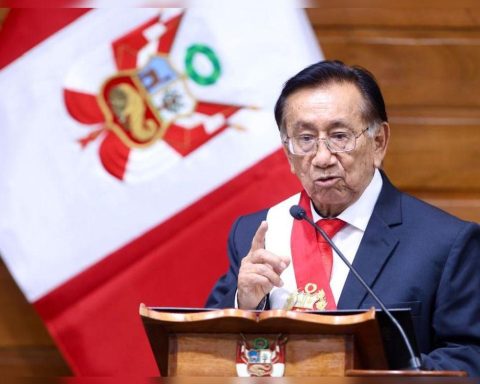
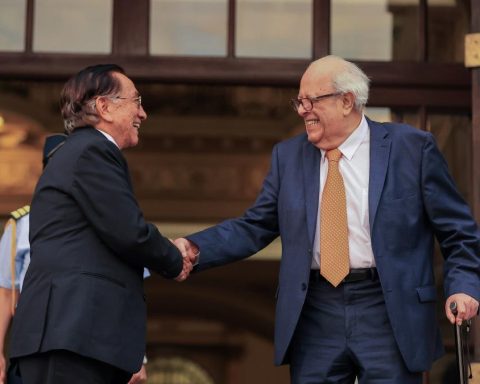
José Jerí changed his speech and now assures that he will “end crime”, despite the fact that only days before he indicated that this would not be possible during the remaining months of his government due to a matter of time.
listen to the newsText converted to audio
Artificial intelligence
“We are optimistic that we will be able to put an end to crime if we follow the plan that we are going to present. A plan that is not from a ministry, a multi-sector plan,” he indicated and announced that in the first weeks of January the Government will present the National Citizen Security Plan.
WE RECOMMEND YOU
TROY BURNS with JULIANA OXENFORD | PROGRAM for 12/29/25 | The Republic – LR+
He indicated that the plan is based on a formula that should have been applied before, in reference to the Bratton plan. “For me, it is a very powerful plan that follows the work methodology of the no longer current 2013-2014 citizen security plan,” he said.
Although this is a positive announcement for citizens, days before, on December 22, the head of state announced that he would not “win the fight against insecurity due to the time factor.”
“The results are not yet what we are looking for. A Government has to be aware of its limitations. We are on track, but we still need to achieve the results that the country is looking for. We are not in four walls thinking that everything is wonderful,” he said after the VI ordinary session of the National Citizen Security Council (Conasec) 2025.
The current measures against insecurity and their questions
Both statements occur in a scenario in which the proposals presented by the Jerí government to curb crime have been questioned.
One of these initiatives is to create the crime of revealing confidential information related to criminal investigations and police actions. A rule that, in practice, would criminalize the dissemination of information of public interest and censor the press, according to the National Association of Journalists (ANP).
The ANP considered that the initiative goes directly against investigative journalism because “it criminalizes the dissemination of information of public interest and constitutes censorship and persecution of confidential sources. It also violates professional secrecy.”
On the other hand, another of the questioned measures was the implementation of the state of emergency in Lima and Callao.
Jerí assumed the presidency on October 10 of this year. Shortly after, on October 21, he ordered a state of emergency for an initial period of 30 days due to the increase in crime and insecurity. The measure was announced in a short message to the Nation, the president’s first, lasting just 46 seconds. Subsequently, on November 21, the state of emergency was postponed for an additional 30 days.