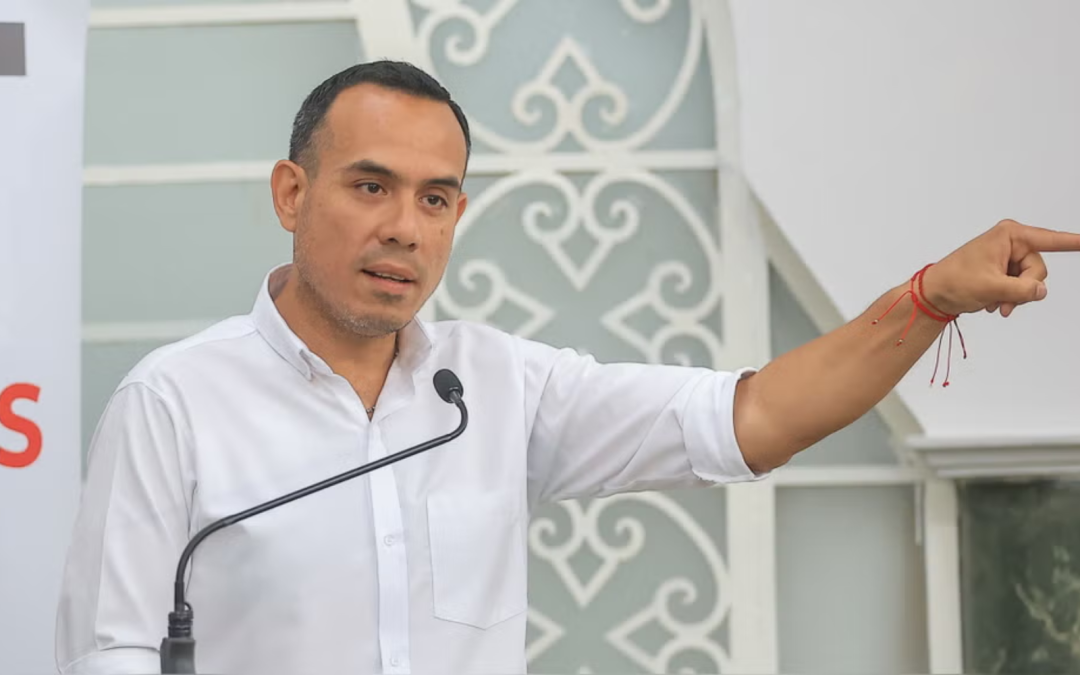
In the midst of the serious prison crisis and the sustained advance of the mafias that operate from prisons, the president José Jerí announced this Tuesday a historic decision: the National Penitentiary Institute (INPE) will cease to function and will be replaced by a new entity, called the National Superintendency of Internment and Resocialization (Sunir), which will begin operating from January 2026.
As the president explained, this reform is part of the legislative powers that he received to act in matters of citizen security and constitutes the first structural measure aimed at regaining control of the penitentiary system, considered one of the most critical focuses of organized crime in the country.
Sunir will assume all the functions of the current INPE, but under a renewed management, supervision and resocialization model. Jerí affirmed that the superintendency will allow “breaking with structures captured by corruption” and establishing more efficient control in detention centers.
One of the first changes announced is the departure of the current head of INPE, Iván Paredes Yataco, who will be relieved in January. Although he continues in office, Jerí explained that his permanence responds to an operational transition phase necessary for the orderly transfer of powers.
Paredes Yataco, belonging to the team that led the INPE in recent years, is investigated by the Anti-Corruption Prosecutor’s Office, although the president stressed that he has complied with all the immediate instructions of the Executive in this stage prior to the closure of the organization.
An inherited system “with corruption and disorder”
In his message, the head of state indicated that he received a prison system marked by corruption, abandonment and deteriorated infrastructure, a scenario that made it easier for gangs and ringleaders to continue committing crimes from prison.
Jerí also criticized that previous governments allowed the use of public telephones inside prisons, a tool that—as he warned—was used to organize extortion and other crimes from inside penitentiary establishments.
He revealed that, since 2010, all calls made from prisons have been recorded, but denounced that this information was not used adequately by the predecessor authorities, even though it could have been used to identify and dismantle criminal networks.
Subscribe for free to the most prestigious gastronomic guide in the country, SUMMUMthe weekly newsletter.