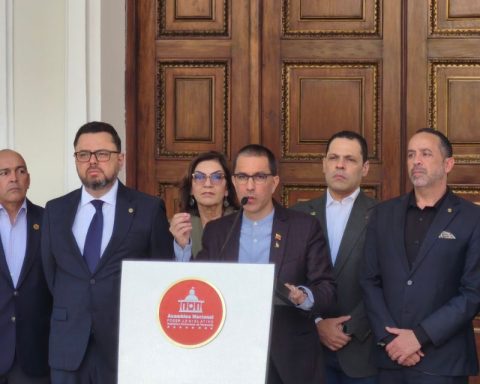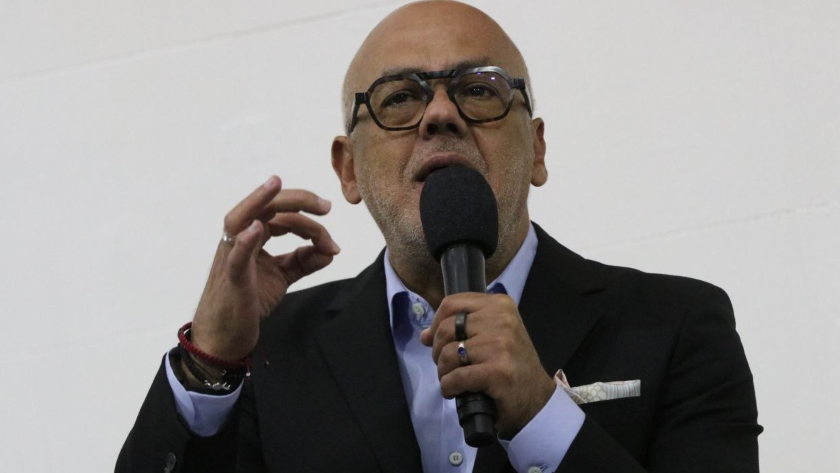
The legal architecture of reconciliation in Venezuela could be expanded through direct decrees of the Executive, this was suggested this Saturday by Jorge Rodríguez, president of Parliament, when clarifying that the end of the validity of the amnesty law does not close the doors to freedom for those that did not fit into the strict parameters of the legal text.
According to the agency EFERodríguez emphasized that the judicial system is evaluating alternative mechanisms for those who were left out of parliamentary pardon. During a meeting in Caracas on the regulation of the Red Cross, the legislator explained that “many other people are being considered, not in the area that contemplates the amnesty lawbecause its scope is very specific, but in the scope of measures of pardon or pardon by the national Executive”.
In response to the questions on the selective nature of the regulationsthe head of the National Assembly pointed out that the promulgation of the law is not the end point, but rather the beginning of a new phase. According to EFE, Rodríguez He stated that now a space is opening for technical organizations to take over.
In this sense, on the state channel Venezolana de Televisión (VTV), he mentioned as an example the case of former deputy and opposition leader Juan Pablo Guanipa, released after the approval of the law, although, Rodríguez assured, the amnesty did not apply to him.
“He (Guanipa) is among the people who should have been excluded, because he called for violent actions against Venezuela, but it was decided that A measure was given to him, which I hope he knows how to appreciate well, and at this moment he enjoys full freedom,” said the head of Parliament, reviewed by EFE.
The NGO Foro Penal, which leads the defense of political prisoners, estimated on Friday that at least 400 detainees For these reasons they could be excluded from amnesty and reported that he will deliver to the special commission of Parliament a first list for review of 232 cases.