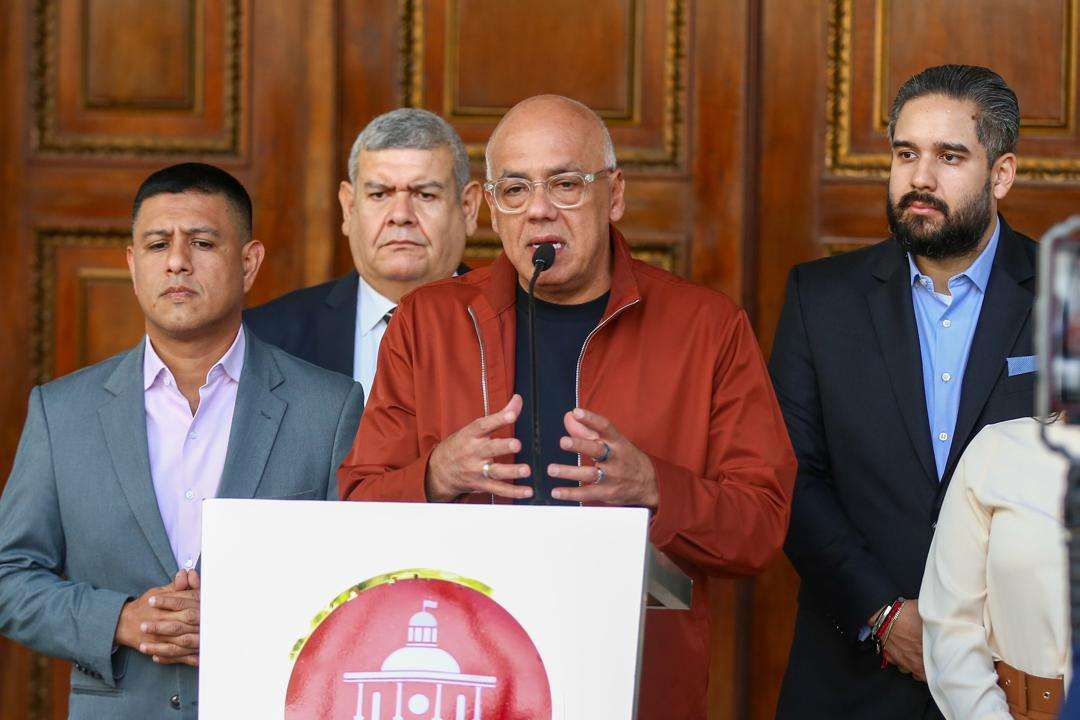
The president of the National Assembly of Venezuela, Jorge Rodríguez, reported that at this time no details can be given of what the reform of the Hydrocarbons Law will be. However, he assured that the Productive Participation Contracts implemented through the Anti-Blockade Law were key in the increase in the country’s oil production during the sanctions, which is why they seek to be incorporated into this new version of the norm.
«There is a model that has been extremely successful in increasing oil production. In conditions in which Venezuela was neither sanctioned nor blocked, it was relatively easy to obtain foreign investment and association with national companies for the exploitation of the so-called mature fields, that is, those that already have a prior investment, to be able to produce. But it is essential to look for optimal conditions to get investors for the so-called green fields, that is, those that are unexploited, which is why they require a much larger investment. To do this, it is necessary to ensure that this foreign investment is protected and profitable, which is why the CPP mechanism was tested, key to increasing oil production,” he explained, highlighting the consecration of the Hydrocarbons Law as a strategic axis of national development.
The so-called CPP (Productive Participation Contracts) are oil agreements in Venezuela between PDVSA and private/foreign companies to increase crude oil production, allowing greater operational control and investment recovery, while PDVSA supervised them under the Anti-Blockade Law, seeking to avoid sanctions.
Rodríguez argued that the responsible and sovereign exploitation of oil must be directly translated into social investments, such as the construction of schools, hospitals, technology, health, housing for young people and other essential public services. This vision links the country’s hydrocarbon wealth with the fulfillment of fundamental rights, reaffirming the role of the State as guarantor of the equitable redistribution of oil income.
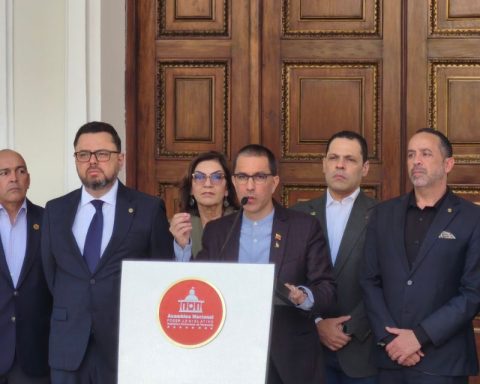
“The oil under the ground is useless, it must be converted into schools, housing for young people, health, roads and highways,” he expressed to the media upon leaving the Parliament’s Advisory Commission, where the analysis, evaluation, monitoring and attention of the Legislative Agenda 2026-2027 was addressed, in accordance with article 36 of the Internal and Debating Regulations.
The president of Parliament recalled that laws always require two phases: in the first discussion, the explanatory reasons, their scope and repercussion and impact on the population are debated. Then there is a process of popular consultation with the communities and finally, the legal text is discussed article by article in the second discussion, so it is not yet possible to talk about its details, beyond the expansion of what is new, “which are the CPPs” and the new commercial relations to increase production.