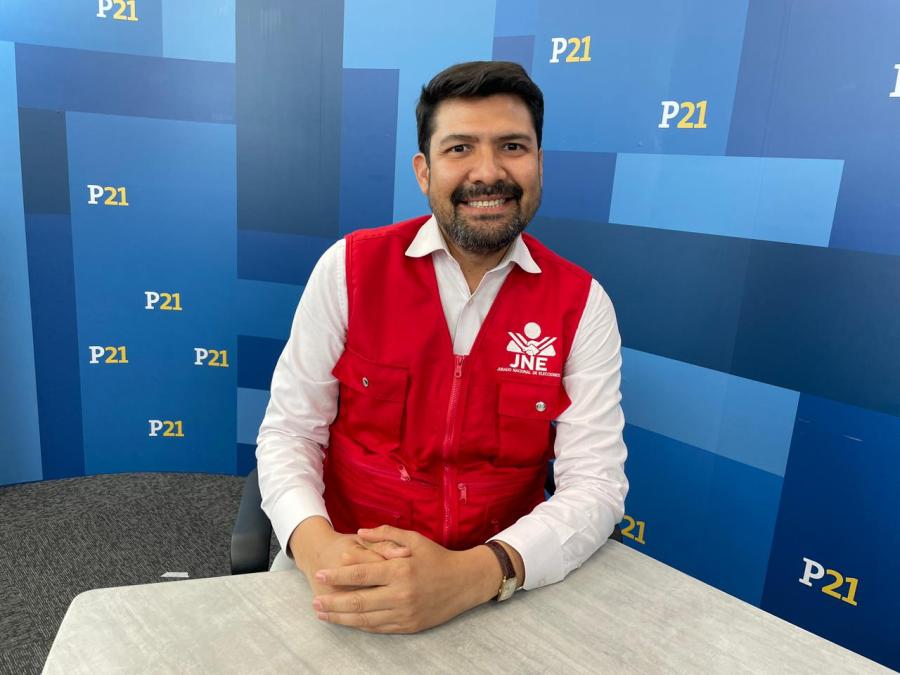
The elections are approaching and, with them, the expectation about the guidelines that the political parties will follow. On this occasion, Peru21 spoke with Carlos Vilela, national director of Education of the National Election Jury (JNE)who detailed the progress and challenges in the implementation of the Electoral Ethical Pact.
How was this Electoral Ethical Pact established?
He Ethical Pact Electoral It is a voluntary initiative promoted by the JNE so that political organizations reach consensus and guarantee transparent elections, with respect and tolerance, at the request of citizens. It consists of ten commitments, the result of a national consultation process through social networks, where 820 contributions from the population were collected.
Are there new guidelines among these ten commitments or are they some already known from previous elections?
He Ethical Pact Electoral includes commitments related to non-discrimination and the consideration of the vulnerable population (children, adolescents, people with disabilities) in government plans. It also addresses non-violence in electoral processes, both in debate, promoting respect and argumentation based on ideas, and in social networks, where it seeks to avoid the manipulation of videos, audios and the dissemination of fake news.
Of the 39 parties, how many have shown interest in signing this Electoral Ethical Pact?
We had the third meeting with political organizations to agree on these commitments together with the Court of Honor, a panel of five people with impeccable professional and academic careers that will monitor compliance with the commitments. Twenty-three parties have expressed their agreement. Three parties have decided not to participate, which we respect, since the Pact is voluntary.
What parties did not want to sign?
We can’t say it yet. On Thursday, December 18 at 10 in the morning, the Ethical Pact will be signed at the Sheraton hotel. We hope that the majority of parties participate, since it is a request from citizens and a first symbol of democracy, consensus, ethics, morality, transparency, respect, neutrality and non-violence.
News and Additional Commitments
Is there any other specification that has caught the attention of citizens and that political parties should commit to?
Yes, the need to avoid political harassment, especially towards young people and women, has been included. Another important commitment is the timely withdrawal of electoral advertising, to avoid visual contamination, a recurring problem in previous elections.
What recommendations are being made to political parties regarding financing so that it is transparent?
The Ethical Pact includes an explicit commitment to the transparency of financing. Commitment five establishes: “Verify and provide information in a clear, timely and complete manner on the use of assets, income and campaign contributions, ensuring their lawful origin.” It also seeks to establish internal mechanisms to prevent, detect and report the indirect use of public goods.
The Electoral Debate and the Informed Vote
How is the electoral debate going to be organized with so many political parties?
It is a challenge for him JNE and for the country, since we are the first country in the world with 39 parties in an election. We have visited Chile to learn about their experience in presidential debates. We have come to the conclusion that we will have to divide the debate over approximately four days, with groups of eight to ten parties per round, so that each one can present their proposals and answer questions.
What initiatives is the JNE promoting to encourage informed voting?
We are promoting the “Informed Vote” campaign through a virtual platform. There, citizens will find the requirements and functions of the positions of president, vice president, deputy, senator and Andean parliamentarian. Starting December 24, the candidates’ resumes and summaries of the government plans will also be available, so that voters can learn about the proposals and make conscious decisions.
Challenges in Presenting Resumes
The deadline for parties to submit official lists expires on December 23, and only 1,500 resumes have been submitted, less than 16% of the total.
Do they arrive or do they not arrive?
Yes, they arrive. Many parties are using the “Declara Más” platform, an innovation from the JNE that allows the virtual registration of candidates, avoiding physical paperwork. Although unfortunately they do it at the last minute, we hope that the information will be available to citizens before December 24.
It is very important that we begin to educate ourselves civically in electoral processes. From the National Directorate of Electoral Education, we are working so that the entire population has an informed vote and to educate new generations, including the 2.5 million young people who will vote for the first time.
Subscribe for free to the most prestigious gastronomic guide in the country, SUMMUMthe weekly newsletter.
RECOMMENDED VIDEO: