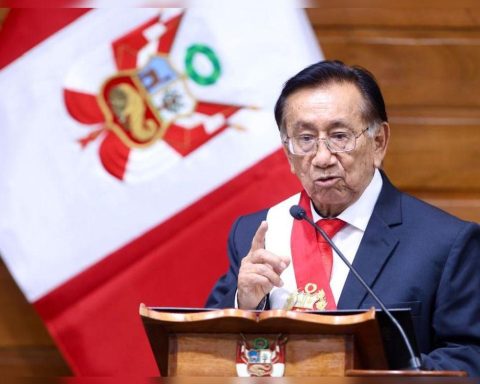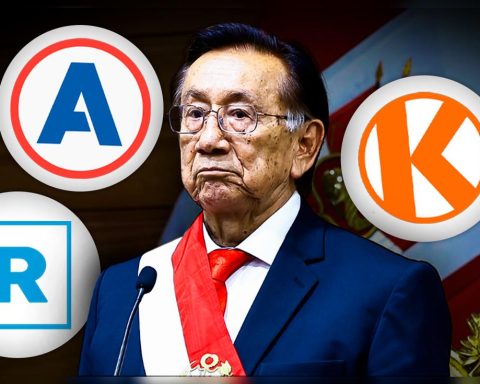
The National Election Jury (JNE) decided that Mario Vizcarra continue as a presidential candidate in the elections 2026by declaring the appeal founded against the blemishes sustained in his sentence for embezzlement, already served and with rehabilitation. With this resolution, the electoral body established that there cannot be a perpetual political sanction for those who have already settled their debt to justice, and placed the right to be elected above a legal prohibition questioned by the Constitutional Court.
listen to the newsText converted to audio
Artificial intelligence
The case focuses on the interpretation of article 107 of the Organic Law of Elections, which prevents people with sentences for certain crimes from nominating, even when there is rehabilitation. However, the highest interpreter of the Constitution had already declared this restriction unconstitutional for serious crimes, considering that it violates political participation and the principle of resocialization.
WE RECOMMEND YOU
TRIUMPH AGAINST CONGRESS AND POLITICIANS IN CAMPAIGN | WITHOUT SCRIPT WITH ROSA MARÍA PALACIOS
In this framework, the plenary session of the JNE applied a criterion of proportionality and fundamental rights. The electoral authority maintained that it is not coherent to exclude people for life for crimes considered less serious when the Constitutional Court itself has ruled out “civil death” even for convictions for terrorism, drug trafficking or rape, as long as there is rehabilitation.
The decision not only impacts the candidacy of Mario Vizcarra. It also sets a guideline for the development of general elections 2026 and for future elections, by delimiting how far the legal restriction can go against the constitutional right to choose and be elected.
Fernando Tuesta, former head of the ONPE: “The JNE is ruling out the so-called civil death”
For the political scientist and former head of the ONPE, Fernando Tuesta, the JNE has privileged a fundamental right over a restrictive reading of the law. “What the National Election Jury has privileged is the right to political participation, particularly in the face of the possibility of excluding candidates referred to in article 107 of the Organic Law of Elections,” he explained.
Tuesta recalled that the Constitutional Court has already declared unconstitutional the prohibition of applications for people rehabilitated for serious crimes. “The TC resolved that this restriction threatened political participation. If those who served sentences for terrorism, drug trafficking or rape cannot be excluded, even less should it be done for crimes considered minor, such as embezzlement,” he said.
From their perspective, the resolution in favor of Mario Vizcarra reaffirms that there cannot be infinite pain. “There cannot be a perpetual sanction. Once the sentence is served and rehabilitation is granted, the person fully recovers their political rights. That is what this precedent is setting,” he said, warning that future plenary sessions of the JNE or the Constitutional Court could review the criterion, although today a guaranteeing reading is required.
José Tello, electoral lawyer: “This criterion will have an impact on all elections”
Electoral lawyer José Tello agrees that the electoral body opted for a constitutional interpretation. “For the jury, political participation as a fundamental right and the principle of rehabilitation have weighed more. That is why he is allowed to continue in the race,” he said when analyzing the case of Mario Vizcarra.
Tello stressed that the effect of this decision goes beyond a specific candidacy. “This criterion has impact for people sentenced even for serious crimes. In practice, the JNE “He is leaving aside the idea of ’political death’ and is recognizing that, after serving the sentence, rights are restored,” he indicated.
The specialist warned that the resolution sets a guideline for the next processes. “The jury has already established a precedent that can be applied in the elections 2026 and also in regional and municipal elections. This is a line that reinforces participation and limits automatic exclusions based only on criminal records already passed,” he concluded.