He JEE Lima Center 1 opened a process to determine if the president José Jerí violated electoral neutrality by issuing statements that would have favored We are Peru during a television interview. The incident occurred in November, in the middle of the process towards the elections 2026according to an inspection report sent to the jury.
listen to the newsText converted to audio
Artificial intelligence
The document of JNE concludes that Jerí made positive references to his political party during the program “The value of truth”, which could constitute an act that influences the voting intention of voters. The audit highlights that the president participated in the media space in his capacity as presidenta condition that reinforces the obligation of impartiality.
WE RECOMMEND YOU
DELIA ESPINOZA FIGHTS BACK AND CRITICAL ELECTIONS | WITHOUT SCRIPT WITH ROSA MARÍA PALACIOS
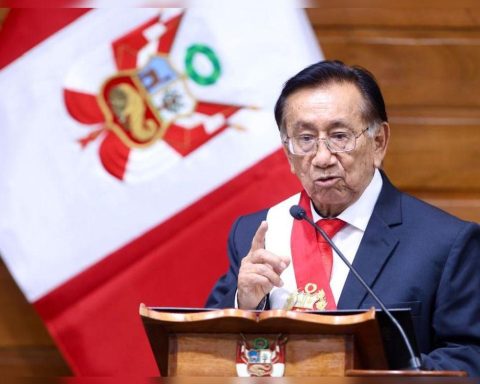
The JEE Lima Center 1 opened an investigation against Jerí for alleged violation of political neutrality. Photo: diffusion
The inspection coordinator, Wendolyne Zapata, also verified official records that confirm that José Jerí remains affiliated with We are Peru and has held various positions within that organization. This information reinforces the hypothesis of an indirect electoral benefit.
With these elements, the case was raised to the plenary session of the JEE Lima Center 1which must decide whether it is appropriate to initiate a sanctioning procedure against the head of state for violating the rules that regulate the conduct of authorities during the electoral period.
José Jerí would have favored Somos Perú during an interview
The report notes that the statements of José Jerí during the interview on Panamericana TV would have constituted a form of political positioning in favor of We are Peru. The president described the party as his “only political love” and highlighted its role in governability, expressions that, according to inspection, could influence the electorate.
The revised regulations include the Organic Law of Elections, the Electoral Propaganda Regulations and the Law of the Code of Ethics of the Public Service. All of these frameworks coincide in prohibiting authorities from using their investiture to benefit political movements during an electoral process. According to the report, the president’s phrases align with the type of infraction provided for in article 32.1.2 of the regulations.
The document added that the president not only highlighted the group’s qualities, but also reinforced his bond with the party by remembering internal positions he held before reaching the Executive. For the oversight office, this reiteration of party identity during a national interview can be interpreted as a political positioning strategy that violates the obligation of neutrality established for the country’s highest authorities.
What did José Jerí say in the interview?
In the report of JNEthe oversight office transcribed the passages in which the president directly referred to We are Peru. Jerí declared that the party “has always supported governability” and described it as his “only political love,” in a context in which he also explained his career within the group. For the audit, these expressions constitute an explicit position towards the political organization in the middle of the electoral period.
The expressions were considered relevant because they did not occur at a party event, but rather in a highly rated television program in which Jerí participated as head of state. This, according to the report, implies a use of his public status with potential influence on the electorate and could constitute an act of indirect proselytism in favor of We are Peru within the framework of the elections 2026.
José Jerí: these would be the consequences of proving the violation according to JNE regulations
If he JEE Lima Center 1 determines that José Jerí violated the principle of neutrality, the electoral body could initiate a procedure for administrative infringement based on article 32.1.2 of the Regulations on Electoral Propaganda, State Advertising and Neutrality during the electoral period, approved by Resolution 0112-2025-JNE. This provision establishes that it constitutes infringement “practice acts of any nature that favor or harm a certain political organization or candidate”.
Also taken into account is the article 33 of the Regulationwhich defines the conditions to configure the violation. In the case of the president, the audit maintains that literal b is met): an authority that, without being involved in an official activity, invokes his condition to influence the intention of the vote. For the JNE, it is enough for a high-ranking authority to make statements that position a party in the electoral context to trigger a possible violation.
In terms of consequences, the electoral system does not contemplate criminal sanctions or immediate removal for a sitting president. However, the JEE yes you can issue a formal declaration of infringementa mandatory public warningor even send background information to other political control entitieslike Congress, because Article 118 of the Constitution obliges the president to “comply with and enforce the resolutions of the National Elections Jury.” Failure to comply could be interpreted as resistance to an electoral mandate.
Furthermore, a declaration of infringement due to neutrality can affect the legitimacy of the Executive in the midst of the campaign towards the elections 2026since the LOE—articles 346 and 347—requires absolute impartiality from all State authorities.