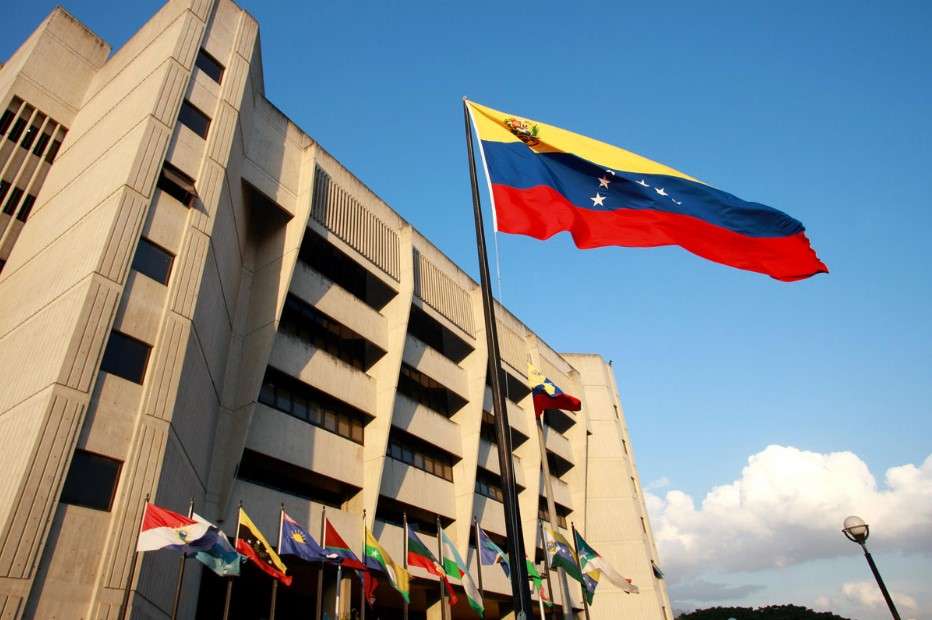
Santo Domingo.-The Central Electoral Board (JCE) looks prepared for the beginning of the process that will lead to the renewal of the identity and electoral card.
Concluded the award process, in which the EMDOC consortium was winner, the institution said that within one or two weeks the contract will be signed and the implementation of the work schedule is already implemented.
The president of the JCE, Román Jáquez Liranzo, said that the deadlines are maintained in accordance with the provisions: the delivery of the new document will begin in the last quarter of this year with the President of the Republic, Luis Abinader, and will expand massively to the entire population from next year.
Reasons of change
Jáquez explained that, after more than ten years of validity, the current card presents vulnerabilities. The material in which it was manufactured —PVC— is easy to acquire, which increases the risk of falsification and/or adulteration.
In contrast, the new one will be developed in polycarbonate, a material of greater resistance and safety, with a technology that embeds the information through a laser burned.

“The 2014 cards had adequate standards, but today show weaknesses. The new document, with five layers and burned laser, will offer much higher durability and protection,” he said. In addition, the QR code will be replaced by an electronic chip with higher levels of security.
Judicial cases
The president of the JCE said that the current ID has been in the center of multiple judicial operations against falsification networks.
Among them he cited the Neiba-Barahona operation, with 17 submissions and four convictions; the hummingbird operation, with 17 subjected and six convicted; and the most recent, in Barahona and the National District, which resulted in seven sentences of up to six years in prison.
“In the last five years, the Attorney General’s Office has investigated more than a thousand cases linked to falsification of cards.
The problem is not hypothetical, it is real. Therefore, the new model is based on high security standards, ”said Jáquez.
The material
Explained in flat language, polycarbonate is a material that, if attempts to alter, is destroyed.
It was introduced into an identity document in 1989 in Finland and despite the advances, it is still in force in that country with a guarantee of between 15 and 25 years, compared to 8 or 10 of the PVC.
The chip that will incorporate the card is not a tracking device, but of safe identification.
It will feature differentiated access levels: name, number and photo will be stored in the public area; in private, biometric or health data.
“Any fear of location will be eliminated. It is a card, not a GPS,” said Jáquez.
In the visual
The new ID will incorporate visible and national identity measures.
It will have the colors of the Dominican flag, gray scale to avoid manipulation and blurred of the parents of the country. The reverse will include cultural symbols such as La Güira, La Tambora, the Monument to Restoration and Cigua Palmera.
The JCE foresees the coverage of 9.4 million citizens through 347 offices in the country and abroad. In addition, as explained by the Director of Cedulation, Américo Rodríguez, 24 -hour Care Centers, special mobile and operative units will be enabled to facilitate access.
The delivery will be staggered per birthday, starting massification in 2026.
Validity of ID will be by age
Process. The ID will have different terms of validity according to the age group: 12 years for people between 18 and 35 years; 16 years for those between 36 and 60; and 20 years old for 61.
In the case of children from 12 to 17 years, a transitory renewal scheme will be introduced when fulfilling the age of majority.
With this system, it is sought to adapt the validity to the biometric changes of each stage of life and prevent maturities coinciding with electoral years.
The document will have a travel certificate, which will allow citizens to move in emergency cases when they are in countries with current agreements and have lost their passport.