Havana/January 2026 closed in Cuba with the rumor volume turned up to maximum. Added to the already known lack of certainties, this time, was a high-voltage external trigger: the capture of Nicolás Maduro by US troops in Venezuela. The event served as a spark for a chain of conjectures, fears, balls and leaks that traveled through neighborhoods, queues, family chats and social networks at full speed.
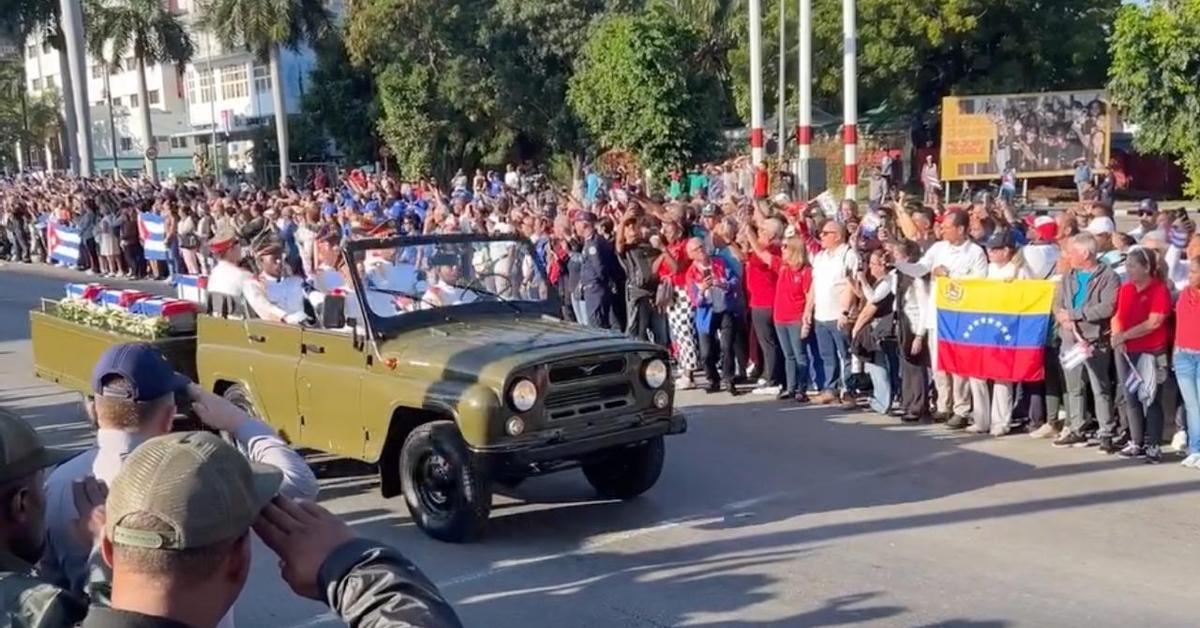
One of the most persistent comments was the supposed departure of Cuban soldiers from Venezuela. The story varied depending on the narrator: some spoke of an orderly retreat; others, of an emergency evacuation after the fall of the main ally. According to these versions, the number of nationals killed in the operation against Maduro would have exceeded 80, instead of the 32 confirmed by Havana.
At the same time, the version circulated that the Cuban medical personnel would be being discreetly removed from the South American country, “before things get worse.” In Telegram and Facebook groups it was claimed that the flights from Caracas to Havana were not coincidental, but part of a larger operation that the Government preferred not to explain.
In Telegram and Facebook groups it was claimed that the flights from Caracas to Havana were not coincidental, but part of a larger operation that the Government preferred not to explain.
Along those same lines, one of the most repeated rumors of the month appeared: the alleged existence of a Cuban delegation negotiating in Mexico the capitulation of the regime to Donald Trump. The phrase, repeated like a mantra on networks, oscillates between irony and hope. For some, these are secret talks with Washington; for others, a simple probe balloon launched to test popular desires. In any case, the idea of discreet negotiations, with Mexican mediation and indirect participation by the United States, firmly established itself in the collective imagination.
Fear of an immediate collapse was also expressed in rumors linked to fuel. At the end of the month, there began to be talk of an alleged circular announcing the cancellation of passenger transportation as of February 1, leaving only “indispensable” means operational. The message, forwarded thousands of times, coincided with the daily experience of empty stops and buses that do not arrive, which gave it a patina of verisimilitude that is difficult to dismantle.
Added to this climate were stories of alleged police insubordination. In Playa, Havana, it was said that several agents were detained within their own unit for refusing to serve. No one provided names or documents, but the story resonated with a growing unrest within the uniformed forces who, in addition to repressing, also stand in lines and suffer blackouts.
Military speculation reached a peak with rumors of US naval movements in the area. The mention of aircraft carriers, including the Gerald R. Fordsailing “to the coast of Cuba,” triggered fantasies of imminent intervention. In parallel, it was said that US military planes flew over the country. The old siege narrative circulated again, this time fueled by real images of deployments in the Caribbean, but reinterpreted with a good dose of fantasy.
The banking system did not escape the rumor either. According to street versions, the directors of the state banks would have been met to announce an emergency situation due to lack of fuel. The result: closed branches, Trasval without transferring cash and the tacit recommendation of having the money “at home.” In a country where trust in financial institutions is fragile, the comment was enough for many to fear non-payment of their salaries and pensions.
January also brought its share of major conspiracies. There was talk of Cuban soldiers who had betrayed the regime, delivering to the United States an alleged machine used in the so-called “sonic attacks.” Old videos were resurrected as irrefutable evidence and circulated again with new headlines. Along the same dark lines, it was rumored that Raúl Castro had ordered the elimination of a general who knew about “the darkest secrets” of the leadership.
One of the names that appeared the most in the balls was Ramiro Valdés. His prolonged public absence fueled versions of terminal cancer.
One of the names that appeared the most in the balls was Ramiro Valdés. His prolonged public absence fueled versions of terminal cancer, emergency admissions and forecasts of numbered hours. The messages were repeated with minimal variations, increasingly more dramatic, while the official silence functioned as additional fuel for speculation.
There was also no shortage of technological rumors: an alleged massive hack of the Etecsa database, of which no concrete consequences were ever seen, but which fit perfectly into the feeling of general vulnerability and the poor service of the state monopoly’s internet connection. At the most disturbing extreme were reports of the forced recruitment of high school students into the Armed Forces, with fines and jail time for those who refused, and the repeated warning of US military action “at any time.”
The month closed with gossip of an internal purge: the fall from grace of the official presenter Humberto López and an alleged betrayal by Raúl Castro of Miguel Díaz-Canel, with his son Alejandro speaking directly with Donald Trump’s envoys in Mexico. Nothing proven, everything commented.
As usually happens in Cuba, January did not offer certainties, but it did offer a fairly precise map of the fears, expectations and desires that cross society. When official information is scarce, rumor not only fills the void: it rules it.