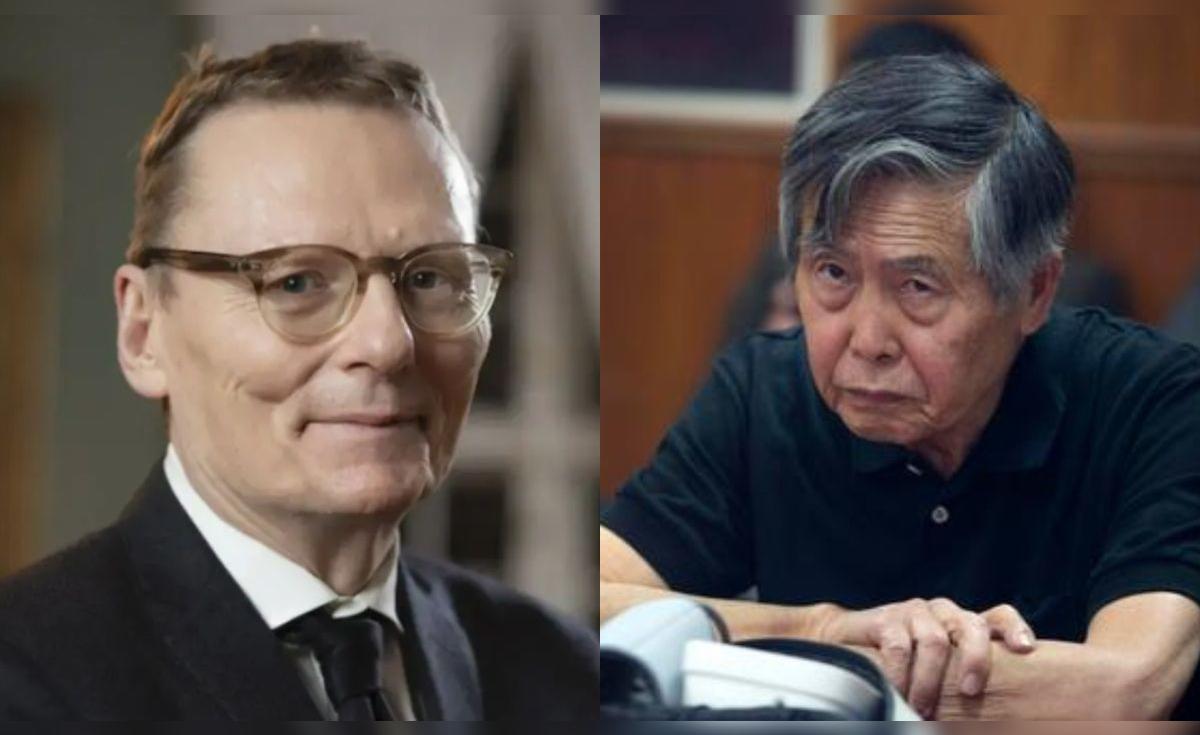
The economist and political scientist James Robinsonrecognized by the Swedish Academy with the Nobel Prize in Economics for his research on the causes of prosperity among nations, he spoke out about the former dictator Alberto Fujimori. In an interview with journalist Mávila Huertas, Robinson stated that the Fujimorato meant a considerable setback for Peruvian democracy and slowed down its institutional development.
listen to the newsText converted to audio
Artificial intelligence
“Fujimori He overthrew democracy and established an autocratic regime. I don’t think that was good. He became extremely corrupt along with the lord Montesinoswith all the consequences we know. I don’t think that was a useful transition to something better in the Peru. “I think it was a setback,” he said.
WE RECOMMEND YOU
PLANKS, MORE CANDIDATES AND FROM JUSTICE | WITHOUT SCRIPT WITH ROSA MARÍA PALACIOS
Likewise, the academic referred to the recent political situation. For Robinsonthe choice of Pedro Castillo In 2021 it represented progress in the democratic inclusion of historically forgotten sectors. However, he indicated that his stay in power was brief due to his lack of political experience.
“I find it fantastic that he is a symbol of the social movement in the Peru. He does not belong to the Lima elite and represents a radical change in Peruvian society, that is fantastic. The ridiculous thing is that he was not prepared for the position. He didn’t have the right experience and fell almost immediately. “That’s sad too,” he concluded.
James Robinson on Peru’s economic challenges: “I think there are economic opportunities”
For Robinsonanalyze the Peru It’s complex. The economist argues that merely macroeconomic issues should not be taken into account, but rather social indicators should be analyzed that show how Peruvian citizenship is developing.
“Per capita income is just a figure. We could consider other dimensions such as people’s health, life expectancy, infant mortality or human development,” he said.
For the Nobel Prize winner in Economics, our country has ways to achieve development: “I think there are economic opportunities. There are millions and millions of Peruvians, so there are markets, there is capacity, but you have to find the right model to work and build with that. In my opinion, the informal sector should not be thought of as some kind of pathology, it is not like a cancer. It is a facet of society, and if you think about it, it is a very natural facet of society and there is a lot of room for creativity,” he indicated.