In addition to operating procedures and technological update to follow as one of the main clean energy generators of the country, the Itaipu Hydroelectric Power Plant in Foz do Iguaçu, Paraná, maintains an activity to ensure electricity production for the next decades: environmental protection.
Last Thursday (18), the hydroelectric plant released the result of an unprecedented inventory regarding the preservation area on the outskirts of the Itaipu reservoir, located on the border between Brazil and Paraguay. The study revealed that in 40 years, it practically tripled diversity in the preserved range.
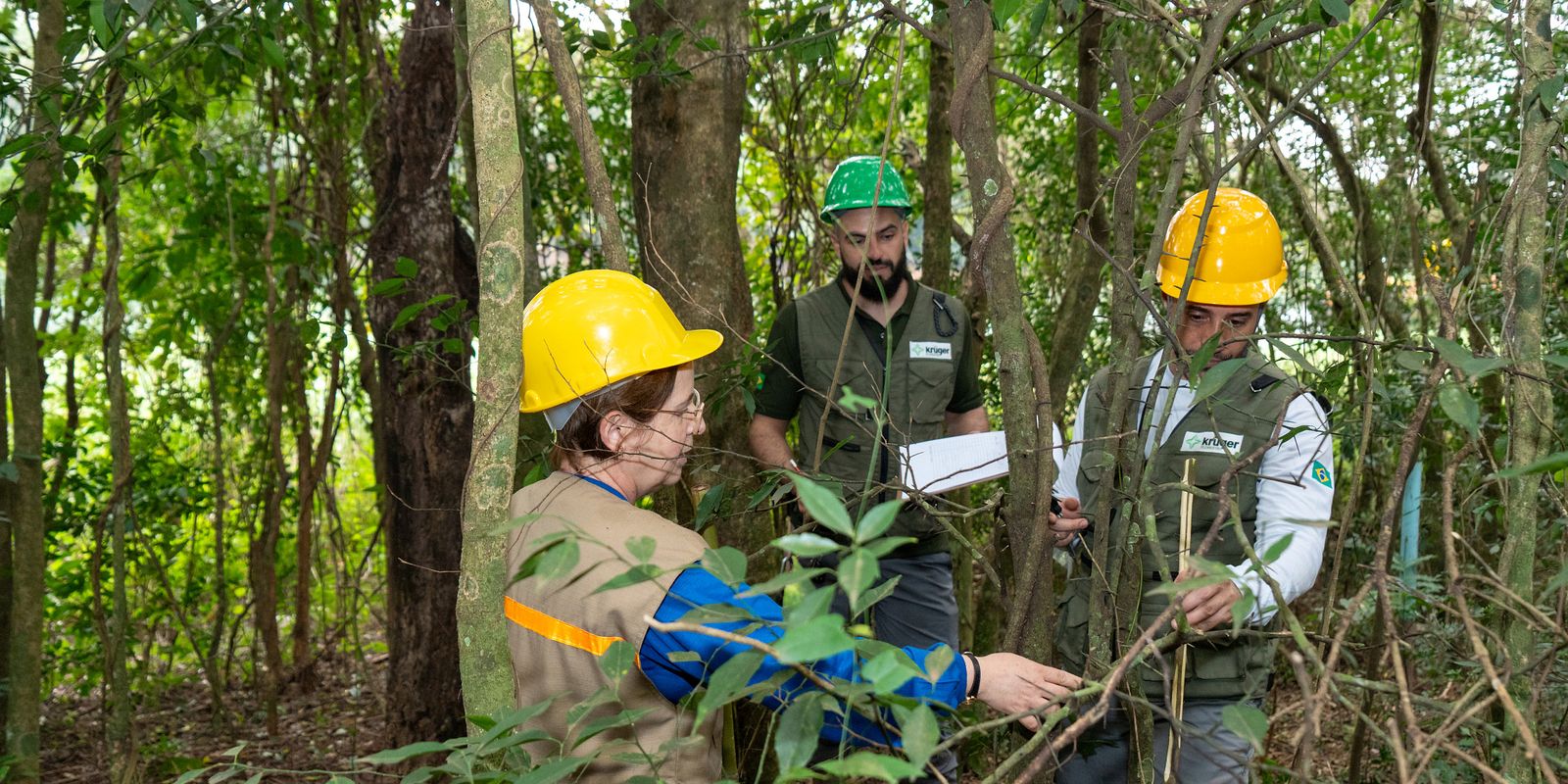
The survey, conducted between March and September 2024, identified 397 tree species and shrubs, almost three times more than 139 species originally planted.
These data represent that what was once an isolated belt of plantations became a forest with 1,300 kilometers long and 30,000 hectares – almost the Belo Horizonte area (33,100 hectares). There are 55 thousand plant records, according to the survey.
The inventory is an agreement between the plant and the Brazilian Agricultural Research Company (Embrapa), linked to the Ministry of Agriculture and Livestock.
The plant area collects trees as an Angico-Red (Rigid parapiptadenia), an essential native species for the amount and frequency of occurrences; ipês of all species; Peroba; Jequitibá; and fruit from several families, such as Araticum, Jabuticaba, Pitanga and Gabiroba.
Reservoir protection
Itaipu Binacional is a company managed jointly by Brazil and Paraguay. The Brazilian Director-General, Enio Verri, explains that Environmental conservation is an investment to ensure electricity generation for decades and more decades.
“Investment in actions such as these, as well as so many others that protect our lake, helps to face climate change and ensure the availability of our raw material, water, to continue generating energy for over 190 years ahead.”
It is in Itaipu Lake, formed on the Paraná River, where is the water reserve that drives the turbines generating the hydroelectric dam.
In an interview with Brazil agencythe Manager of the Itaipu Protected Areas Division and Technical Division, Luis Cesar Rodrigues da Silva, pointed out that it is “widely known in literature and scientifically proven” that healthy vegetation around water and reservoir courses has a crucial function for water production and its quality.
According to Luis Cesar, this happens for two factors: at first, the vegetation acts as a protective barrier, preventing debris and a large sediment load from reaching the reservoir; In a second step, vegetation contributes to stabilizing the soil around the reservoir, preventing erosion effects.
“Erosion is a strong contributor to decrease the life of the reservoir. The more sediment, the more erosion it goes to a reservoir, the less life the structure has,” he details.
Ecological role
The forest engineer adds that environmental preservation and diversity also play an ecological role. “It serves as a shelter for a series of vegetable and animal species, especially insects, which are important pollinators of agricultural crops,” he says.
It contextualizes that the reservoir protection range is a biodiversity corridor as it is located between two important conservation units.
“To the south, there is the Iguaçu National Park, with all its strength and international fame, and to the north, the Ilha Grande National Park [na divisa do Paraná e Mato Grosso do Sul]in a strategic position in the transition between Atlantic, Cerrado and Pantanal Forest. ”
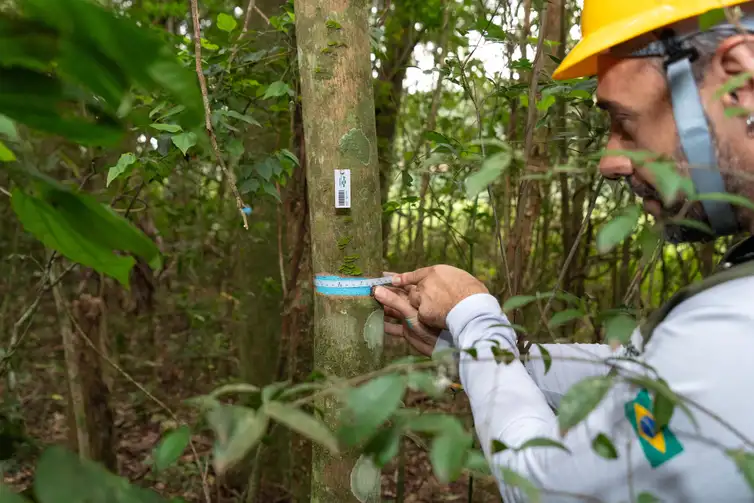
Work covers about 30,000 hectares of riparian forest between Foz do Iguaçu and Guaíra (PR) Sara Cheida/Itaipu Binacional
Inventory partnership
The Agreement Manager explained to the Brazil agency Which for about 40 years, Itaipu – which began to be built in 1973 – dedicated himself to extensive planting in the protection range. Now it takes new direction.
“We have nothing else to plant. We need to manage and check if there is something we can do, some opportunity to improve this vegetation and bring it closer to what would be native vegetation,” he says.
He adds that the partnership with Embrapa aims to establish a management plan of this reservoir protective vegetation for the next 30 or 40 years.
“It is a series of studies that we need now, to have data to define a planning of improvement and care activities of this vegetation for the long run,” he projects.
Benefits for the surroundings
The partnership is signed with the Embrapa Forests division. The researcher at Embrapa Forests Maria Augusta Doetzer Rosot said to Brazil agency That the largest gain in the region in the last 40 years was the formation of a permanent preservation area at the edges of the reservoir.
“Due to agricultural expansion in western Paraná, which occurred in the mid -20th century, these edges were mostly constituted by areas of agriculture that needed to be recovered to fulfill the ecological functions of a protective area,” he says.
According to her, since the 1980s, with the filling of the reservoir in 1982, restoration plantations in areas without any forest coverage have begun to modify the environment and provide so -called ecosystem services.
Maria Augusta emphasizes that, in addition to benefiting the preservation of the Itaipu Water Reservoir, the protection area brought gains to the population of neighboring municipalities.
“Since the forest acts as a climate regulator, it protects soil and water, houses pollinators and seed scatters, facilitating gene flow [troca de genes]preserves and, proven, increases biodiversity, purifies air and removes carbon from the atmosphere through its absorption with the photosynthesis process, ”he describes.
She also points out that the conserved region offers protection and shelter to fauna, acting as an important ecological corridor, and has “aesthetic relevance in the landscape, with meandrant format [curvas acentuadas] Throughout the reservoir and the rivers that flow there, giving scenic beauty, which is also considered an ecosystem service. ”
Next Steps
The Embrapa Florestas researcher anticipates that the next steps of the partnership predict surveys on environmental quality indicators of the forest, such as soil enzymatic activity, the abundance of worms and genetic diversity of tree species.
The inventory will also have remote sensing techniques, which includes drone use to estimate carbon content stored in the vegetation. A lower carbon release in the atmosphere contributes to curb global warming.
Maria Augusta advanced to Brazil agency that the main result expected to achieve is “a broad and robust set of information obtained through the processing and analysis of all these themes”, in order to reach a forest management plan “aiming at the perpetuity of the generation of forest goods and services”.
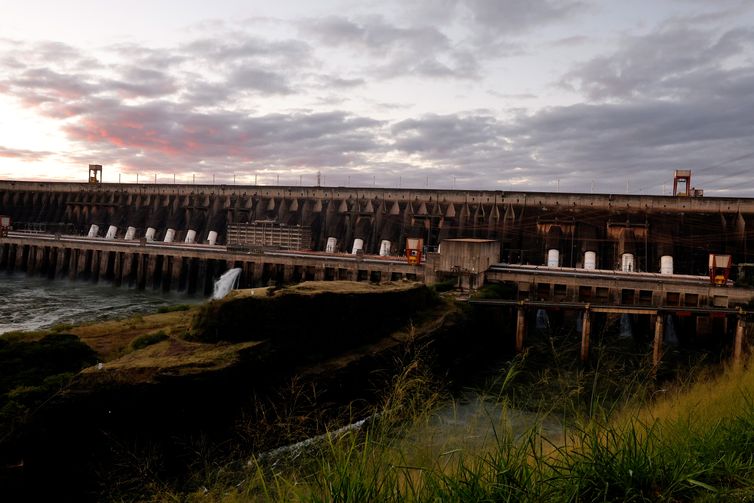
External view with comports of the Itaipu Binacional plant. Photo: Tânia Rêgo/Agência Brasil
Energy production
Currently, Itaipu accounts for about 9% of Brazilian electricity consumption.
To be aware, the production of 3.1 billion MWh is sufficient to supply the whole world for 44 days or Brazil for six years and one month.