"It may be the start of a great war on the European continent": President Zelensky’s strong speech shortly before the Russian military operation
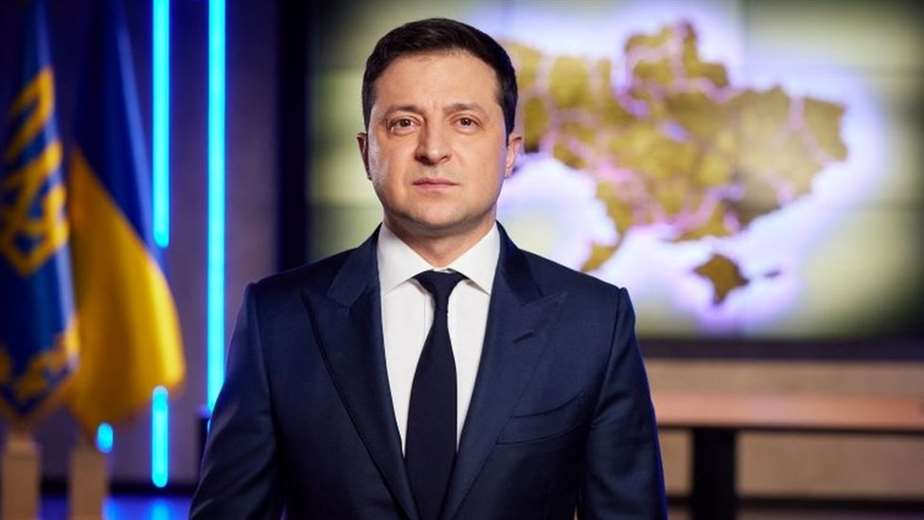
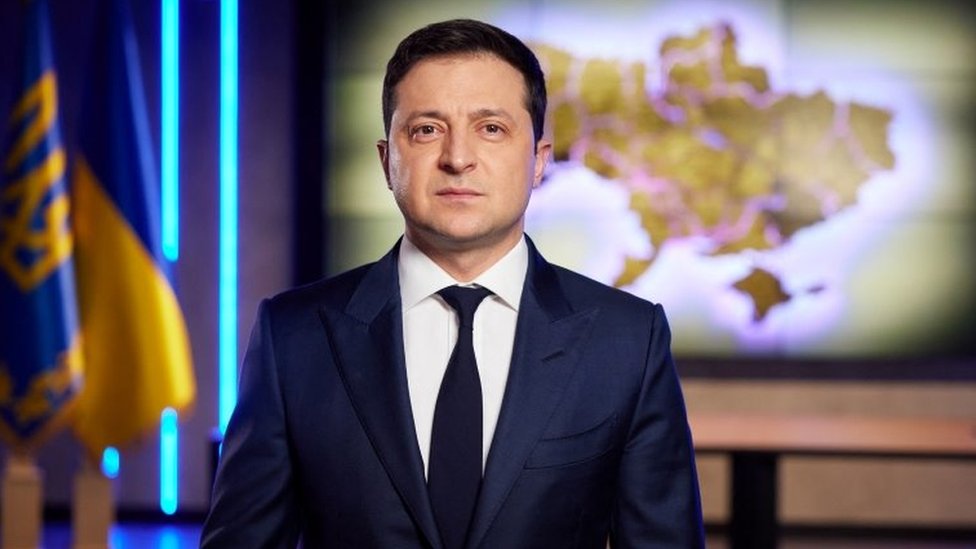
Volodymyr Zelensky in a televised message.
Volodymyr Zelensky returned to television in the early hours of Thursday with a new speech in the midst of the conflict on the border with Russia, but this time, in addition to addressing his people, he sent a message to the Russians in their own language.
The Ukrainian president delivered the speech minutes before his Russian counterpart, Vladimir Putin, announced a “special military operation” in the Donbas region of eastern Ukraine, where the two pro-Russian rebel territories of Donetsk and Luhansk are located.
Zelensky first spoke in Ukrainian and warned that a Russian invasion “may be the start of a great war on the European continent.”
He said that he unsuccessfully sought to speak with the Russian president and that Moscow has almost 200,000 soldiers and thousands of combat vehicles on the border between the two countries.
“I made a phone call to the president of the Russian Federation. Result: silence. Silence should be in the DonbasZelensky said.
Zelensky said the Russian president did not return his call on Wednesday night.
But by changing the language to Russian, the president asked the population of the neighboring country to reject an attack and pointed out that they are lying about Ukraine.
“They say the flame [de la guerra] will free the people of Ukraine, but the Ukrainians are free,” said BBC Eastern Europe correspondent Sarah Rainsford.
“Who can stop [la guerra]? the gentity. And it ispeople are among you, I’m sure”he emphasized.
The Ukrainian leader stressed that his country is ready for a Russian attack, warning: “We don’t need any war, not cold, not hot, not hybrid. But if the troops attack us, if they try to take our country – our freedom, our lives , the lives of our children – we will defend ourselves”.
“If they attack us, they will see our faces, not our backs,” the Ukrainian president said.
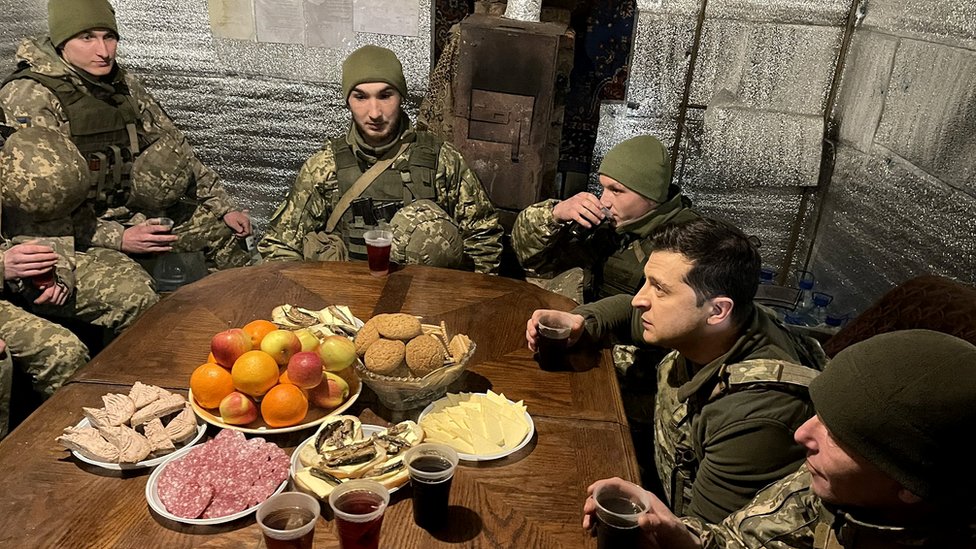
Ukrainian soldiers at the front received a visit from President Zelensky on February 17.
“They tell you that we hate Russian culture. How can you hate culture? Or any culture. Neighbors always get culturally rich (…). We’re different, pbut this is not a reason to be enemiesZelensky continued.
“They tell you that we are Nazis, but how can a people who lost more than eight million lives because of the victory of Nazism support Nazism? How can I be a Nazi? Tell that to my grandfather, who spent the entire war in the infantry of the Soviet Army and died as a colonel in the Ukraine.”
Continuing in Russian, Zelensky stated that Ukrainians remember their past, but “want to determine and build their own history.”
“Qthey want hedo you russians a war? I would very much like to answer this question. But the answer depends only on you, citizens of the Russian Federation”he concluded.
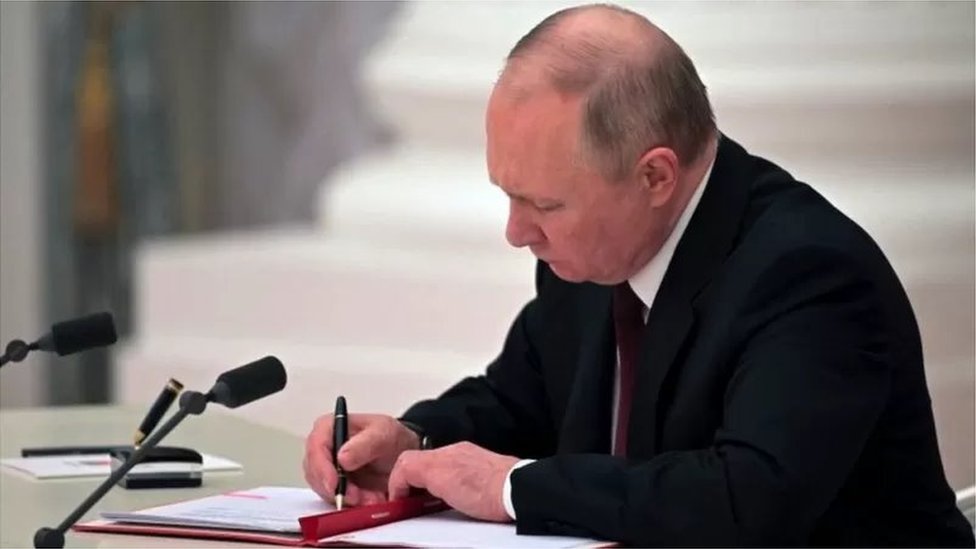
Putin announced a “special military operation” in Ukraine.
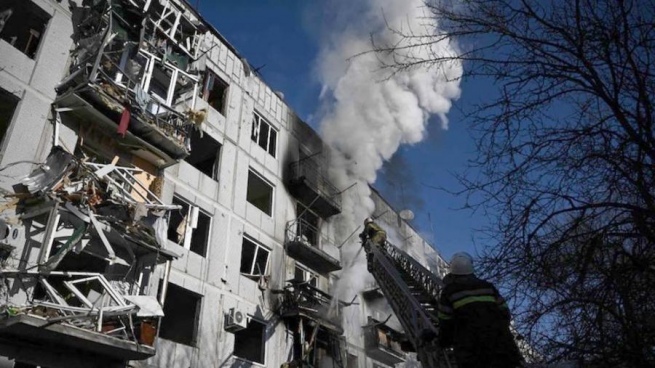
Minutes after Zelensky’s intervention, Vladimir Putin announced a “special military operation” in the Donbas region, in eastern Ukraine, where the two rebel territories of Donetsk and Luhansk are located, self-proclaimed republics and which on Monday Putin recognized as independent.
As Putin made the announcement, the United Nations Security Council implored him to stop any military action.
A few minutes later, Ukraine’s Prime Minister Denys Shmyhal tweeted: “Putin has just launched a full-scale invasion of Ukraine. Peaceful Ukrainian cities are under attack. This is a war of aggression. Ukraine will defend itself and win.”
Now you can receive notifications from BBC World. Download our app and activate it so you don’t miss our best content.
Volodymyr Zelensky returned to television in the early hours of Thursday with a new speech in the midst of the conflict on the border with Russia, but this time, in addition to addressing his people, he sent a message to the Russians in their own language.
The Ukrainian president delivered the speech minutes before his Russian counterpart, Vladimir Putin, announced a “special military operation” in the Donbas region of eastern Ukraine, where the two pro-Russian rebel territories of Donetsk and Luhansk are located.
Zelensky first spoke in Ukrainian and warned that a Russian invasion “may be the start of a great war on the European continent.”
He said that he unsuccessfully sought to speak with the Russian president and that Moscow has almost 200,000 soldiers and thousands of combat vehicles on the border between the two countries.
“I made a phone call to the president of the Russian Federation. Result: silence. Silence should be in the DonbasZelensky said.
Zelensky said the Russian president did not return his call on Wednesday night.
But by changing the language to Russian, the president asked the population of the neighboring country to reject an attack and pointed out that they are lying about Ukraine.
“They say the flame [de la guerra] will free the people of Ukraine, but the Ukrainians are free,” said BBC Eastern Europe correspondent Sarah Rainsford.
“Who can stop [la guerra]? the gentity. And it ispeople are among you, I’m sure”he emphasized.
The Ukrainian leader stressed that his country is ready for a Russian attack, warning: “We don’t need any war, not cold, not hot, not hybrid. But if the troops attack us, if they try to take our country – our freedom, our lives , the lives of our children – we will defend ourselves”.
“If they attack us, they will see our faces, not our backs,” the Ukrainian president said.
Ukrainian soldiers at the front received a visit from President Zelensky on February 17.
“They tell you that we hate Russian culture. How can you hate culture? Or any culture. Neighbors always get culturally rich (…). We’re different, pbut this is not a reason to be enemiesZelensky continued.
“They tell you that we are Nazis, but how can a people who lost more than eight million lives because of the victory of Nazism support Nazism? How can I be a Nazi? Tell that to my grandfather, who spent the entire war in the infantry of the Soviet Army and died as a colonel in the Ukraine.”
Continuing in Russian, Zelensky stated that Ukrainians remember their past, but “want to determine and build their own history.”
“Qthey want hedo you russians a war? I would very much like to answer this question. But the answer depends only on you, citizens of the Russian Federation.”he concluded.
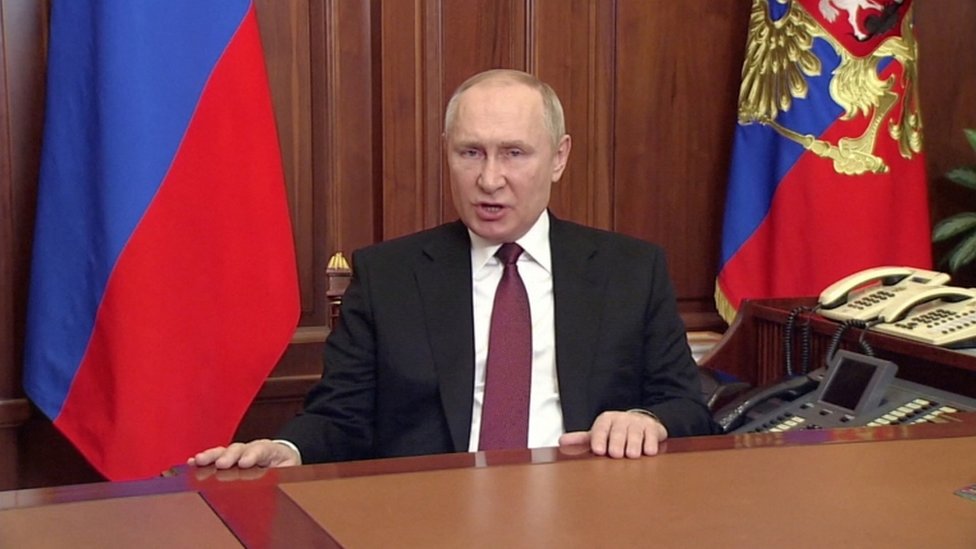
Putin announced a “special military operation” in Ukraine.
Minutes after Zelensky’s intervention, Vladimir Putin announced a “special military operation” in the Donbas region, in eastern Ukraine, where the two rebel territories of Donetsk and Luhansk are located, self-proclaimed republics and which on Monday Putin recognized as independent.
As Putin made the announcement, the United Nations Security Council implored him to stop any military action.
A few minutes later, Ukraine’s Prime Minister Denys Shmyhal tweeted: “Putin has just launched a full-scale invasion of Ukraine. Peaceful Ukrainian cities are under attack. This is a war of aggression. Ukraine will defend itself and win.”
Now you can receive notifications from BBC World. Download our app and activate it so you don’t miss our best content.
The Dominican Government is holding talks with investment banks to acquire financial insurance that will mitigate the impact on the public finances of possible increases in crude oil, given the recent increase
Caixa Econômica Federal announced this Tuesday (3) the resumption of financing for the purchase of residential properties above R$2.25 million with resources from the savings account. The modality, framed in the Real
On February 11, a federal jury convicted Earl Richard Clouser, 55, of Burnham, Pennsylvania, for attempting to produce child sexual abuse material with a 15-year-old teenager in Cuba. According to the United
Havana/On the corner of 23rd and L, where for decades Havana waited in line to enjoy a five-scoop salad, this Tuesday the only possible taste was the bitter aftertaste of frustration. The
“PDVSA has signed supply contracts with companies marketing oil and derivatives destined for the United States market,” the state-run company reported without identifying the companies or offering more details of the contracts.