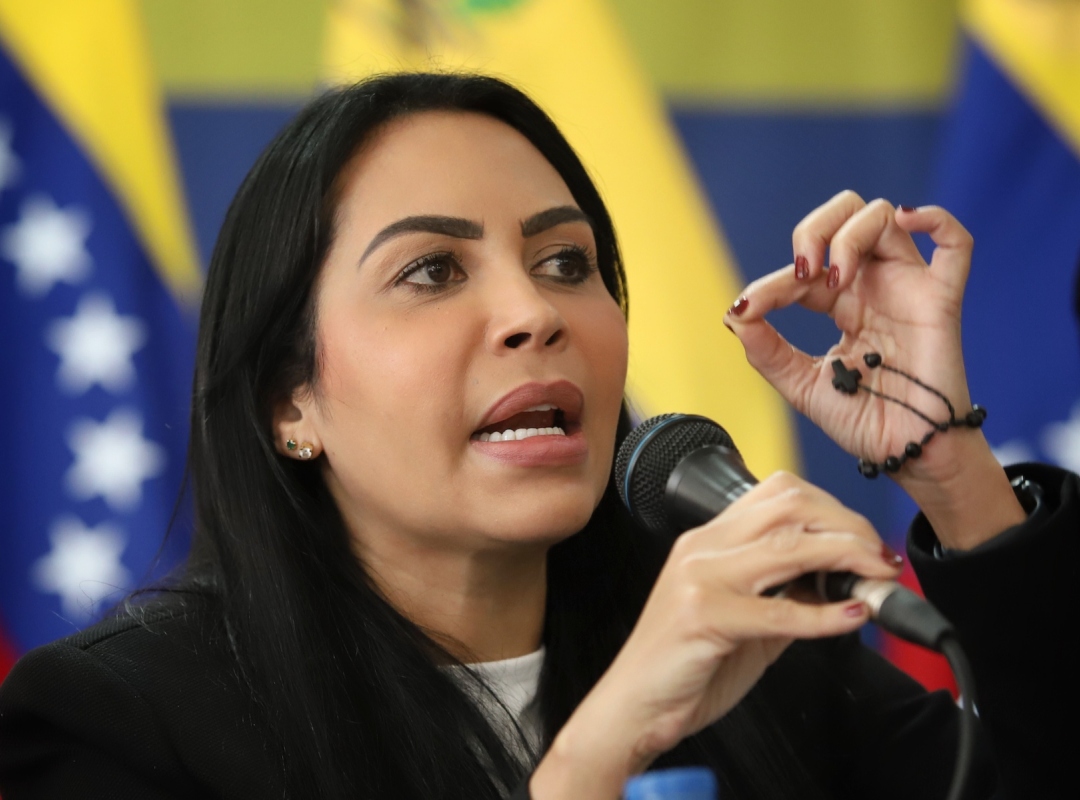

Opposition leader Delsa Solórzano warned this Friday that the amnesty bill, sanctioned in the first discussion on Thursday in the National Assembly, presents significant gaps that could put the objectives of justice and reconciliation in Venezuela at risk.
Through a statement, Solórzano indicated: “We must warn that this is a highly incomplete and potentially dangerous text.”
He indicated that the project consists of 13 articles and strictly limits its application to ten specific moments, all linked to events classified as political violence. Among them, the 2002 coup d’état, the 2002–2003 civic and oil strike, the events of February-March 2004, demonstrations between March and August 2017 and the events linked to the 2024 presidential elections stand out, as detailed in Article 6.
Exclusions and lack of guarantees reveal insufficiency for the project
Solórzano stressed that the project excludes certain groups and does not repeal instruments of repression, which limits its scope:
“To those who have been convicted under the Simón Bolívar Law and the Law Against Hate, among other current instruments of repression, the causes of military jurisdiction, and any repeal of the repressive legal framework that allowed and continues to allow persecution for political reasons,” he noted.
He added that by not expressly repealing these laws, “the door remains open for new arrests, even after an eventual application of the amnesty.”
He also stated that the project “does not guarantee the safe return of the exiles, it does not lifts political disqualifications and does not establish comprehensive reparation mechanisms for the victims.”
Regarding the procedures to access the amnesty, Solórzano pointed out that it will not be automatic, but will depend on a formal request and judicial verification: “Its application must be requested and is subject to judicial verification, maintaining wide margins of discretion in the hands of the same system that carried out the persecution.”
Consequently, it considers that the proposal “is insufficient to move forward towards a comprehensive solution that guarantees justice, reconciliation and the full restitution of the rule of law and freedom for political prisoners, with a guarantee of non-repetition.”
He demanded the immediate release and without further delay of all political prisoners, as well as “the full and immediate reestablishment of the constitutional order, as indispensable conditions for any serious process of justice and democratic transition.”