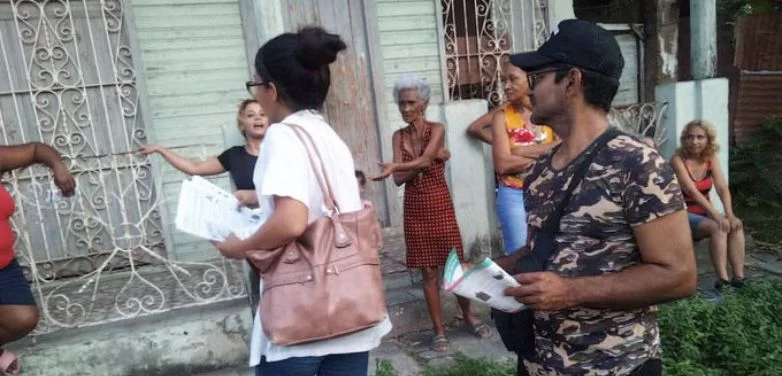
This weekend, Public Health officials confirmed 11 new deaths from dengue and chikungunya in Cuba.
MIAMI, United States. – The Cuban doctor Lázaro E. Libre, resident in Valencia, Spain, warned on his Facebook profile that the severity of the arbovirus epidemic in Cuba is not only due to the viruses that circulate, but also to the collapse of the health system and the deterioration of living conditions on the Island.
In two texts published on Facebook, the specialist maintains that chikungunya is, by definition, a low-lethality disease and that the deaths reported should be read as the result of a “social clinic” and a “syndemic” scenario, rather than as the isolated effect of the pathogen.
Cuban authorities have recently recognized an increase in deaths associated with the current epidemic of mosquito-borne diseases. At the beginning of December, the Vice Minister of Public Health, Carilda Peña, reported on state television of 33 deaths from dengue and chikungunya.
This weekend, Public Health officials raised the death toll to 44, including several minors.
In this context, Lázaro E. Libre tried to distance itself from any alarmist reading: “First of all, a necessary clarification: this is not alarmism or sensationalism. It is scientific information explained in a simple way, for those who know medicine and for those who do not. Because understanding what happens today helps us prevent what may happen tomorrow.”
The doctor recalled that chikungunya is “an RNA virus, which means that it has the capacity to mutate and adapt” and cited specific mutations that increased its transmission efficiency through certain mosquitoes and “facilitated a huge outbreak in La Réunion (French territory in the Indian Ocean, near Madagascar).”
Indeed, studies on the La Réunion outbreak document that the E1-A226V mutation improved the virus’s ability to infect Aedes albopictus.
Libre emphasizes that the problem in Cuba is not isolated: “Today dengue, chikungunya, Zika and other febrile viral diseases coexist, with a constant increase in cases. This means people becoming infected several times in a short time or even coinfected.”
In his analysis, the doctor also alluded to the possibility of disproportionate inflammatory responses: “When the body faces multiple viral attacks in a row, the inflammatory response can intensify to levels that some authors identify as a possible ‘immunological storm’. It is not an inevitable fate, but it is a real clinical possibility that must be considered.”
scientific literature matches in which severe forms of dengue and dengue-chikungunya co-infection can be associated with hyperinflammation and “cytokine storm” phenomena, with multi-organ involvement. Recent studies have also explored how successive Zika and dengue infections modify the immune response and can favor more severe symptoms.
Libre added a warning about the virus’s ability to change: “If we add to that that RNA viruses can mutate, as happened with [el] COVID, relying on natural immunity alone is not a sufficient strategy. Immunity protects, yes, but if the virus changes, it may fall short. Hence vector control, epidemiological surveillance and anticipation are essential. Prevention is now.”
The doctor also asked for a strategic response within Cuba: “We cannot observe this with a short vision. I hope, and I urge, that the health and epidemiological authorities of Cuba consider this possible scenario and think with a long vision. Anticipating will always be better than reacting late.”
Three days later, that is, this Monday, Lázaro E. Libre deepened the connection between the chikungunya epidemic and the structural crisis that the country is going through. “Deaths associated with chikungunya are reported, but those of us who know its pathophysiology understand that it is not, by definition, a disease with high mortality, except in well-defined vulnerable groups: the elderly, infants and patients with chronic comorbidities. The literature places its global fatality rate around 0.01%-0.1%,” he explained.
From that base, he posed a central question: “What is happening in Cuba that we are observing serious cases and deaths?” And he responded with two plans of analysis. The first, virological: “We are not facing an isolated event. Several viruses coexist circulating simultaneously: chikungunya, dengue, influenza, COVID… and coinfection or reinfection can exacerbate the inflammatory response, favor organic decompensation and accelerate clinical progression, especially if management is not early, or if the patient arrives late or weakened to the system.”
The second plane is structural. “From a health perspective, the reality that the country is experiencing, and that we all know, conditions the patient’s prognosis as much as the virus itself,” he wrote. He then referred to “saturated services, a shortage of medications and intravenous solutions, a shortage of reagents for differential diagnosis, deficiencies in primary care, and a socioeconomic situation that directly affects public health.”
For Libre, this deterioration translates into a more fragile patient from the outset: “When the diet is limited, daily stress is high, access to basic products is unstable and hygienic conditions are not consistent, the patient arrives biologically more vulnerable, with less capacity to sustain an effective immune response. It is not just a viral clinic; it is a social clinic.”
From there, he proposed reading what is happening on the Island as a “syndemic”, a concept that integrates several simultaneous factors: “What we are seeing makes more sense if we understand it as a syndemic: virus + deficiencies in the health system + socioeconomic deterioration + decreased physiological reserve + delayed or limited response.”
“In a compromised, poorly nourished organism, with high oxidative stress, with uncontrolled comorbidities or without adequate access to treatment, a low-lethality virus can become lethal. My reflection as a doctor is this: It is not only the virus that is generating deaths; it is the terrain where that virus falls. A health system without supplies, a patient without reserves, and a simultaneous co-infection can turn a theoretically manageable condition into a fatal one. The pathogen matters, yes… but the context weighs just as much or more,” he concluded. blunt.