In the middle of the national electrical crisisthe tobacco sector of Pinar del Río, the main producer of the most important exportable item in Cuban agriculture, will have priority with the assembly of solar irrigation systems and mobile generating sets to guarantee the current tobacco campaign and prepare the next one.
Osvaldo Santana Vera, provincial coordinator of Tabacuba, explained to Granma that more than a thousand electric irrigation positions cover some 4,840 hectares and that the goal is to completely replace them with renewable sources for the 2026-2027 campaign.
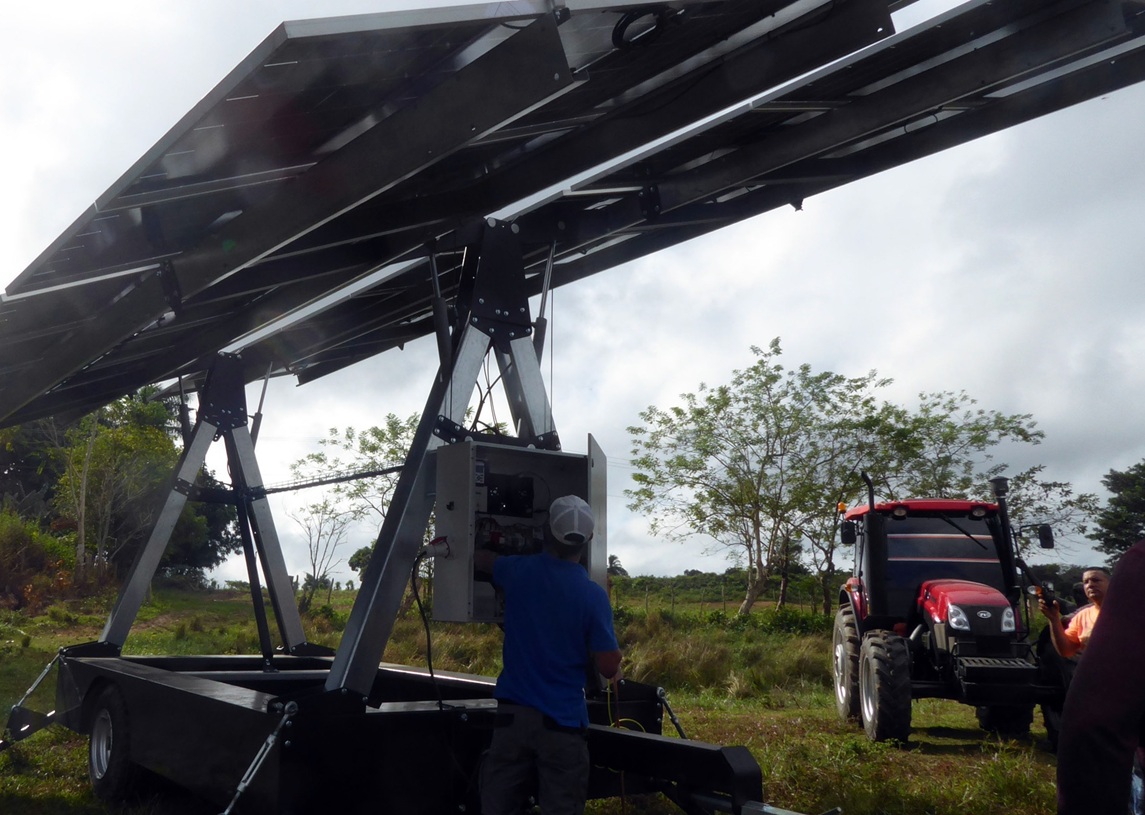
Meanwhile, the urgency of the ongoing sowing forces immediate solutions, when ten mobile photovoltaic irrigation equipment, with 10 kW peak and a capacity of 22 liters per second, will cover 150 hectares in nine companies in the territory.
According to the report, the panels rotate on their own following the sun and are moved by tractor, while fifteen mobile generator sets will power 58 high-power pumps and protect another 800 hectares.
In addition, more than 300 fixed solar systems arrived, adding to the 156 installed between 2024 and 2025. To put them into operation, 22 trained brigades work tirelessly on assembly.
“In January, a thousand new systems of this type, which have already been contracted, should arrive in the country. The intention is to cover with renewable sources for the next campaign, 100% of the area that we have in the province under electric irrigation,” said Santana Vera.
Tobacco, which generates most of Cuba’s agricultural exports, thus receives urgent support, first with emergency measures and then with a definitive transition to clean energy that frees it from the constant electricity deficit in the country.
The recent tobacco campaign in the municipality of Consolación del Sur, in the province of Pinar del Río, closed with serious damage due to the prolonged blackouts suffered by the country.
Authorities of the Integral and Tobacco Company in the territory reported at the end of June that just over 385 hectares were lost due to the impossibility of irrigating the plantations due to power outages, the newspaper reported. Guerrilla.
More than 385 hectares of tobacco lost in Pinar del Río due to prolonged blackouts
The lack of energy affected all the varieties of tobacco planted equally, although with a greater impact on the second-grade meadows of the Sol skewered type and in the areas dedicated to Virginia tobacco. Mario Luis Zamora Medina, general director of the company, explained that just over 1,500 hectares were planted, but it was not possible to meet the initial commitments.
“We estimate an impact at a rate of half of the contract, which means 0.6 tons per hectare. Therefore, only 1,301 tons have been produced, compared to a plan of 1,778,” he said. As a result, the company collected around 1.99 million cujes (bundles of cured leaves), just 79% of what was planned.
At the end of the first half of the year, more than 327 tons of tobacco had been collected, and the Virginia variety stood out with 98% quality, according to official data.
In the 2025-2026 campaignwhich started last October 10, the province must plant 14,620 hectares of tobacco, which represents 70% of what is planned to be planted in Cuba. According to Osvaldo Santana Vera, coordinator of the Tabacuba Business Group, 10% of the tobacco must be planted in October; 55% in November; 30% in December and 5% in early January.