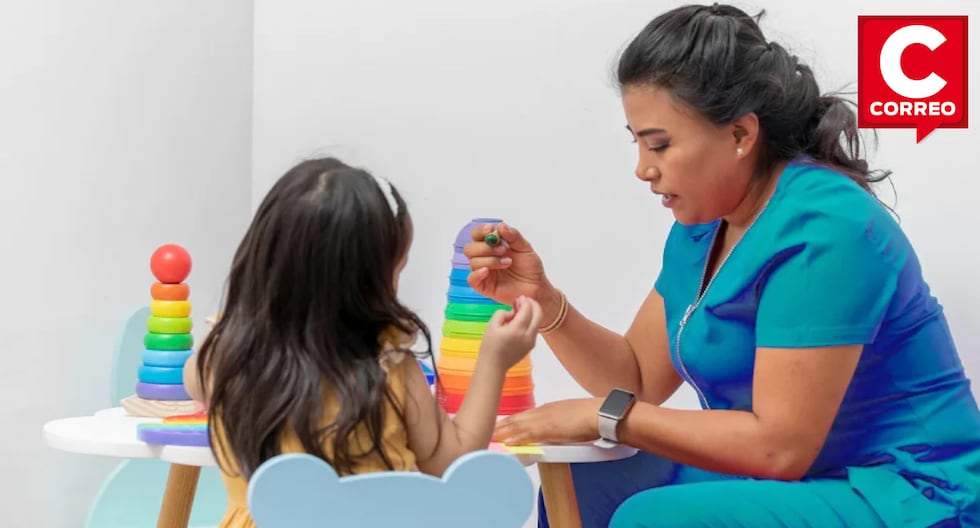
In many Peruvian homes, children who are classified as “naughty”, “restless” or “hyperactive” are usually labeled without a clear diagnosis. This lack of early identification of neurodevelopmental disorders affects not only school coexistence, but also its educational and social future. This report explores how the absence of an early diagnosis in early childhood impacts the educational system, the rights of children and the work of parents and teachers. The role of the State and public institutions in the attention and education of children with special needs is also analyzed.
LOOK AT THIS: Schoolchildren study in rented rooms and where there were rams
Leonardo’s case
Guisela PR (32), Leonardo’s mother, a 6 -year -old boy, has faced multiple school changes because complaints about his son’s behavior. “He is very distracted, he has no interest in the tasks,” said the teachers. In an attempt to solve the situation, Guisela changed his son of educational institution, but the problem persisted. Finally, he decided to seek professional help and is waiting for an accurate diagnosis. “Before I thought the problem was school, but now I understand that my son needs specialized attention,” says Guisela.
Like Guisela, many families in Peru face this reality. The lack of early diagnosis of disorders such as attention deficit, learning disorders and other emotional problems seriously impacts access to inclusive and quality education for children. Many parents feel guilt or ignorance, which makes it difficult to accept the need for professional help.
Conditions of children in early childhood
The clinical and educational psychologist Anais Reyes Capcha explains that the first years of life are crucial for child development. During this period, conditions can be identified as difficulties in language development, dyslexia, discculia, attention deficit (ADHD), hyperactivity and autistic spectrum disorders (ASD). Without adequate diagnosis, these children are at risk of being erroneously labeled, which can affect their self -esteem, social relations and academic performance.
“It is essential that parents are willing that their children receive a diagnosis, since early detection opens the door to therapeutic interventions that improve the quality of life and the development of children”says Reyes. In addition, it emphasizes that the brain of children in early childhood has a remarkable plasticity, which allows them to adapt and learn new skills if they receive proper intervention.
Anais Reyes adds that many parents tag their children with phrases like “my son is hyperactive” or “I think he has attention deficit.” These expressions not only simplify the problem, but can contribute to the stigmatization and discrimination of children, violating their fundamental rights. The specialist points out that parents’ refusal to seek a professional diagnosis is often due to fear, guilt, ignorance and social prejudices. This situation generates great uncertainty in parents, who question about the future of their children: “Will it be autonomous? Will it be discriminated against?” This situation is even more complex in the Peruvian cultural context, where myths and beliefs persist that hinder the acceptance of a diagnosis. Therefore, the specialist emphasizes that it is essential that parents also receive emotional and psychological support to overcome these fears and prejudices, which will allow them to make more informed decisions and contribute to the well -being of their children.
You may be interested: Junín: Vaccination against Railus cough barely reaches 60% in the region
THE EDUCATIONAL SYSTEM: A challenge for teachers
Teachers face a complex reality in classrooms. MSM (40), a teacher with more than 20 years of experience in Huancayo, shares her experience when working with children with behavioral problems: “When an incident occurs, as a child who hits her partner, the first thing we do is activate an intervention protocol, deriving the case to the psychologist and parents.” However, many times the parents’s reaction is not expected. “Five out of ten parents feel offended when we mention that their children could have a disorder as an attention deficit. Some even change their children of institution”explains the teacher.
This situation is frustrating for teachers, who, in addition to lacking adequate training to address these cases, face the resistance of parents to accept the need for a professional diagnosis. As a consequence, children with ASD, ADHD and other neurodevelopment disorders become “invisible children”, affected in their academic integration and development.
According to psychotherapist Anais Reyes, the lack of clear diagnosis can generate that the teacher cannot implement optimal teaching, causing interruptions and problems in school coexistence. “A child without clear diagnosis within the classroom can generate conflicts and hinder the establishment of norms of coexistence”says Reyes. Teachers, limited both in training and in support by parents, are forced to deal with this problem daily.
Realities in rural areas
In rural areas, the situation is even more complicated. NBZ (57), teacher and director of an educational institution in a district of Huancayo, recounts the difficulties they face in their school: “In our classrooms we do not have psychologists or specialists. When we detect that a child can have some disorder, we recommend parents to take their children to a psychologist, but many do not have the economic resources to do so, and appointments in state hospitals are usually delayed. Many parents prefer to continue working to support their families”explains the teacher.
This lack of resources seriously limits the necessary interventions to address the needs of children with neurodevelopment disorders, which contributes to the violation of their rights to quality and inclusive education.
In this context, the psychologist Anais Reyes proposes an early detection program and access to psychologists, therapists and doctors specialized in health centers and schools. “The State should train teachers and launch awareness campaigns to reduce stigmas and myths, so that parents feel more supported. In addition, it is necessary to implement public policies that guarantee access to therapies, since they are very expensive,” says Reyes.
LOOK AT THIS: Huancayo: They deliver with “palpa” new but schools are still overcrowded
The role of the State and the institutions
The Peruvian State has promulgated Law No. 29973, which guarantees inclusive education for children with disabilities, but its implementation remains poor. Despite the law, many educational institutions, especially in rural areas, do not have adequate infrastructure or the teacher training necessary to serve students with neurodevelopmental disorders, which limits their access to quality education.
The National Special Education policy seeks to guarantee educational care for children with disabilities, but the lack of resources and personnel specialized in public schools prevents their correct execution. The training of teachers in the management of these disorders remains insufficient, which hinders the effective inclusion of these children in the educational system.
In the field of health, the mental health and early care program seeks to detect and treat neurodevelopment disorders, but faces budget and coverage limitations. Many children still do not access adequate diagnoses and treatments, especially in rural areas, due to the lack of coordination between health and education systems, which prevents comprehensive care.
Education and Health: A challenge for the State
In Peru, the Ministry of Health attended to 77,678 people with autistic spectrum disorder (ASD) in 2023, of which 90.6% were under 11, which highlights the urgency of implementing early detection programs. In addition, it is estimated that between 5 and 10% of school -age children have attention deficit disorder and hyperactivity (ADHD), which implies that in Peru there could be between 30,000 to 45,000 children without an adequate diagnosis, which underlines the critical need for early intervention.
In this context, the psychologist Anais Reyes proposes an early detection program and access to psychologists, therapists and doctors specialized in health centers and schools. “The State should train teachers and launch awareness campaigns to reduce stigmas and myths, so that parents feel more supported. In addition, it is necessary to implement public policies that guarantee access to therapies, since they are very expensive.” Without an immediate intervention, children with neurodevelopment disorders will continue to be invisible in the classrooms, and the educational and social inequality gaps will continue to expand. The lack of action not only perpetuates the suffering of these children, but also compromises the future of an entire generation.