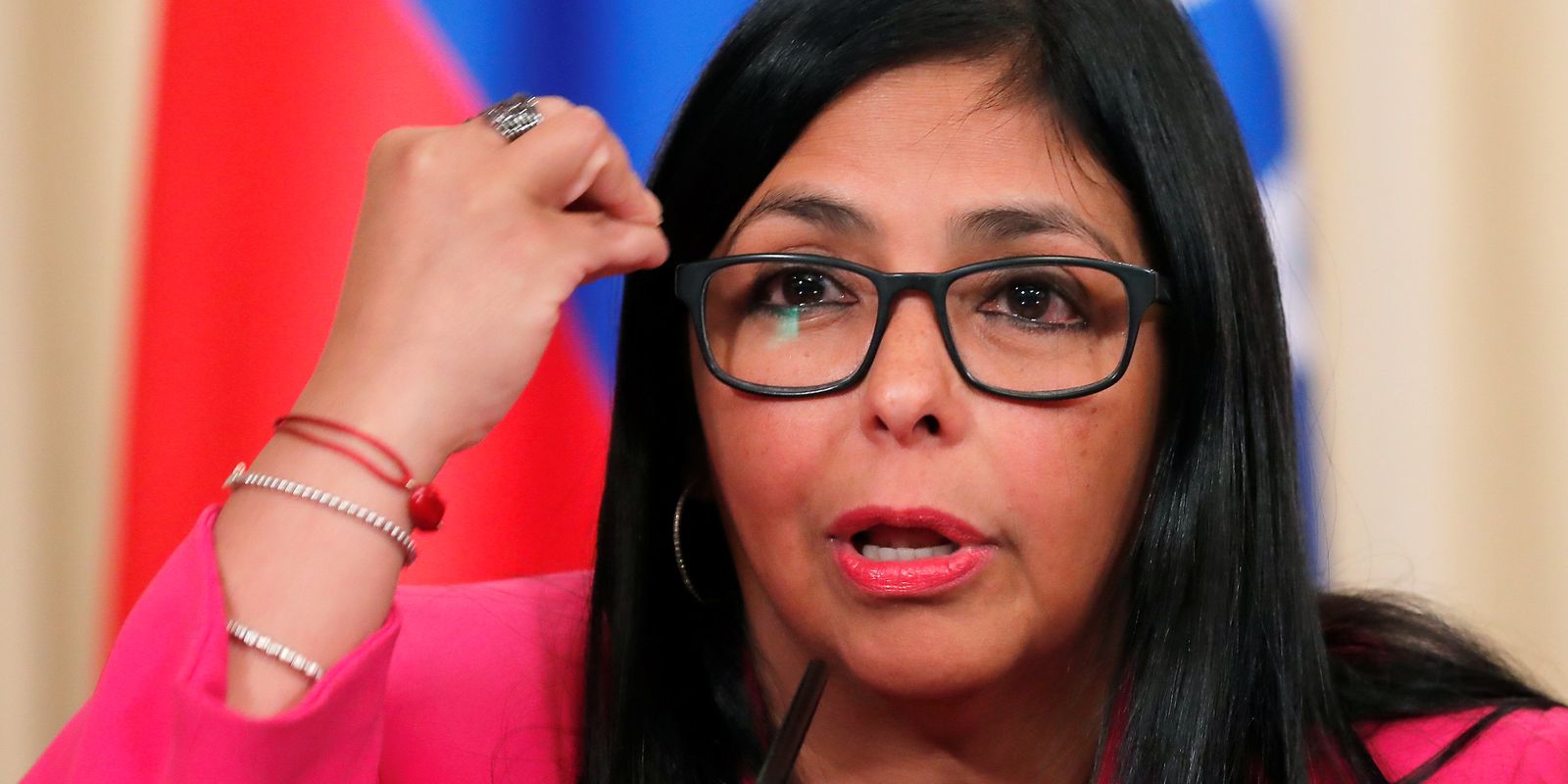
In a public letter addressed to the President of the United States, Donald Trump, the interim president of Venezuela, Delcy Rodríguez (photo), classifies as a priority moving towards a “balanced and respectful” relationship with the North American country, “based on equality and not interference”. 
In the document, published on social media, Delcy invites the US government to work together on a cooperation agenda, focused on shared development, within the framework of international legality and in order to strengthen “lasting community coexistence”.
Dialogue
She says: “President Donald Trump, our people and our region deserve peace and dialogue, not war. That has always been the predicament of President Nicolás Maduro and it is that of all of Venezuela at this moment. This is the Venezuela that I believe in, that I have dedicated my life to.”
The interim president concludes the letter by highlighting that Venezuela has the right to peace, development, sovereignty and the future.
Find out more
On Saturday (3), several explosions were recorded in neighborhoods of Caracas. Amid the military attack, orchestrated by the United States, the president of Venezuela, Nicolas Maduro, and his wife, Cilia Flores, were captured by elite American forces and taken to New York.
The attack marks a new episode of direct North American interventions in Latin America. The last time the United States invaded a Latin American country was in 1989, in Panama, when US military personnel kidnapped then-president Manuel Noriega, accusing him of drug trafficking.
Just as they did with Noriega, the United States accuses Maduro of leading an alleged Venezuelan cartel called From Los Soleswithout providing evidence. Experts in international drug trafficking question the existence of the cartel.
Donald Trump’s government offered a reward of US$50 million for information leading to Maduro’s arrest.
For critics, the action is a geopolitical measure to distance Venezuela from global adversaries of the United States, such as China and Russia, in addition to exerting greater control over the country’s oil, which owns the largest proven oil reserves on the planet.