Average interest rates charged by banks rose for families and fell for companies in November, according to Monetary and Credit Statisticsreleased this Friday (26), by the Central Bank (BC).
In free credit operations for individuals, the highlight of the month were the advances of 5.5 percentage points (pp) in non-conducted personal credit contracts, which rose to 106.6% per year, and 3.2 pp in installment credit cards, which stood at 181.2% per year. There was also an increase of 0.7 pp in the revolving credit card rate, reaching 440.5% per year.
This last modality is one of the highest on the market. Even with the limitation on charging revolving interest ─ in force since January last year ─ interest rates continue to vary, with a reduction of 5.4 pp in 12 months for families. This is because the measure aims to reduce debt, but does not affect the interest rate agreed upon when taking out the credit.
Revolving credit lasts 30 days and is taken by the consumer when they pay less than the full amount of the credit card bill, paying the minimum installment, for example. In other words, you take out a loan and start paying interest on the amount you were unable to repay.
After 30 days, financial institutions pay the credit card debt in installments, using the installment card method. In this case, even with the increase in November, there was also a 2 pp reduction in monthly doses.
As for non-payroll personal loans, which was one of the highlights of the increase in the month, the increase in interest rates in 12 months reached 7.3 pp.
In total, the average interest rate on free credit grants to families increased by 0.9 pp in November, accumulating an increase of 6.2 pp in 12 months and reaching 59.4% per year.
In the case of operations with companies, the average interest on new free credit contracts decreased by 0.6 pp in the month, and increased by 2.8 pp in 12 months, reaching 24.5%.
In this scenario, the monthly drop of 0.7 pp in discount interest on bills and other receivables stands out, which stood at 19.3% per year, and also the 0.7 pp drop in the rate on working capital operations with a term exceeding 365 days, which reached 21.8% per year.
In free credit, banks have the autonomy to lend money raised in the market and define the interest rates charged to customers. Directed credit ─ with rules defined by the government ─ is basically intended for the housing, rural, infrastructure and microcredit sectors.
In the case of targeted credit, the rate for individuals was 10.9% per year in November, stable in relation to October and increasing by 1 pp in 12 months. For companies, the rate fell 2.1 pp in the month and 0.7 pp in 12 months, reaching 11.8% per year.

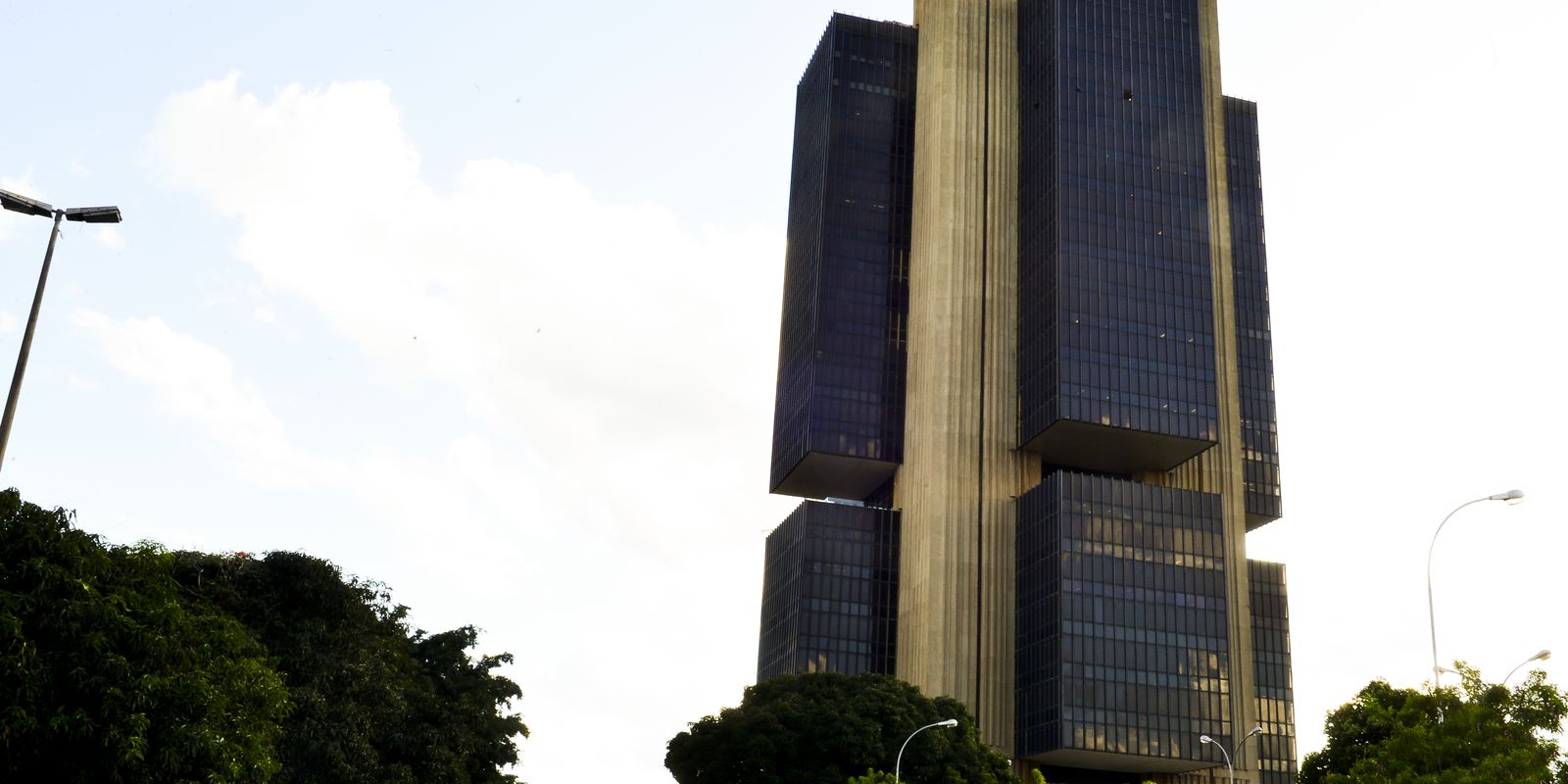
Interest rates on revolving credit and credit cards are the highest. Photo: Marcello Casal Jr/Agência Brasil/Arquivo
Rising interest rates
As a result, considering free and earmarked resources for families and companies, the average interest rate for concessions in November increased by 0.1 pp in the month and 3.5 pp in 12 months, reaching 31.9% per year.
As expected, the rise in bank interest rates follows the cycle of increasing the economy’s basic interest rate, the Selic, set at 15% per year by the BC’s Monetary Policy Committee (Copom).. Selic is the main instrument used by the Central Bank to control inflation.
By increasing the rate, the BC aims to cool demand and contain inflation, because higher interest rates make credit more expensive and encourage savings, causing people to consume less and prices to rise less. The basic interest rate is at its highest level since July 2006, when it was 15.25% per year.
Likewise, the spread banking sector increased 0.3 pp in the month and 2.5 pp in 12 months. It measures the difference between the cost of raising funds by banks and the average rates charged to customers. The spread is a margin that covers operating costs, default risks, taxes and other expenses and thus results in banks’ profits.
Balance slowdown
In November, credit concessions reached R$637.5 billion, a decrease of 6.6%. In the seasonally adjusted series, they fell 1.4% in the month, with reductions of 2.2% in operations with legal entities and 0.6% with families. In 12 months, nominal concessions grew 8.9%, with increases of 9.8% in the corporate segment and 8.3% for individuals.
Therefore, the stock of all loans granted by banks in the National Financial System (SFN) was R$6.971 trillion, an increase of 0.9% compared to October. This result resulted from expansions of 0.3% and 1.2% in credit portfolios for legal entities and families, respectively, whose balances closed the month at R$2.606 trillion and R$4.364 trillion, in the same order.
In 12 months, the SFN credit stock remained on a decelerating path, with an increase of 9.5% compared to 10.2% in the 12 months up to October this year.
Credit extended to the non-financial sector ─ which is the credit available to companies, families and governments, regardless of the source (banking, securities market or external debt) ─ reached R$ 20.341 trillion, an increase of 1.4% in the month, reflecting increases of 2.6% in public debt securities and 0.8% in SFN loans.
In 12 months, expanded credit grew 11.2%, with advances of 19.6% in public debt securities and 9.2% in SFN loans.
Family debt
According to the Central Bank, default rates ─ delays of more than 90 days ─ were 3.8% in November, 4.7% in operations for individuals and 2.3% for legal entities.
Household indebtedness ─ the relationship between the balance of debts and income accumulated over 12 months ─ stood at 49.3% in October, an increase of 0.2 pp in the month and 1.2 pp in 12 months. Excluding real estate financing, which takes up a considerable amount of income, debt was 30.9% in the penultimate month of the year.
Income commitment ─ the relationship between the average value for debt payment and the average income calculated in the period ─ was 29.4% in October, an increase of 0.6 pp over the month and 2.2 pp over 12 months.
The last two indicators are presented with a greater lag from the month of publication, as the Central Bank uses data from the National Household Sample Survey (Pnad), from the Brazilian Institute of Geography and Statistics (IBGE).