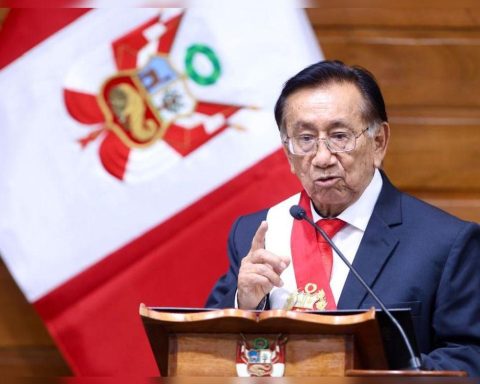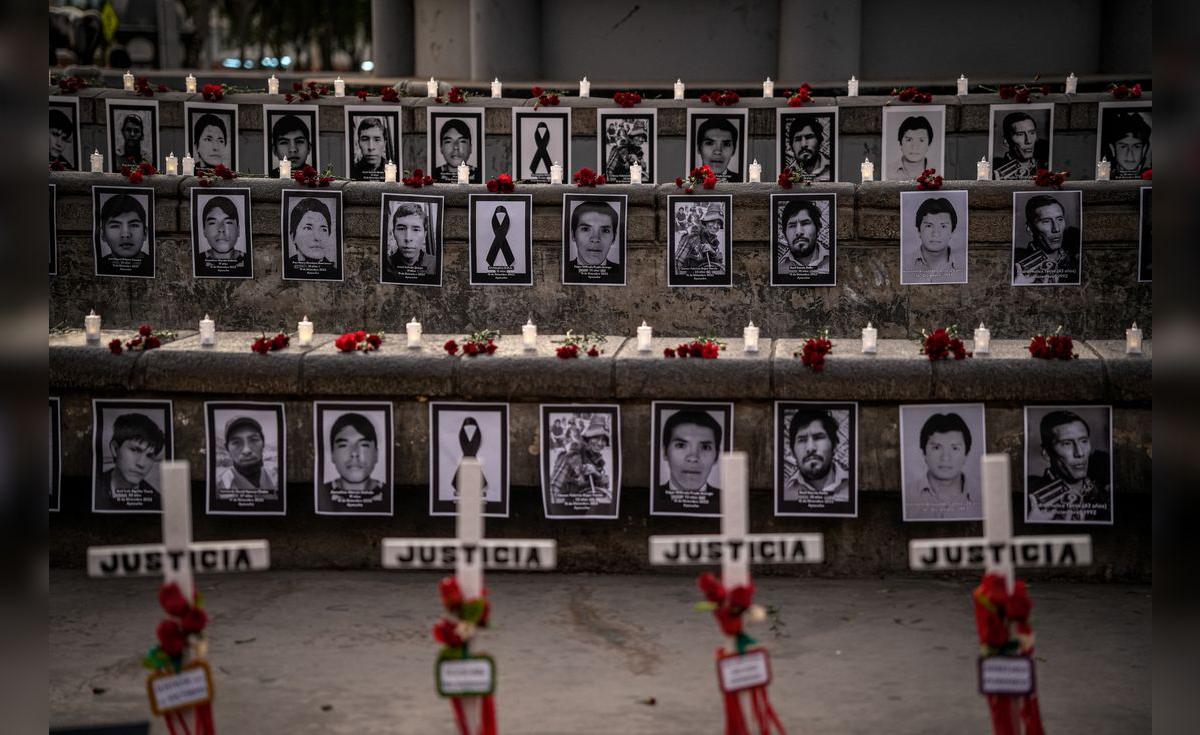
The president of Constitutional Court, Luz Pacheco Gómez, has ordered judges not to apply the American Convention on Human Rights in cases of serious human rights violations committed between 1980 and 2000 in our country. He argues that, since it did not reach five votes in the TC, Law No. 32107, which limits the crime against humanity to July 2002, is constitutional. However, this disregards rulings by the Inter-American Court of Human Rights against Peru against impunity.
listen to the newsText converted to audio
Artificial intelligence
Judges of the Inter-American Court of Human Rights in hearing on Peru. Photo Broadcast IDH Court
Crime of 42 inmates of the Castro Castro prison
On November 25, 2006, the Inter-American Court found the Peruvian State responsible for the death of 42 prisoners for terrorism in the Miguel Castro prison during the Mudanza 1 operationwhich occurred in May 1992, during the government of Alberto Fujimori.
The court noted that at the time the events occurred “the commission of crimes against humanity, including murder and torture carried out in a context of widespread or systematic attack against sectors of the civilian population, was a violation of a peremptory norm of international law.” He highlighted that already in the case Almonacid Arellano against Chile issued two months earlier, the Court established that the prohibition of committing crimes against humanity is a norm of ius cogens, and its criminalization is mandatory in accordance with general international law.
He indicated that the attack on the inmates of pavilions 1A and 4B of the Castro Castro prison occurred in a context of internal conflict and serious violations of human rights in Peru. He stated that it constituted a massacre, because at the time and the subsequent treatment given to the inmates they had the objective of “attacking the life and integrity of said inmates, who were people accused or sentenced for the crimes of terrorism and treason.”
He stressed that these people were held in a prison under state control, which made the government a guarantor of their human rights.
“Therefore, the Court finds that there is evidence to support that the deaths and torture committed against the victims of this case by state agents, for the reasons referred to in preceding paragraphs, constitute crimes against humanity,” the ruling of the supranational court said verbatim. And he added that as it is a ius cogens norm, “the State has the duty not to leave these crimes unpunished and to do so it must use national and international means, instruments and mechanisms for the effective prosecution of such conduct and the punishment of its perpetrators, in order to prevent them and prevent them from remaining unpunished.”
WE RECOMMEND YOU
MARISOL PÉREZ TELLO ACCUSES THE JNE OF EXCLUDING HER IRON BY MISTAKE | TROJ BURNS WITH JULIANA OXENFORD
A teacher and nine students from La Cantuta
Regarding the kidnapping, disappearance and extrajudicial execution of nine students and a professor from La Cantuta University for the Colina Military Detachment In July 1992, the Inter-American Court found the Peruvian State responsible in a ruling issued on November 29, 2006.
He described the events as imprescriptible crimes against humanity. and ordered Peru to investigate, prosecute and punish those responsible, annulling laws of amnesty, prescription and other forms of impunity.
“The events of La Cantuta, committed against victims who were extrajudicially executed or forcibly disappeared, constitute crimes against humanity that cannot go unpunished, are imprescriptible and cannot be included within an amnesty,” the ruling stated.
He explained that the considerations he made in the case Almonacid Arellano and others vs. Chili:
“[…] According to the corpus iuris of International Law, a crime against humanity is in itself a serious violation of human rights and affects all of humanity,” he said. And he added: “[…] Since the individual and humanity are the victims of all crimes against humanity, the General Assembly of Nations has held since 1946 that those responsible for such acts must be punished.”
The supranational court even required Peru to repeal those regulations that generate impunity.
“In compliance with its obligation to investigate and, where appropriate, punish those responsible for the events, the State must remove all obstacles, de facto and de jure, that maintain impunity, and use all available means to expedite the investigation and the respective procedures and thus avoid the repetition of events as serious as the present ones. The State may not argue any law or provision of domestic law to exempt itself from the Court’s order to investigate and, where appropriate, criminally punish those responsible for the events. of La Cantuta”, appears expressly in the ruling of the Inter-American Court.
Disappearance of Kenneth Anzualdo
On December 16, 1993, student Kenneth Anzualdo Castro was kidnapped from a bus he took to go to university, two days before testifying about the disappearance of a fellow student: Martín Roca. Both were allegedly illegally detained and taken to the basements of the Army Intelligence Service (SIE). They were never seen again. They would have been tortured, murdered and burned in the ovens of said military installation.
His case reached the Inter-American Court, which in September 2009 found responsibility in the Peruvian State for the forced disappearance of Anzualdo and ordered it to “remove all obstacles, de facto and de jure, that prevent the due investigation of the facts and the development of the respective judicial processes, as well as use all available means to make them expeditious, in order to avoid the repetition of events such as those in the present case.”
He specified that “this is a case of forced disappearance that occurred in a context of systematic practice or pattern of disappearances perpetrated by state agents, so the State will not be able to argue or apply any law or provision of domestic law, existing or issued in the future, to exempt itself from the Court’s order to investigate and, where appropriate, criminally punish those responsible for the events.”
The ruling went further, as it explicitly said that its prescription or non-retroactivity cannot be invoked: “As this Court ordered since the issuance of the Judgment in the case of Barrios Altos vs. Peru, the State will not be able to reapply the amnesty laws, which have no effects nor will they generate them in the future, nor will it be able to argue prescription, non-retroactivity of the criminal law, res judicata, nor the ne bis in idem principle or any similar exclusion of responsibility, to excuse itself from this obligation.”
The judges of the supranational court, unanimously determined that “no law or provision of domestic law, existing or issued in the future, may be applied to exempt itself from this obligation.”
Compliance monitoring: Barrios Altos
In September 2012, the Inter-American Court issued a resolution complying with its ruling in the case of the extrajudicial execution of 15 people, including an 8-year-old child, on a lot in Barrios Altos, committed by the Colina Military Detachment in November 1991.
Already in 2001, the supranational court ordered the Peruvian State to investigate these crimes and annul the amnesty laws given in 1995 by Congress and promulgated by Alberto Fujimori, which granted forgiveness to soldiers, police and civilians for crimes committed during the internal armed conflict that began in 1980, including serious human rights violations. He specified that they were incompatible with the American Convention on Human Rights.
Already then he maintained that “the amnesty provisions, the prescription provisions and the establishment of exclusions of responsibility that seek to prevent the investigation and punishment of those responsible for serious violations of human rights such as torture, summary, extralegal or arbitrary executions and forced disappearances are inadmissible.”
In the 2012 resolution, it ruled on a Supreme Executive Order issued by the Permanent Criminal Chamber of the Supreme Court of Justice chaired by Javier Villa Stein in July of that year, pointing out that the crimes of Barrios Altos did not constitute crimes against humanity.
In this regard, the Inter-American Court declared that said ruling is incompatible with the commitments acquired by Peru when ratifying the American Convention on Human Rights and with what was ordered by said court in its ruling in the case of Barrios Altos vs. Peru.
He added that “it would present serious obstacles to achieving the ordered reparation measure that relates to the duty to investigate the facts of the present case.”
“Then, if it is not corrected, the violation of the right of the victims or their families to obtain clarification of the violating acts from the competent bodies of the State would continue, through the investigation, trial and punishment of all those responsible,” he stated.
Forced disappearance of Jeremías Osorio
In 2013, the Inter-American Court determined that the Peruvian State was responsible for the forced disappearance of Jeremías Osorio Rivera that occurred in April 1991. Several witnesses saw that he was detained during the Palmira Operational Plan carried out by an Army patrol from the Countersubversive Base of Cajatambo, department of Lima. He described the case as a serious violation of human rights that should not go unpunished.
He indicated that the investigations carried out in the domestic jurisdiction were neither diligent nor effective in determining the whereabouts of “Osorio Rivera, establishing what happened, identifying and punishing those responsible, nor did they respect the guarantee of a reasonable time.”
He explained that in events such as those alleged in this case, in which an operation was carried out, it must “be considered that there are degrees of responsibility at different levels and, however, only one person was investigated for the crime of forced disappearance, who was finally acquitted, without taking into account the allegations regarding physical abuse or the possible participation of other people in the events.”
The Court ordered that the State investigate and determine the responsibility of all the material and intellectual authors of Osorio’s disappearance and apply the sanctions provided by law. Likewise, he urged him to remove “all the obstacles that maintain impunity in this case.” In that sense, he called on the Peruvian State to “refrain from acts that imply obstruction to the progress of the investigative process.”
The ruling emphasizes that “because this is a serious violation of human rights, and in consideration of the permanent or continuous nature of the forced disappearance whose effects do not cease until the victim’s whereabouts are established or his remains are identified, the State must refrain from resorting to figures such as amnesty for the benefit of the perpetrators, as well as any other analogous provision, prescription, non-retroactivity of the criminal law, res judicata, ne bis in idem or any similar defense of responsibility, to excuse himself from this obligation.”