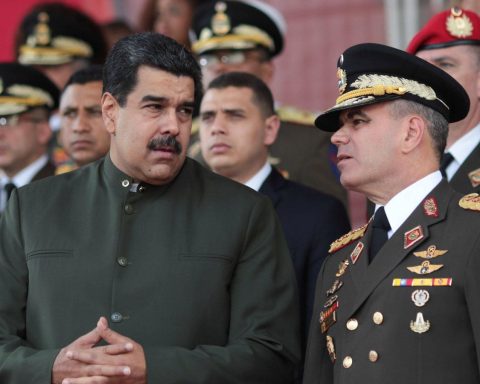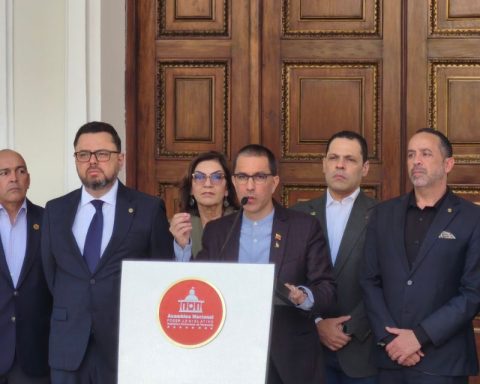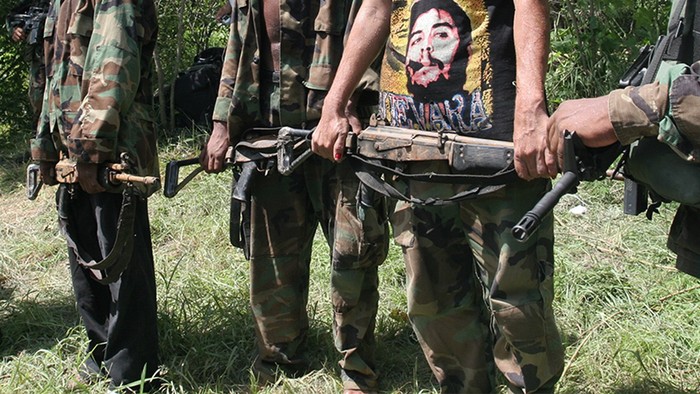
An explosive criminal alliance that crosses borders has been exposed. He National Liberation Army (ELN) operates as a “strategic proxy” and armed wing of the Nicolás Maduro regime in Venezuelawith the support of the terrorist network Hezbollah and the main Brazilian cartels.
The information was revealed by the Colombian media CHANGEwho had access to a report from intelligence agencies.
The document, prepared by the Latin American Hybrid Conflict Analysis Unitand which brings together military intelligence from agencies in the region, points out that the permissiveness and direct support of the Venezuelan regime have turned the ELN into an essential gear for drug trafficking and territorial control.
An alliance of four decades, consolidated for crime
The relationship between the guerrilla and the Venezuelan government dates back more than four decades, allowing leaders of the Central Command (COCE) as alias Gabino, Pablo Beltrán and Pablito They have taken refuge and gathered in Zulia, Apure and Amazonas, under the protection of the Army and the Bolivarian National Guard.
“This organization, (the ELN), under the command of Eliécer Herlinto Chamorro Acosta, alias Antonio García; Israel Ramírez Pineda, alias Pablo Beltrán, and Gustavo Aníbal Giraldo, alias Pablito, has strengthened its presence in Catatumbo, acting as the armed wing of the Venezuelan regime and the Cartel of the Suns,” the report states.
According to interceptions and testimonies, intelligence agencies point to Diosdado Hair as the figure who would control the Cartel of the Suns, using the ELN to expand illicit activities, especially the drug trafficking and gold smuggling.
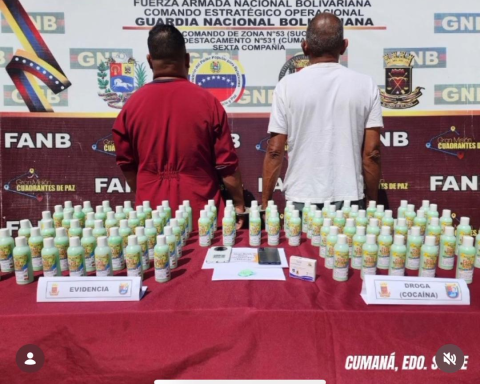
The analyst Andres Villamizar emphasizes that the Bolivarian National Armed Force (FANB) It is the main supplier of weapons, logistics and supplies for the guerrilla, a fact denounced by former Venezuelan soldiers who fled the country.
The global network: from Caracas to the Middle East
The report not only accuses high-ranking Venezuelan commanders – including Major General Jesus Maria Mantilla Oliverosto the admiral Neil Jesús Villamizar Sánchez and the major general Alfredo Roman Parra Yarza– to articulate this network, but also details the international alliances:
- Hezbollah: It plays a key role, facilitating the logistics and transportation of cocaine through Iranian front companies registered as exporters. They use Iranian airline flights Mahan Air to move drug shipments and money laundering from Venezuela to West Africa and Europe.
- Brazilian Posters: There is a solid alliance with the First Capital Command (PCC) and the Red Command (CV)using Amazon and river routes that connect Venezuela with Brazil to distribute cocaine.
“The FANB not only guarantee the supply of resources to the ELN, but also actively participate in joint operations to consolidate territorial control on the Colombian-Venezuelan border,” the document says.
Armed conflict over drugs on the border
The document from the Hybrid Conflict Analysis Unit reveals that, since January 2025, the ELN began a military offensive against the 33rd front of the FARC dissidents, led by aliases John Mechas and Richard.
The cause of the conflict was diversion of a shipment of cocaine intended for General Mantilla Oliveros, which was sold to the Sinaloa Cartel. This incident led to the personal intervention of Diosdado Cabello in the state of Táchira and the deployment of approximately 100 FANB officials to reinforce the ELN. The resulting operations have left at least 80 dead and thousands displacedconsolidating the territorial control of the Cartel of the Suns in Catatumbo.
The denial of the ELN and Venezuela
The Maduro government (which denies the existence of the Cartel of the Suns) and the ELN leadership have rejected these accusations.
The commander of the ELN, alias Antonio Garciahas denied the allegations in his X account, stating that the group “An ELN militant has never been captured with a gram of cocaine” and proposing the creation of a international commission to independently verify the allegations.
However, the report concludes that the network represents a major threat to regional security and requires coordinated response of Colombia and the international community to dismantle this binational criminal structure.