Every time we talk about overcoming poverty in Colombia, experts in the field review the issue from two optics that although they seem distant, over time it has become clear that they go hand in hand and that it cannot be reduced one without attending the other. If you talk about this scourge, you should also talk about inequality.
As for the results obtained in recent years, the country stands out for having great advances that have even allowed this indicator to correct the strong increases that were seen during the pandemic. However, a recent World Bank report warns that achievements are not the same for the entire territory.
Also read: Tax Reform would include the three internal shock taxes: What are they?
María Eugenia Dávalos, a senior economist of this organization, warned that there are currently at least five barriers that hinder that the fight against poverty does not obtain the same results in Bogotá as in, for example, Chocó. That said, puts on the table that inequalities derived from circumstances outside the control of a person, Like ethnicity or birthplace, they are unfair and require special attention.
“The opportunities to have a better education, access to quality health care or better water sources vary widely depending on whether it is an Afro -Colombian who lives in Chocó, an indigenous who lives in Vaupés or a Venezuelan immigrant who lives in Bogotá, ”he said.
This situation was analyzed in the report “Trajectories: Prosperity and reduction of poverty in the Colombian territory ”, which was officially launched together with the University of the Andes and highlights realities such as the socio -economic profiles of the poor in Colombia, persistently reveal that not everyone has the same opportunities as Get out of poverty and prosper.
Poverty report in Colombia – World Bank.
Courtesy – API
Inequalities and accumulation
The first barrier that hinders the fight against poverty in Colombia, according to the World Bank, lies in structural inequalities between populations, and explained that factors such as the place of birth, ethnicity and immigration status directly influence economic and educational opportunities .
“The territorial gaps have been quite persistent. It is especially disturbing that the most prosperous regions of Colombia in the 16th century remain the ones in the best situation today. The 1973 census captured deprivations in basic needs that today, 50 years later, they are still concentrated in the same areas, ”says the report.
More information: The reign is over: the milky is no longer the best pork dish in the world
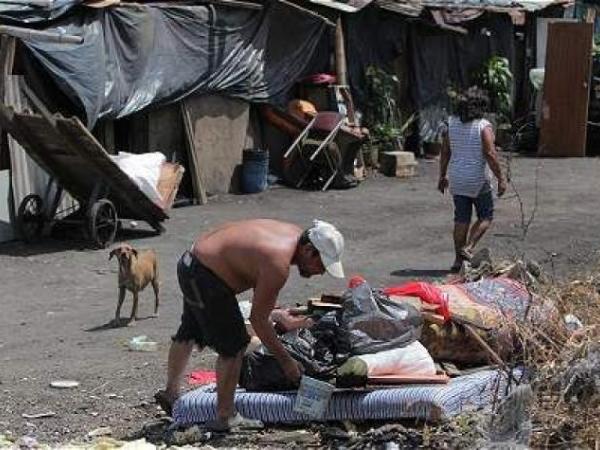
In this sense, they warn that the poorest municipalities have less access to education, health and drinking water, perpetuating inequalities that have persisted for centuries and that will make advances in the medium and long term, if nothing is done to close them with a strategy of Social Attention
Additionally, Dávalos said that the unequal accumulation of assets It limits the productive capacity of many people in the country, putting as an example that although education, health and infrastructure are fundamental to improve economic conditions, in indigenous and Afro -Colombian populations face higher poverty rates and a slower slow reduction of these conditions.
“The departments with higher poverty rates tend to have a lower proportion of formal employment, below 20% in departments such as Nariño, Sucre, La Guajira and Cauca. Many people work in micronegocios, but not all arise from a business business opportunity; Approximately half arise because entrepreneurs have no other income alternative, ”he said.

Poverty report in Colombia – World Bank.
Courtesy – API
Pandemic pumps
World Bank analysts also said that the impact of the Covid-19 pandemic aggravated the situation, reversing a decade of progress in poverty reduction, since for them, the crisis hit with greater force to the middle class and deepened structural problems of the labor market.
“Pandemia caused a serious economic contraction of 7.2 % in 2020, with an important loss of jobs, especially in informal sectors. Government transfers helped mitigate the impact on poverty, but the weaknesses of the labor market were intensified, linked to low productivity and high informality, ”says the report.
Given this, María Eugenia Dávalos recalled that since 2021a downward trend of poverty and the middle class has been resumed has grown slightly, although inflation, especially in food prices, was a challenge for poverty reduction efforts.
It may interest you: They request that Ricardo Roa’s statement in case isa reserved
Absence of the State
Another determining factor that has been constituted as a stick in the wheel when lowering poverty, is the absence of the State in several regions of the country. In this sense, for the World Bank, in departments such as Chocó, Vichada, Guainía and La Guajira, the governmental presence is weak, generating “deserts of services” where access to education and health is limited.
“In addition, the sequels of the armed conflict continue to affect these communities, reducing their human capital and Their citizen participation, which in turn influences the low educational and political performance, ”they said.

Poverty report in Colombia – World Bank.
Courtesy – API
Finally, institutional weakness and inefficient policies hinder the fight against poverty, since for researchers, many local governments lack fiscal and administrative capacity to execute effective programs; While the lack of coordination between municipalities and the central government prevents taking advantage of economies of scale in the provision of services.
“Granular data at the municipal level on poverty, learning, Avoidable mortality, road connectivity and the presence of the State, among other measures, show that the inhabitants of the poorest municipalities have less access to quality education, medical care, water and financial assets and other, ”they said.
Other news: Crier chickens in their courtyards, the solution of Americans due to the lack of eggs
With all this in the panorama, the World Bank made a series of recommendations to boost the equitable struggle against poverty in Colombia, which for them must start by generating a greater investment in human capital and public services in the most lagging regions.
Likewise, they suggest that it is necessary to strengthen institutions to improve local management and efficiency in policy implementation, while proposing to design work strategies that reduce informality and promote productivity, together with differentiated approaches for vulnerable populations as indigenous, Afro -Colombians and migrants, guaranteeing greater equity.