A project by the National Institute for Ocean Research (INPO) envisages the creation of the Thematic Center for Renewable Energy in the Ocean – Blue Energy. Through it, four technologies will be developed for the production of renewable energy offshore (on the high seas): wave energy conversion, tidal currents, ocean thermal gradient (OTEC) and green hydrogen production.
To put the project into practice, the institute recently won a public notice from the Financier of Studies and Projects (Finep) worth around R$15 million.
Emissions reduction
According to INPO, the solutions have industrial application and can reduce emissions in sectors that are difficult to abate, which includes oil and gas platforms, fertilizers, steel, transport and cement. Floating units that currently use turbines powered by natural gas, for example, will be able to replace part of the generation with clean sources produced in the ocean.
INPO’s general director, Segen Estefen, reinforces the strategic potential of the initiative.
“The availability of renewable resources in the ocean and the Brazilian experience in activities offshore are important differentiators. We can transform the ocean into a strategic ally in the energy transition, producing electricity, hydrogen and desalinated water in a sustainable way”, he says.
Scholarships for students
Of the total invested, R$4.3 million will be allocated to research scholarships for master’s, doctoral and post-doctoral students in partnership with four universities: Federal University of Rio de Janeiro (UFRJ), Federal University of Pará (UFPA), Federal University of Pernambuco (UFPE) and Fundação Getúlio Vargas (FGV). The measure seeks to strengthen the training of specialists and expand the production of knowledge in oceanic energy in the country.
Another front of the project physically simulates the production of hydrogen from wind energy offshoreusing desalinated seawater for electrolysis (conversion of electrical energy into chemical energy).
The technology, according to INPO, seeks to solve the problem of intermittency in wind generation, allows energy to be stored in the form of hydrogen and guarantees stability to the electrical system.
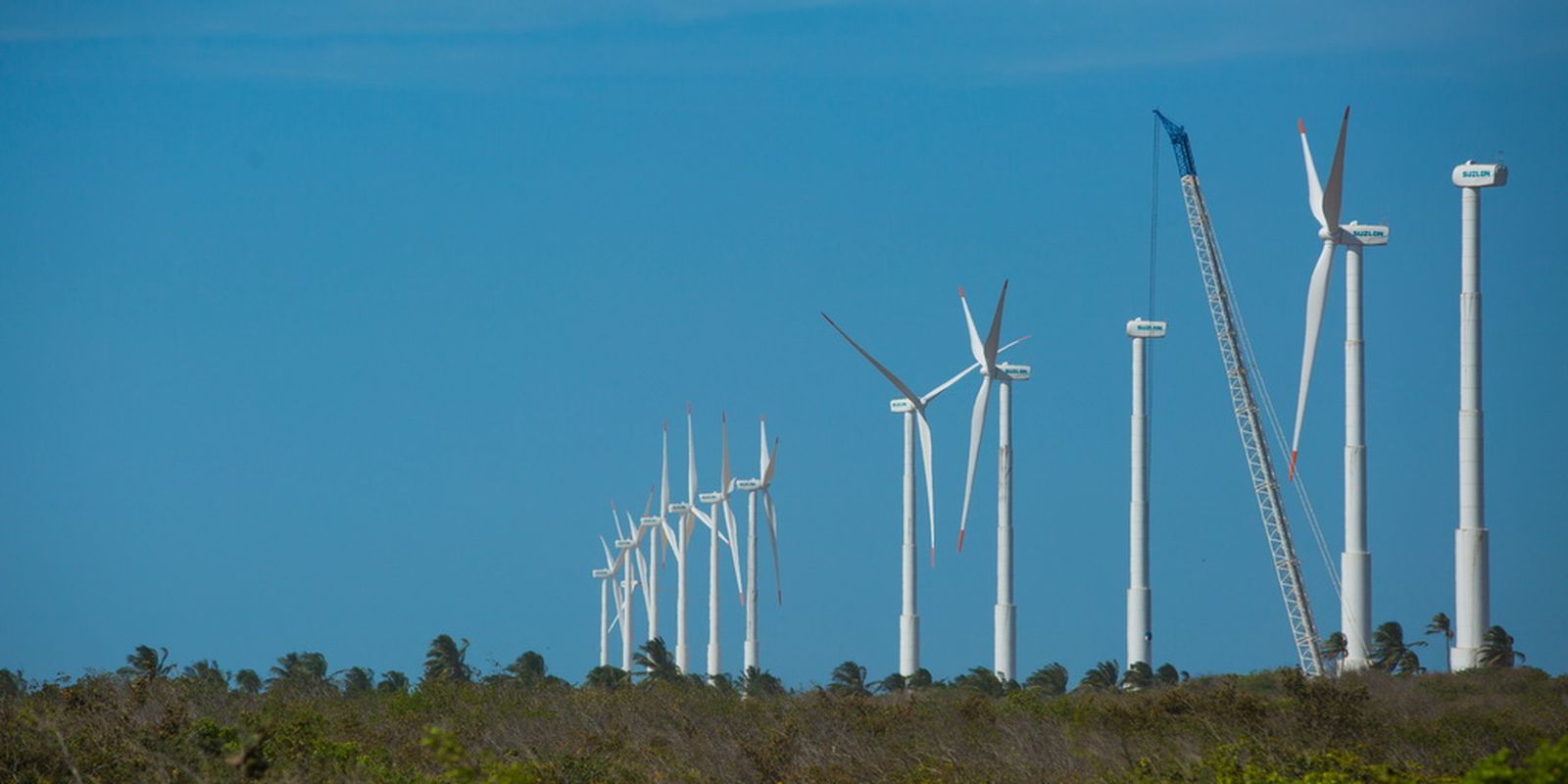
Today, around 250 gigawatts in wind projects offshore are under licensing at the Brazilian Institute of the Environment and Renewable Natural Resources (Ibama). If only 20% are implemented, the Brazilian electrical matrix could gain 50 gigawatts additional capacity – almost a quarter of current national capacity.
The turbine for harnessing tidal currents will be capable of operating both in the ocean and in continuous-flow rivers.
“Even small turbines can reach high installed capacity. This makes it possible to bring clean, continuous energy to isolated communities, solving a historical problem of access to electricity”, says Estefen.
water converter
The project also foresees the development of four pieces of equipment: a wave converter, an Otec system based on the Rankine cycle with ammonia, a hydrogen production module offshore and a tidal current turbine.
Each technology will be designed, built and tested in a laboratory and operational environment, resulting in pilot projects ready for installation at sea.
Estefen also said that the Blue Energy Center will be decisive in raising the level of technological maturity of the solutions.
“Renewable energies offshore They are currently in the pre-commercial phase, which requires advances in technological maturity levels (TRL). The Energy Center will act precisely in this intermediate stage, enabling the proof of concept and the detailing of projects for full-scale application. At the end of the project, for each technology, the delivery of a respective pilot project for installation at sea is contemplated, a step that paves the way for large-scale commercial applications”, concludes the general director.