“Legal, but not ethical”
The identities of most buyers of WLFI tokens are hidden behind opaque “virtual wallet” addresses, the only identifiers that investors use as keys to access and manage their assets. Among the few major buyers whose identities are known — a mix of foreign and American investors — most have histories of legal and regulatory entanglements related to their business ventures. And as the Trump brothers’ travels over the past year demonstrate, foreign investors have been a major target for token sales.
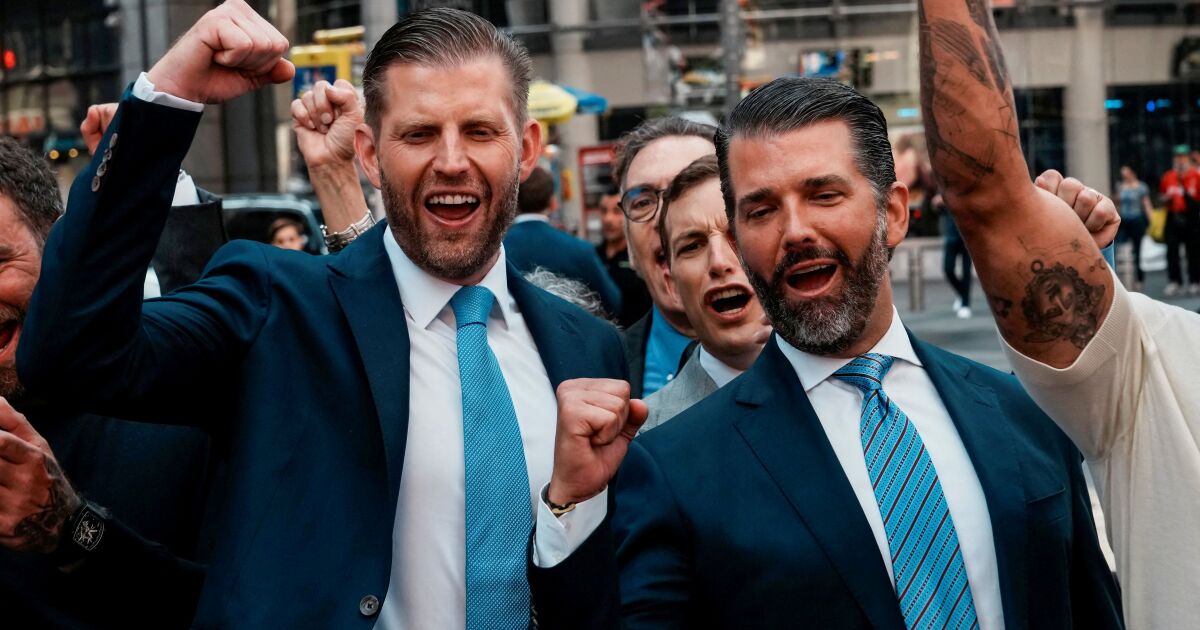
Reuters interviewed half a dozen foreign crypto entrepreneurs who met with the Trump brothers. Five of them said they sought out the younger Trumps for business opportunities because of their proximity to the 79-year-old president and hopes of capitalizing on his political and financial power.
For many other investors, the Trumps’ involvement was an opportunity to cash in on the family name. Dorji Rabten’s Seoul-based venture investment firm Oddiyana Ventures purchased an undisclosed amount of WLFI tokens in January. Rabten said he never met Trump’s children, but the family’s involvement was critical to his investment. “When we first saw the project, we thought it was going to be very big, obviously, given the fact that it is the sons of a president who are in charge of that project,” Rabten told Reuters in September.
The alignment of the Trump family’s crypto initiatives with President Trump’s public role as overseer of American cryptopolitics constitutes a conflict of interest unprecedented in modern presidential history, government ethics experts said.
“These people are not pouring money into the coffers of the Trump family businesses because of the brothers’ acumen,” said Kathleen Clark, a law professor at the University of Washington who specializes in government ethics, commenting on the Reuters findings. “They are doing it because they want the freedom from legal restrictions and the impunity that only the president can offer.”
However, ethicists said that unless the Trump brothers are explicitly promising access or favorable treatment from the president in their sales pitches, they are not breaking any laws. “It’s legal, but it’s not ethical,” said Richard Painter, who was former President George W. Bush’s chief ethics lawyer and is now a professor at the University of Minnesota Law School.
None of the more than a dozen people Reuters spoke to who met with the Trump brothers or their associates said any of them had explicitly offered presidential access or favors in exchange for investing in their family businesses. The White House has repeatedly denied any conflict of interest, and said that upon taking office the president ended his involvement in his businesses after placing them in a trust managed by his children.
Still, as a beneficiary of the trust controlled by the Trump Organization, the president will have access to the money the family now earns when he leaves office.
A White House spokeswoman referred Reuters to the Trump Organization for comment. The Trump Organization’s chief legal officer did not respond to a request for comment. Neither did Eric Trump or Donald Trump Jr.
Parlatore, the World Liberty lawyer, said any suggestion that investments in the firm are motivated by a desire to get closer to President Trump “is a complete lie.” He noted that token purchases on secondary markets — unlike direct purchases from the company — do not benefit the World Liberty team.
blurring the line
World Liberty announces its plans on its website: an app for making crypto deposits, for example, and a lending service backed by cryptocurrencies. But for now, as another player in a crowded field, he has little to offer.
The company has yet to unveil what it announced last year as its core business: a peer-to-peer financing platform capable of challenging traditional banks. Since March, its leaders have actively promoted a stablecoin — a cryptocurrency whose value is pegged to traditional assets like the dollar or gold — called USD1. Although the stablecoin name belongs to World Liberty, the coin is issued and backed by another company that pays World Liberty a portion of the coin’s profits. The currency’s circulation is dwarfed by that of the market leaders.
Additionally, while WLFI holders can vote on limited government matters, the platform is not designed to allow them to claim a share of the benefits. According to two academics who study cryptocurrency markets and a Reuters study of the trading conditions of four of the largest platforms, this is unusual among peer-to-peer cryptocurrency lending platforms.
In July, holders voted to allow trading of the tokens on cryptocurrency exchanges. World Liberty later said that first buyers would only be allowed to sell a maximum limit of 20% of their tokens.
Following the start of trading on September 1, the price of the tokens rose from an initial 31 cents to 46 cents, before plunging 65% three days later. It now trades at about 14 cents.
In his letter to Reuters, Parlatore said that the broader adoption of the stablecoin and other World Liberty products “directly benefits WLFI governance token holders through the established mechanics, which, while complicated, are factual and already operational.” Asked about the details of those mechanisms and how they would benefit token holders, he said in a subsequent letter: “Your proposed article is based entirely on false sources and a misunderstanding of the basic principles.”
In 2021, Donald J. Trump, speaking on Fox Business, criticized cryptocurrencies as a threat to the supremacy of the US dollar and said that Bitcoin “looks like a scam.” Three years later, his opinion on cryptocurrencies has changed. Just weeks before the November 2024 presidential election, he kicked off World Liberty token sales with a social media post: “This is YOUR chance to help shape the future of finance,” he wrote.