The National Consumer Price Index (INPC) rose 0.39% in January, after having registered 0.21% in December. With the resultthe indicator accumulates an increase of 4.3% in the last 12 months, surpassing the figure accumulated until December (3.9%). 
The data was released this Tuesday (10), in Rio de Janeiro, by the Brazilian Institute of Geography and Statistics (IBGE).
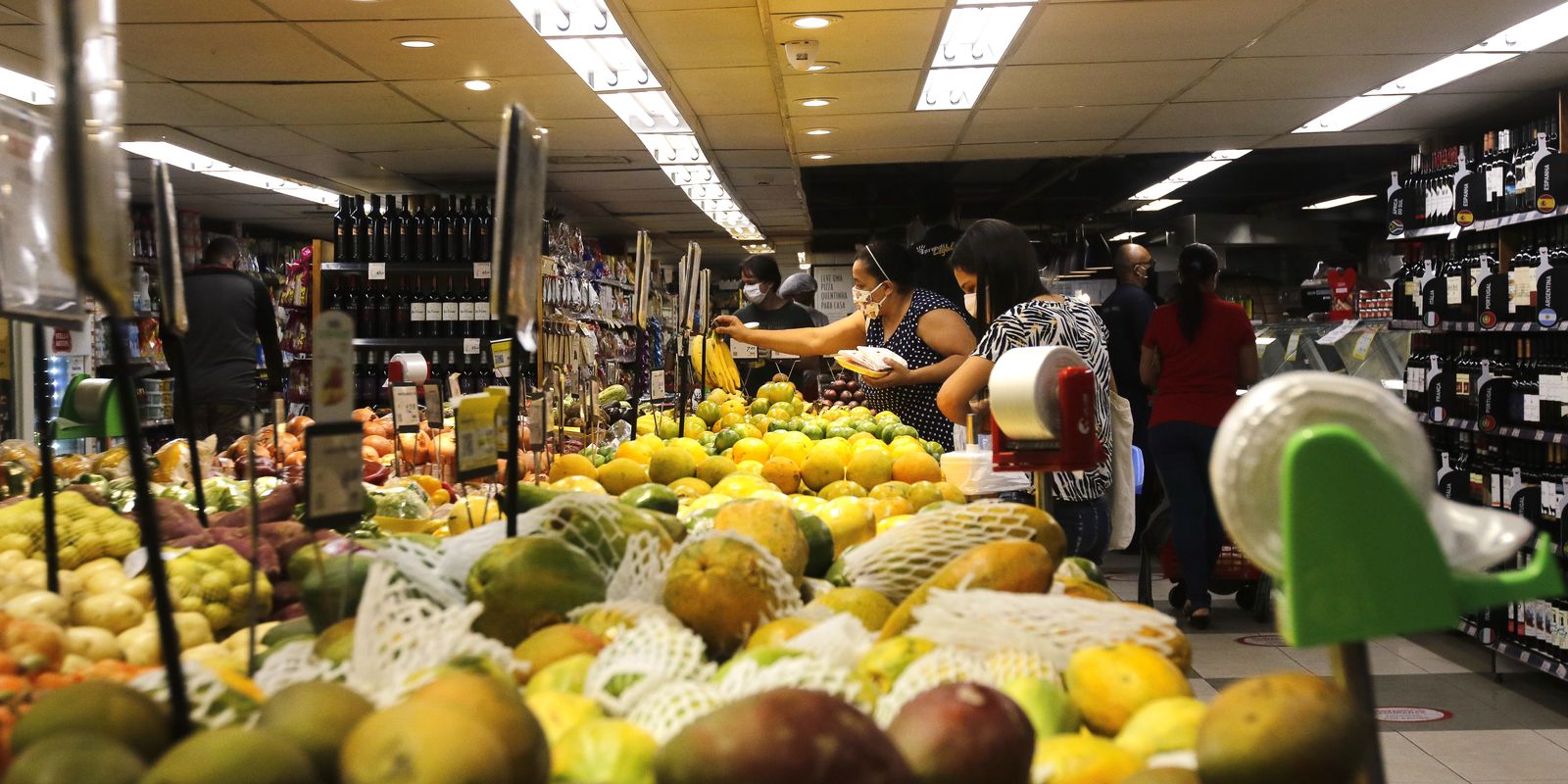
The researchers found that, last month, inflation for food products fell by half compared to December, going from 0.28% to 0.14%.
Non-food items jumped from 0.19% in December to 0.47% in January.
>> Follow the channel Brazil Agency on WhatsApp
Index
The INPC calculates the cost of living for families that receive between one and five minimum wages. Currently, the minimum is R$1,621.
The indicator differs from the Broad National Consumer Price Index (IPCA), known as official inflation, which measures the variation in prices of a consumption basket of families with income up to 40 minimum wages. January’s IPCA it was 0.33%, totaling 4.44% in 12 months.
IBGE gives different weights to the price groups surveyed. In the INPC, for example, food represents around 25% of the index, more than in the IPCA (approximately 21%), as lower-income families spend proportionally more on food. From the opposite perspective, for example, the price of a plane ticket weighs less in the INPC than in the IPCA.
Search
Price collection is carried out in ten metropolitan regions: Belém, Fortaleza, Recife, Salvador, Belo Horizonte, Vitória, Rio de Janeiro, São Paulo, Curitiba and Porto Alegre. The research is also carried out in Brasília, Goiânia, Campo Grande, Rio Branco, São Luís and Aracaju.
The INPC directly influences the lives of many Brazilians, as the 12-month rolling accumulation is usually used to calculate salary adjustments for different categories throughout the year.
The minimum wage, for example, takes November data in its calculation. Unemployment insurance, the INSS ceiling and the benefit for those who earn above the minimum wage are readjusted based on the result of the INPC accumulated until December.
The IBGE maintains that the INPC calculation “aims to correct the purchasing power of salaries, through measuring price variations in the consumption basket of the salaried population with the lowest income”.