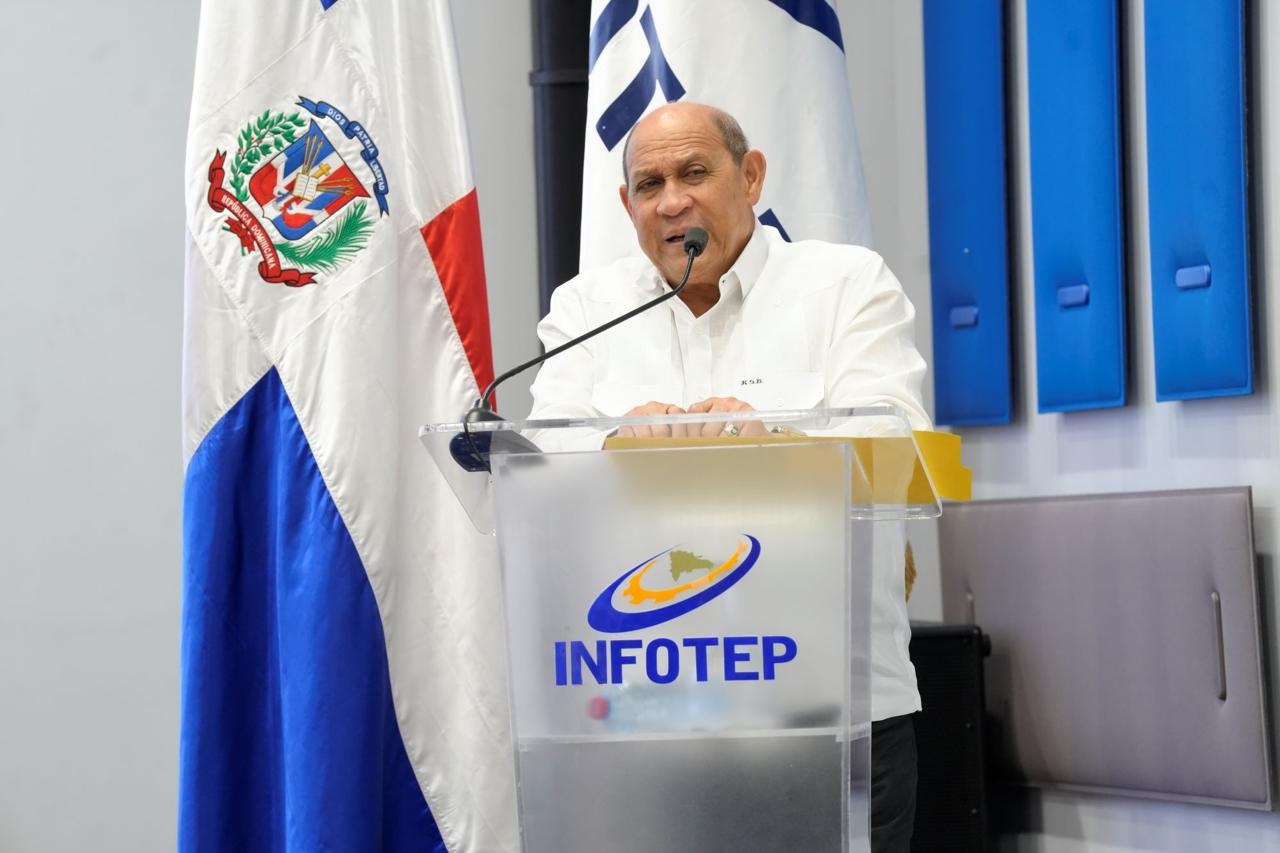
Santo Domingo. The National Institute of Vocational Technical Training (INFOTEP) announced that during the year 2026 will run 49,129 training actions, with a projection of 918,090 participants at the national level, as part of their Annual Operating Plan 2026, approved by the Board of Directors at its session on November 4, 2025.
The plan establishes a process of strengthening and expanding the actions that are already being carried out, aimed at raising the skills of human talent, increasing the competitiveness of the productive sectors and sustainably expanding access to technical-professional training, aligned with the priorities of the country’s economic and social development.
It will also expand direct services to some 5,610 companies from different economic sectors, with emphasis on specific training, dual training, skills certification, technical advice and business innovation programs.
Expansion of coverage and commitment to digital transformation
The 2026 Operational Plan contemplates an expansion of territorial and sectoral coverage, as well as the consolidation of virtual and blended training, with the aim of facilitating access to training, reducing gaps and responding more quickly to the demands of the labor market.
Among the strategic priorities, the strengthening of the training offer linked to Industry 4.0, the development of digital skills, the promotion of innovation and the incorporation of micro-certifications aimed at specific and high-demand skills stand out.
We recommend you read: Infotep expanded its territorial presence during 2025
Training of highly qualified technicians
By 2026, INFOTEP aims to train 18,795 participants in technical careers, through the modalities of continuous training in centers, dual training and training itineraries, prioritizing key areas such as health and well-being, computing and communications, electricity and electronics, hospitality and tourism, commerce and personal services.
Likewise, the plan includes the strengthening of occupational validation services and certification of work skills, with a goal of 3,294 people benefiting through the formal recognition of their previous learning.
Historic investment to strengthen professional technical training
The 2026 Annual Operational Plan will be financed with an income budget amounting to RD$8,402,271,422, of which RD$7,602,271,422 correspond to operating expenses, which represents an increase of 11.45% compared to 2025. Meanwhile, the investment budget reaches RD$800 million, with an increase of 9.52%.
These resources will be destined, among other aspects, to the modernization of the physical and technological infrastructure, the updating of workshops and laboratories, the acquisition of specialized equipment and the execution of strategic innovation and sustainability projects.
Alignment with national development and tripartite governance
The 2026 Operational Plan is aligned with the Institutional Strategic Plan 2025-2028, the National Development Strategy 2030, the Sustainable Development Goals and the main public policies of the Dominican Government, especially those related to decent employment, digital transformation, territorial cohesion and innovation.
The approval of the plan by the Board of Directors of INFOTEP, a tripartite governance body made up of representatives of the State, the business sector and the labor sector, reaffirms the institutional commitment to relevant, quality training oriented to the productive development of the country.
Santo Domingo. The National Institute of Vocational Technical Training (INFOTEP) announced that during the year 2026 it will carry out 49,129 training actions, with a projection of 918,090 participants nationwide, as part of its 2026 Annual Operational Plan, approved by the Board of Directors in its session on November 4, 2025.
The plan contemplates the strengthening and expansion of the actions already carried out by the institution, aimed at raising the skills of human talent, increasing the competitiveness of the productive sectors and sustainably expanding access to technical-professional training, in line with the priorities of the economic and social development of the country.