The inflation year-on-year in the formal market in Cuba stood at 14.95% in November, according to official data, published by the National Office of Statistics and Information (ONEI).
This is a slight drop compared to October (15.41%), which breaks an upward trend in recent months, according to a report from the agency. EFE.
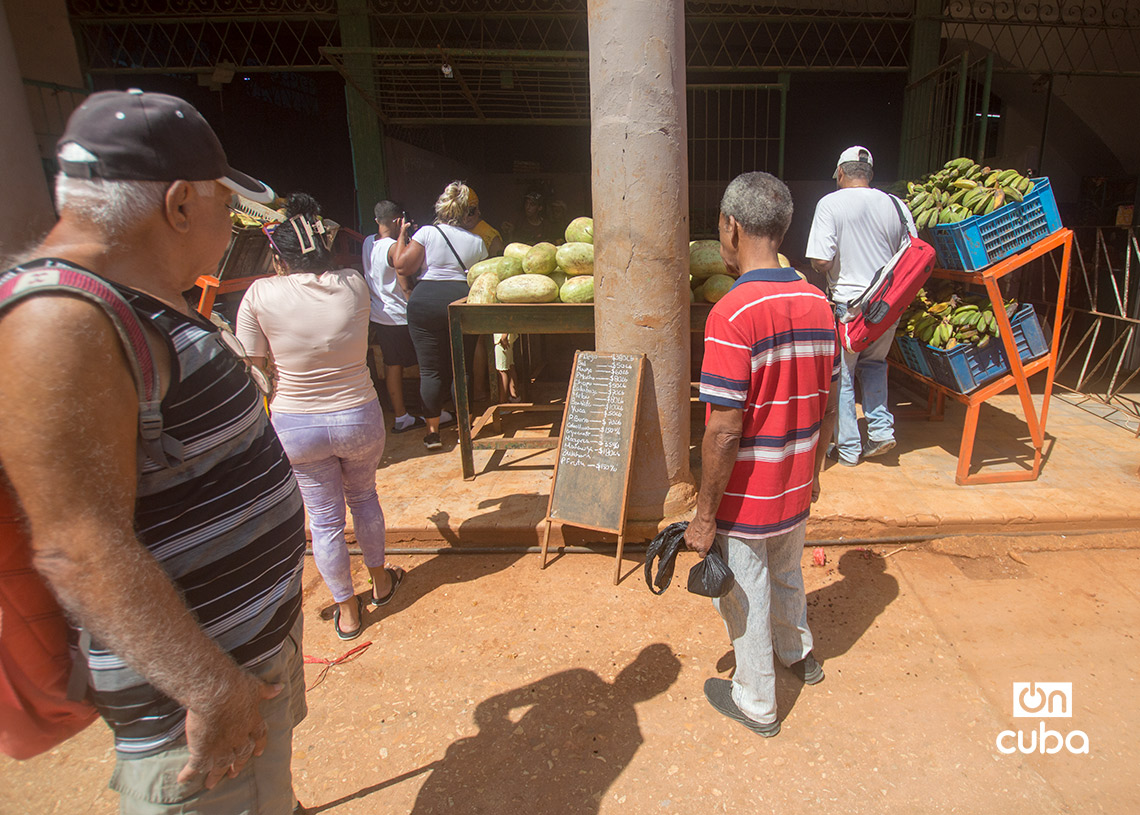
Nevertheless, ONEI figures They do not take into account the majority and best-stocked informal market, which blurs its effectiveness in the precarious socioeconomic panorama of the island.
The consumer price index (CPI) continues to be well below that recorded in November 2024, when it was at 27%. The monthly variation compared to the previous month was 1.01% and the accumulated variation was 13.07%.
By category, the year-on-year increase in Alcoholic Beverages and Tobacco (87.95%) stood out, followed by Restaurants and Hotels (23%), Education (16.40%), Housing Services (14.39%), Food and non-alcoholic beverages (14.43%), Furniture and household items (13.07%), and Miscellaneous Goods and Services (13%).
The Communications sector (0.48%) remains the least inflationary category despite the strong rise in rates applied on May 30, which substantially raised the prices of additional mobile phone recharges, generating protests and controversy.
Other estimates in the midst of the crisis
According to estimates by Cuban economist Pavel Vidal, cited by EFE, real inflation on the island in 2025 “would be around 70%.” This data, the agency says, does take into account the prices and dynamics of the informal market.
Inflation has tripled prices on the island since 2020, according to official statistics. The consumer price index (CPI) closed in 2021 above 77%; while in 2022 it stood at 39.07%; in 2023, at 31.34%, and in 2024, at 24.88%.
Cuba has been mired in a serious economic and energy crisis for more than five years, visible in the shortage of basics such as food, medicine and fuel, high inflation, economic contraction, growing dollarization and prolonged daily blackouts.
The national economy contracted 1.1% in 2024 and added an accumulated fall of 11% in the last five years, according to official data. ECLAC also expects its gross domestic product (GDP) to be negative this year.
The combination of the COVID-19 pandemic and the tightening of United States sanctions, together with internal deficiencies and the failed economic and monetary policies carried out in the country, have aggravated the structural problems of the Cuban economy.
The situation has caused social unrest, evident in the unusual protests of recent years and in a wave of migration unprecedented in scale and duration.
EFE / OnCuba