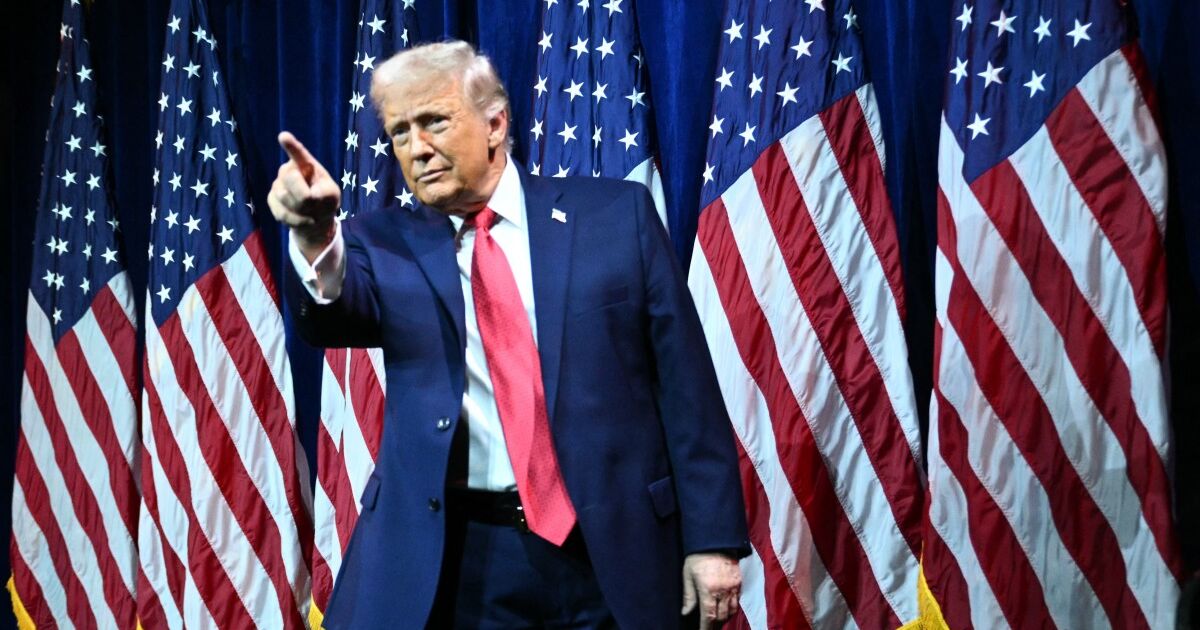
In the latest AP-NORC poll, only 31% of adults approve of his handling of the economy, its lowest level in the US president’s second term.
Although border security, one of the strong issues on the Republican’s agenda, remains relevant, with 50% approval, the Voter dissatisfaction is concentrated in the deterioration of purchasing power and the inflation expectations.
Despite the recent improvement in both prices and economic growth, data from the University of Michigan shows “substantial uncertainty about the economic future.” And long-term price anxiety persists. For the consumer, this translates into difficulty in predicting how much their savings or salaries will yield in the future, which keeps them at levels of doubt higher than those of 2024.
A deteriorated image in a decisive year
The deterioration of consumer confidence and the fact that only 17% of Americans consider that their income is better than a year ago are situations that may persist during 2026 and increase political pressure on Donald Trump.
In its outlook for the year, Morgan Stanley warns that tariffs and pre-election stimuli can reignite inflation, just when voters are most sensitive to the cost of living.
In an analysis, Actinver also highlights that the application of tariffs and a more aggressive immigration policy have already had costs in the president’s approval. This background increases the political risk towards the review of the USMCA, where any trade tightening could deepen the economic discontent of the American voter.
The pressure on the White House to show visible economic results explains the emphasis on rate cuts, investment and strategic projects, as well as a tougher trade speech
Enrique Covarrubias, chief economist at Actinver.
In the scenario in which Democrats achieve a majority in the House, the institution warns that Trump would face greater political restrictions to promote profound trade changes, which would increase uncertainty around the USMCA and tariff policy.
Recent averages indicate that Democrats have about a 4.7-point lead over Republicans in general voting intention for the House (e.g., 45.1% Democrats vs. 40.3% Republicans), according to polls compiled by Decision Desk HQ, RealClearPolitics and Race to the WH, showing that there is a political challenge to Trump in November 2026.
Inequality also weighs, since according to Moody’s Analytics analysis, until the second quarter of 2025, approximately 10% of households with the highest income represented 49.2% of total consumer spending in that period, the highest level recorded since 1989.
Another report from the Dallas Federal Reserve confirms the trend by observing that the top 20% of the income distribution represents about 57% of total spending. This may explain why in recent months expectations for the consumption of durable goods plummeted 40 points between January, when Donald Trump took office, and November 2025.
The OECD, in its latest update in December 2025, projects a slowdown for the United States in 2026, with GDP growth of 1.5%, affected by tariffs, lower immigration and cuts in public spending, although investment in AI persists, inflation would remain above 2% until mid-2026, with possible rate moderation.