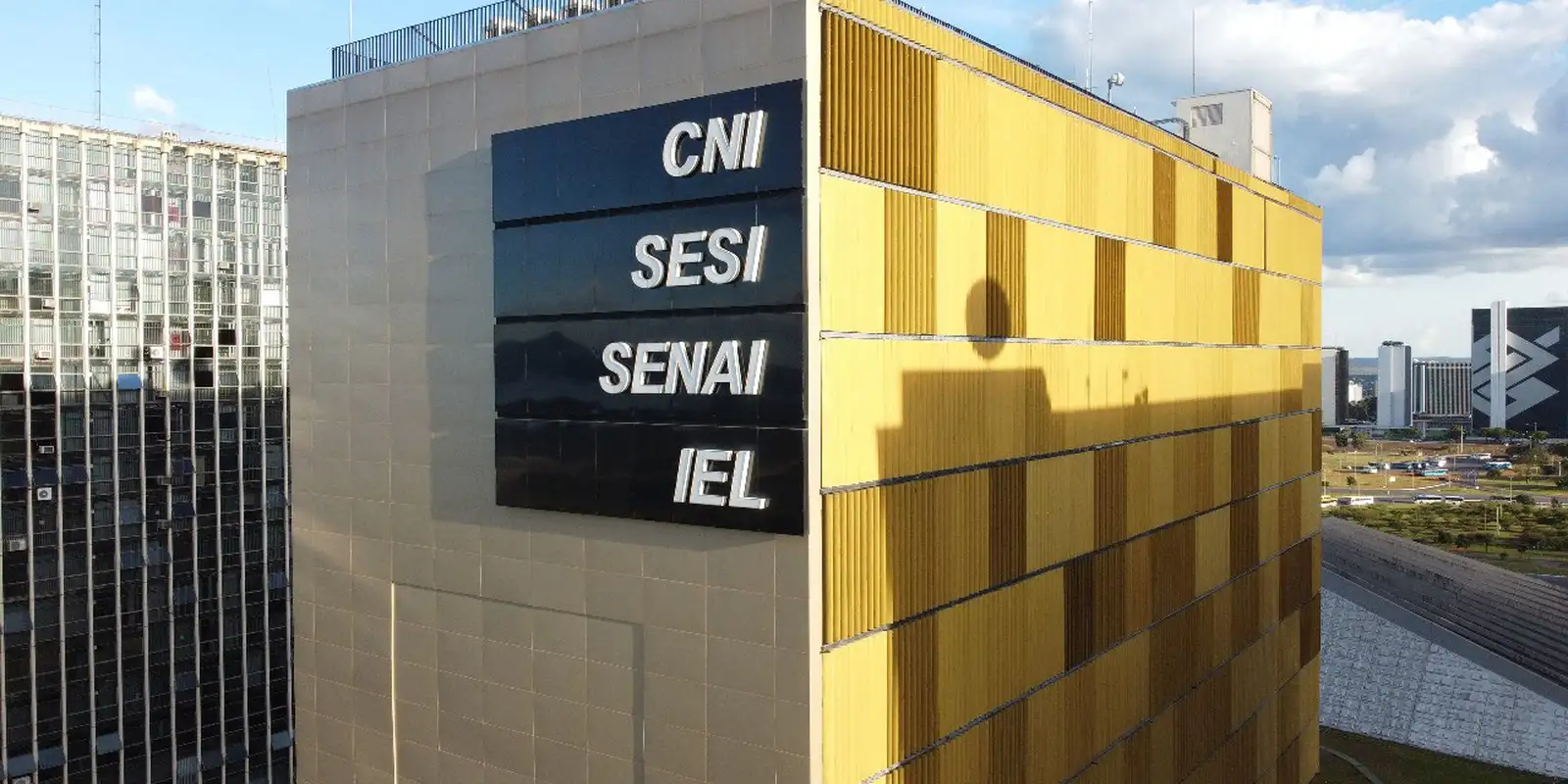
Brazilian industrialists articulate with American entrepreneurs a joint action to pressure the government of Donald Trump to negotiate the tariff with the Government of Brazil. Industrialists are in the United States in a delegation led by the National Confederation of Industry (CNI).
The mission participates in the leaders of the Federations of Industries of Minas Gerais (FIEMG), Paraná (FIEP), Paraíba (FIEPB), Rio de Janeiro (Firjan), Rio Grande do Norte (Fiern), Santa Catarina (FIESC), Goiás (Fieg) and Sao Paulo (FIESP).
“The Brazilian industrial sector has articulated with American partners to also press the US government in search of a consensus to overcome the crisis. We are working together for both governments to feel at the table and find a way out of this impasse,” said Fiemg President Flávio Roscoe.
In addition to representatives of industrial associations, CNI’s international mission, which had meetings in Washington, US capital, yesterday and Thursday (4), has approximately 80 Brazilian and 50 American businessmen.
“The immediate result is the strengthening of the synergy between entrepreneurs and the construction of a joint work that will yield fruits. I believe that this effort in each country will be able to mobilize political forces in the right direction to overcome this crisis,” added Roscoe.
According to FIEG President André Rocha, The intention of entrepreneurs’ action is to be able to reduce rates or increase the list of exempt products from the tariff.
“We are dealing with the counterparts, the US Chamber of Commerce, US Chamber, precisely to try to reduce tariffs or also get a new exception list.”
Face political misconceptions
CNI President Ricardo Alban stressed that the Mission seeks to establish technical criteria for negotiation, but also fight political misconceptions between the two countries.
“What we want here is to ensure a gateway, ensure that a negotiating table can exist and that at this table the technical, commercial and economic arguments can have their preference, they can have their importance and, therefore, we create alternatives to face possible understandings or misconceptions that come from the political or geopolitical order,” he said.
Political interference
The tariff is part of a series of actions from the United States to try to interfere with the trial of former President Jair Bolsonaro and allied by the attempted coup d’état. The performance of the licensed deputy Eduardo Bolsonarowhich is living in the United States, in favor of sanctions against Brazil and Brazilian authorities, was investigated by the Federal Police and the Attorney General’s Office.
You Americans opened a commercial investigation against Brazil and adopted 50% rates on imports of Brazilian productslevel among the highest announced so far in the trade war promoted by Donald Trump.
In addition, the agent signed an Executive Order (OE) in which Brazil considers an unusual and extraordinary threat to US National Security, a classification similar to those considered hostile to Washington, such as Cuba, Venezuela and Iran.
Brazilian government measures
THE Federal Government announced on the last day 13 a series of measures to support companies, exporters and workers affected by the overcutments imposed by the United States against Brazilian products.
Calls of Sovereign Brazil Plan, the measures intend to strengthen the productive sector; protect workers; and advance in diplomatic, commercial and multilateral solutions.
Among the main actions are new lines of credit. Only from the Export Guarantee Fund will be R $ 30 billion, as announced by President Luiz Inacio Lula da Silva.
Resources will be used as foundry For the granting of credit with affordable rates and also to expand the financing lines to exports. Most affected companies will preference to obtain credit, taking into account the dependence on revenues in relation to exports to the US; Product type; and the size of a company.
In the case of small and medium enterprises, they will also be able to resort to guaranteeing funds to access credit. The government points out that access to lines will be conditional on job maintenance.
Also planned are R $ 4.5 billion in guaranteeing funds; and R $ 5 billion in credit for the new special regime for reintegration of tax values (New Reintegra).