Alejandro Malagón, president of Concamin, explained in the work tables convened by the Economy Commission of the Chamber of Deputies that the traffic light divides the fractions into three levels. Green for areas with solid national production and growth capacity. Yellow for sectors with limited supply, but with potential. Red for activities without a productive base, where a tariff would only increase costs.
The objective is to order the entry into force of the plan and increase its effectiveness. This mechanism would apply to inputs, intermediate goods and final goods.
“We welcome this tariff initiative because we consider that it is part of an industrial policy that the country needs and that is aligned with Plan Mexico and an intelligent import substitution policy. We believe that, well implemented and intelligently, it can translate into greater employment and greater production,” he said.
Concamin delivered to the Ministry of Economy an inventory of sensitive sectors that covers steel, aluminum, textiles, footwear and paper. Malagón added that the discussion cannot ignore a critical point: customs. Undervaluation and smuggling weaken any adjustment. A suit declared at $1 shows that a tariff loses force if there are no solid controls. For industrialists, customs modernization becomes the essential complement to the plan.
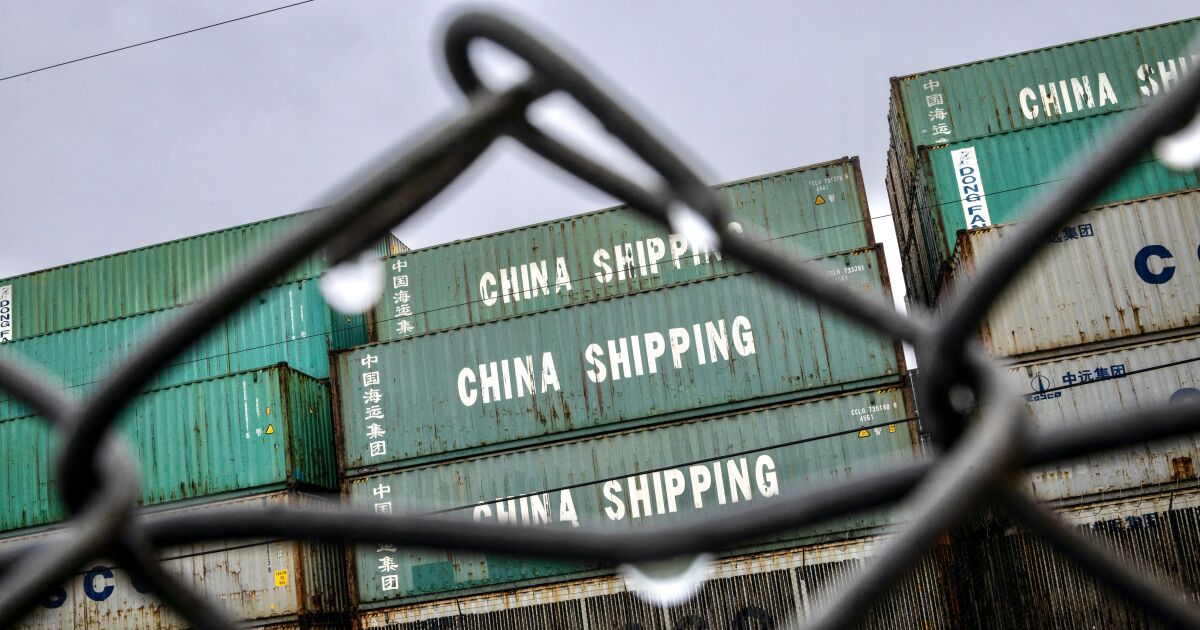
Vietnam appears as another risk factor, since tariffs would not apply due to its participation in a shared treaty with Mexico. The country is advancing its tariff reduction within the Comprehensive and Progressive Agreement for Trans-Pacific Partnership, but hosts the operations of numerous Chinese companies.
The industry fears a triangulation that would allow the entry of Chinese merchandise with a Vietnamese facade. The effect would reduce the scope of the presidential adjustment.
Tariffs with technical criteria
The Ministry of Economy defended the technical criteria of the tariff package being analyzed by Congress and stated that the new tariffs will not affect sectors with a high dependence on a single supplier. Luis Rosendo Gutiérrez, Undersecretary of Commerce, explained that half of the package corresponds to final goods and the other half to inputs, and explained that the design sought to avoid risks for the industrial operation.
The official pointed out that one of the main objectives was to prevent an input from being subject to a tariff when most of its supply comes from a country without a trade agreement with Mexico.
“We were not going to say: ‘Hey, we are going to impose tariffs on third countries with which we do not have trade agreements, but what do you think? We are going to impose that tariff on a country that has 95% of the supply of that product. Well, we are lost; it would put us, that industry, in a very delicate situation.’
Gutiérrez explained that Economía established a technical threshold: no input included in the 1,463 fractions of the package presents a dependency equal to or greater than 50%. Everyone has at least one supply alternative in another country and, in many cases, with two, three, four or even five options. The analysis sought to guarantee that companies maintained real access to essential inputs and avoid an involuntary blow to the production chain.
The undersecretary added that, in recent weeks, the Secretariat detected cases where alternative supplies also come from countries without a trade agreement with Mexico. That finding opened a new review process to define exceptions and adjustments requested by the president of the Economy Commission. The instruction consists of ensuring that each industry has competitive conditions during the tariff transition.
Gutiérrez affirmed that Mexico respected the maximum levels allowed by the World Trade Organization. He stressed that the country remains within international rules and that the reform does not exceed the tariff ceilings recognized in that framework.
The undersecretary highlighted that the consultation forums with the sectors convened by Congress seek to refine the package with the proposals of each one. “We want a tailored suit together with Congress. We want industries to maintain their competitiveness and not face risks due to lack of inputs,” he stated.
Economía reported that it will continue working together with the Economy Commission of the Chamber of Deputies to define the final opinion that will be sent to the Plenary Session.