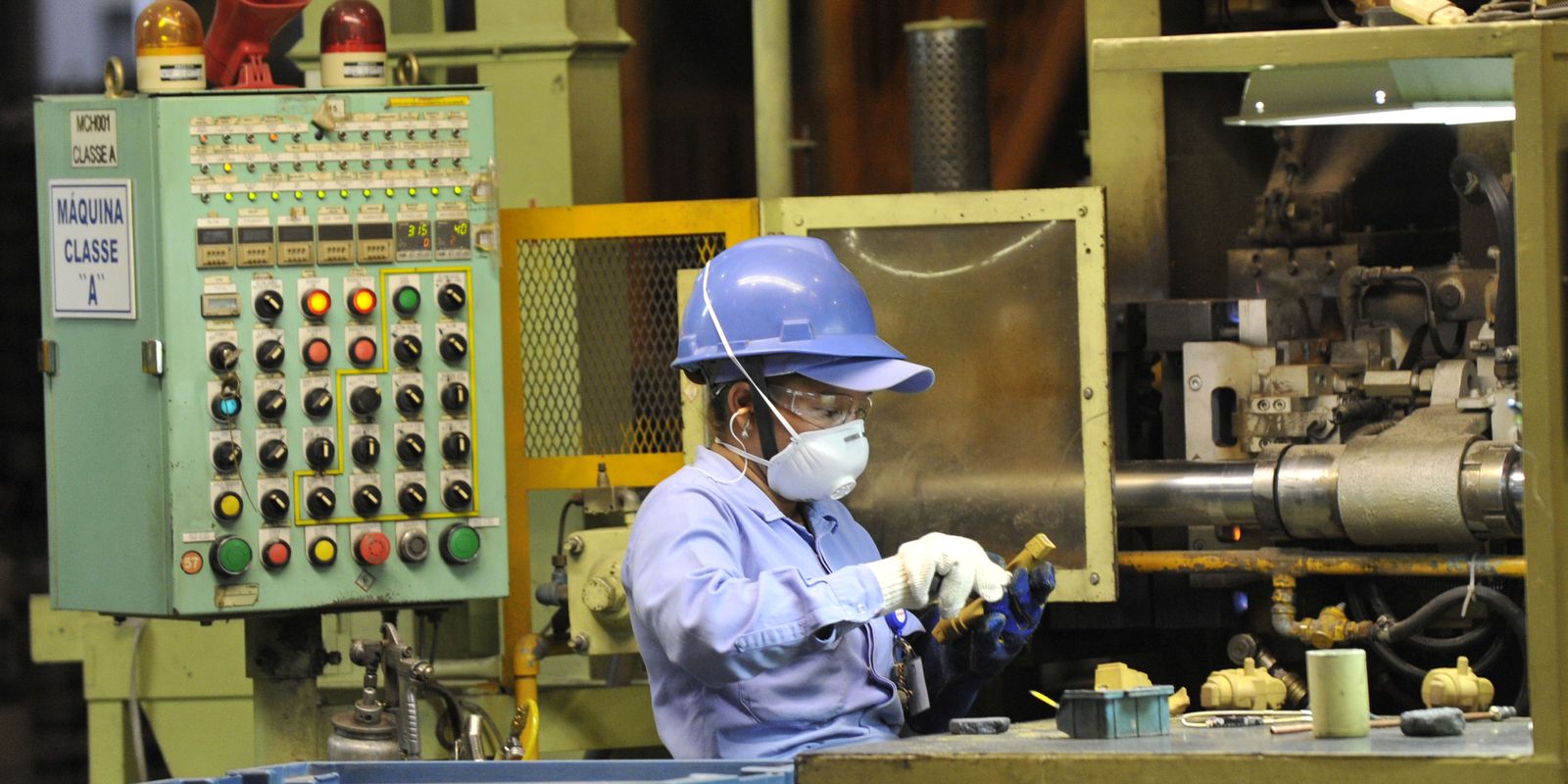
Brazilian industry production fell 0.4% from August to September. The result eliminates part of the 0.7% growth that had been recorded in August. Compared to September 2024, industrial production grew 2%. In the last 12 months, the sector has increased by 1.5%.
The data is part of the Monthly Industrial Survey, released this Tuesday (4) by the Brazilian Institute of Geography and Statistics (IBGE).
September’s performance places the industry at a level 2.3% above the pre-covid-19 pandemic period (February 2020) and 14.8% below the highest point ever reached, in May 2011.
Influences
IBGE found that from August to September, there was a decline in production in 12 of the 25 industrial activities surveyed. The negative highlights were:
- pharmochemical and pharmaceutical products (-9.7%)
- extractive industries (-1.6%)
- motor vehicles, trailers and bodies (-3.5%)
Among the activities that grew, the biggest influences were:
- food products (1.9%)
- tobacco products (19.5%)
- wood products (5.5%)
Effect of interest
In the period from April to September, the industry had four negative results. The August data is the most intense decline since May (-0.5%).
According to the research manager, André Macedo, the industry’s lower intensity behavior in recent months is explained by the high interest rates.
“This causes investment decisions by companies to be postponed, as well as consumption decisions by families”, explains the researcher, adding that high interest rates make credit difficult and tend to increase defaults.
The basic interest rate in the country, the Selic, is 15% per year, the highest level since July 2006 (15.25%). The rate is decided by the Monetary Policy Committee (Copom) of the Central Bank (BC), which defends the high level to combat inflation, which accumulates 5.17% in twelve months.
Since September 2024, inflation has been above target ceiling from the government, which goes up to 4.5%.
By cooling the economy, high interest rates tend to reduce demand for goods and services, in order to curb inflation. The side effect is the obstacle to job creation and economic growth.
Tariff
According to the IBGE manager, it was also observed that some industrial companies justify the drop in production because of the American pricingwhich increased taxes on part of Brazilian products sold to the United States. But Macedo explains that the research cannot measure the size of this specific effect.
The tariff began in August and, in the view of the American government, has the role of protecting the American economy. President Donald Trump even claimed that it was also retaliation for Brazil’s treatment of former president Jair Bolsonaro, whom Trump considered to be persecuted, before being condemned by the Federal Supreme Court (STF), in September, for an attempted coup d’état.
In recent weeks, the Brazilian and American governments have held meetings as a way of seeking agreements for the business partnership.