The Peruvian fishing industry faces a legal paradox that puts jobs, investment and revenue at risk. The most serious thing is that the State itself, called to protect constitutional rights, has generated this problem.
The Law of Protected Natural Areas (ANP), approved in 1997, seeks to conserve continental and marine spaces without absolutely prohibiting existing economic activities. Its article 23 establishes that the ANP may have direct use areas, where the use of wild flora and fauna, including fishing, is allowed under regulated conditions.
For this reason, the Nazca Dorsal National Reserve, created in 2021, expressly authorizes larger-scale fishing up to 1,000 meters deep through technical zoning that protects the seabed and allows regulated extractive activities in the surface area. Its design included Imarpe, Sernanp, Produce and various NGOs, which showed that conservation and sustainable fishing can coexist.
However, in September 2021, Sernanp approved a directorial resolution that absolutely prohibits larger-scale fishing in all ANPs. This measure contradicts the ANP Law itself and the technical model of the Nazca Ridge, approved just three months before.
“The person who determined the vertical zoning system to protect the seamounts and establish the 1,000 meters as a direct use zone in the Nazca Ridge was the Peruvian Sea Institute. And that is what is sometimes not wanted to be recognized,” said Héctor Soldi, former president of Imarpe.
popular action
The National Fisheries Society presented a popular action pointing out that the resolution violates the normative hierarchy: a directive cannot prohibit what a law allows. The position of the SNP is the same as the ANP Law, that fishing can be carried out on a larger scale in certain zones and areas up to certain limits with the respective controls of Sernanp.
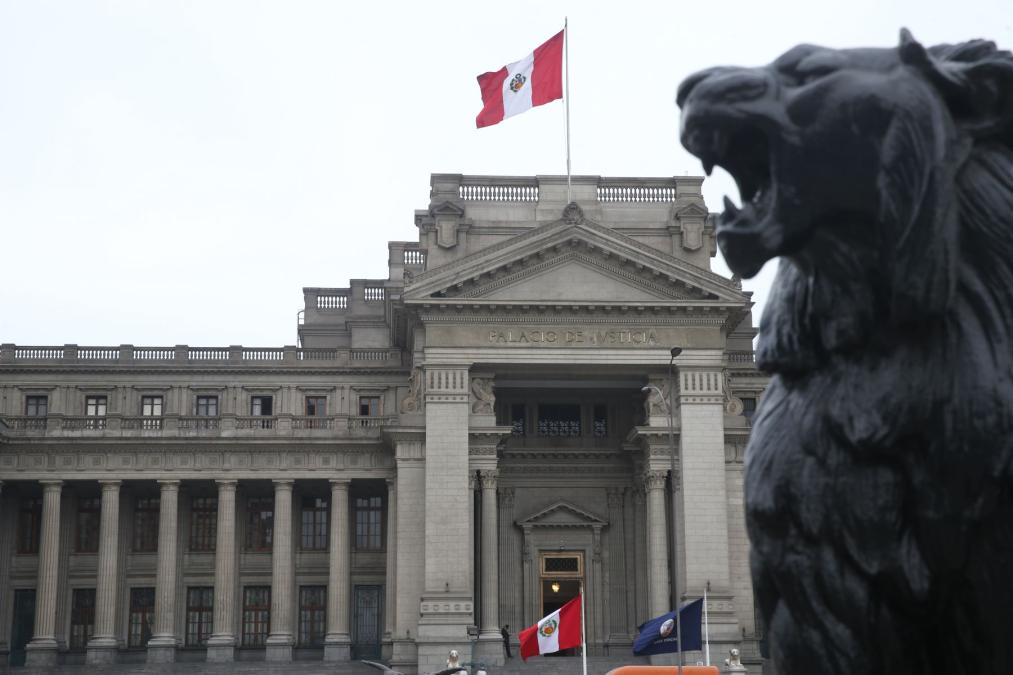
The Constitutional Chamber of the Supreme Court evaluated the case, in which contradictions were evident in the defense of the State. Attorney Luis Alberto Huerta acknowledged that in the Nazca Ridge it was decided to “seek harmony between the protection of the environment with the exercise of economic freedoms,” implicitly admitting that absolute prohibition is not the only constitutional alternative. Despite this, he defended the directive that prohibits all large-scale fishing in the ANP.
Ernesto Blume, representative of the Single Fishermen’s Union, maintained that the contested rule “has unconstitutionality defects” and affects thousands of workers. He also questioned its rationality: “The Peruvian sea is immense and has natural wealth in all its spaces; a prohibition of this nature seems irrational.”
The controversy shows that the debate is not whether the ANP should be conserved – there is a consensus on this – but how to do it. The alternative already exists in Peruvian legislation: case-by-case regulation, master plans and zoning based on scientific evidence, as in the Nazca Ridge.
The Supreme Court must decide whether an administrative directive can prohibit what a law allows and whether an absolute prohibition without technical support or a balanced regulation should prevail. Its ruling will have an impact on 250,000 direct jobs, 3,500 SMEs and, above all, on the defense of the principle of regulatory hierarchy in a rule of law.
“Clearly, there is an excess in the powers of Sernanp”
Interview with Aníbal Quiroga, constitutional lawyer
The National Service of Protected Areas (Sernanp) prohibits large-scale fishing in protected natural areas. Is it compatible with the Law of Protected Natural Areas (ANP)?
The provisions of Sernanp, which have been regulated according to a directive, are a secondary norm that cannot go against the law. They are invading legal powers and cannot establish a ban on something that is permitted by law, because they are not authorized to do so, in addition to affecting investment and fishing activity that is being carried out legally.
So, a directive or a regulation cannot prohibit something that the law does not prohibit?
In the Constitution there is a legal framework that establishes the normative hierarchy and indicates that the prohibitions and regulations that must be made must have the same legal framework as the norm that regulates them, in this case the law. So, there is clearly an excess in Sernanp’s powers to establish these restrictions. They are outside their powers to the extent that a directorial resolution is contradicting a norm established by a law of Congress.
Is prohibiting an economic activity constitutional in our country?
It is constitutional to the extent that it is within the powers of the person who prohibits it, but since it does not have powers and does not have reasonableness, it is absolutely unconstitutional. It is as if the Municipality of Chorrillos prohibits traffic on the streets of Chorrillos. It is not its responsibility to establish that and it is not reasonable, it cannot prohibit free transit. In this case, fishing activity is free within the framework of the law. The administrative authority cannot, through a resolution of a lower hierarchy, establish prohibitions where the law does not establish them.
What is the constitutional standard for limiting economic rights and in which cases is an absolute prohibition appropriate?
When, for example, it is justified from a reasonable point of view. For example, you cannot establish a gasoline tap 200 meters from a school or a hospital, or you cannot establish a casino near a school or university. When there is a reason that justifies the limitation of the constitutional right, because it is said that constitutional rights are not absolute, they have limitations that maintain the legal order and, on the other hand, reasonableness. I can prevent a person from walking over a cliff because it is dangerous, but I cannot prevent them from walking on the street. But in the case we are talking about, no reasonableness applies.
What would the judges in the Supreme Court who are evaluating the amparo action against the Sernanp ban have to take into account?
That the general rule is economic activity and the exception is restriction, and not the other way around. And regarding this general rule, clearly, fishing activity cannot be limited without reasonableness that justifies the exception. The exceptions are specific, assessed and justified. Freedom is unrestricted to the extent that it does not affect a restriction that is supported by a technical report and also with a specific legal competence. For example, I have the right to walk, but I am not going to walk on private property, because there is an exception to that. The limitation of traffic is regulated by order, security, and conditions, but it cannot be prevented.
Receive your Perú21 by email or Whatsapp. Subscribe to our enriched digital newspaper. Take advantage of the discounts.
RECOMMENDED VIDEO