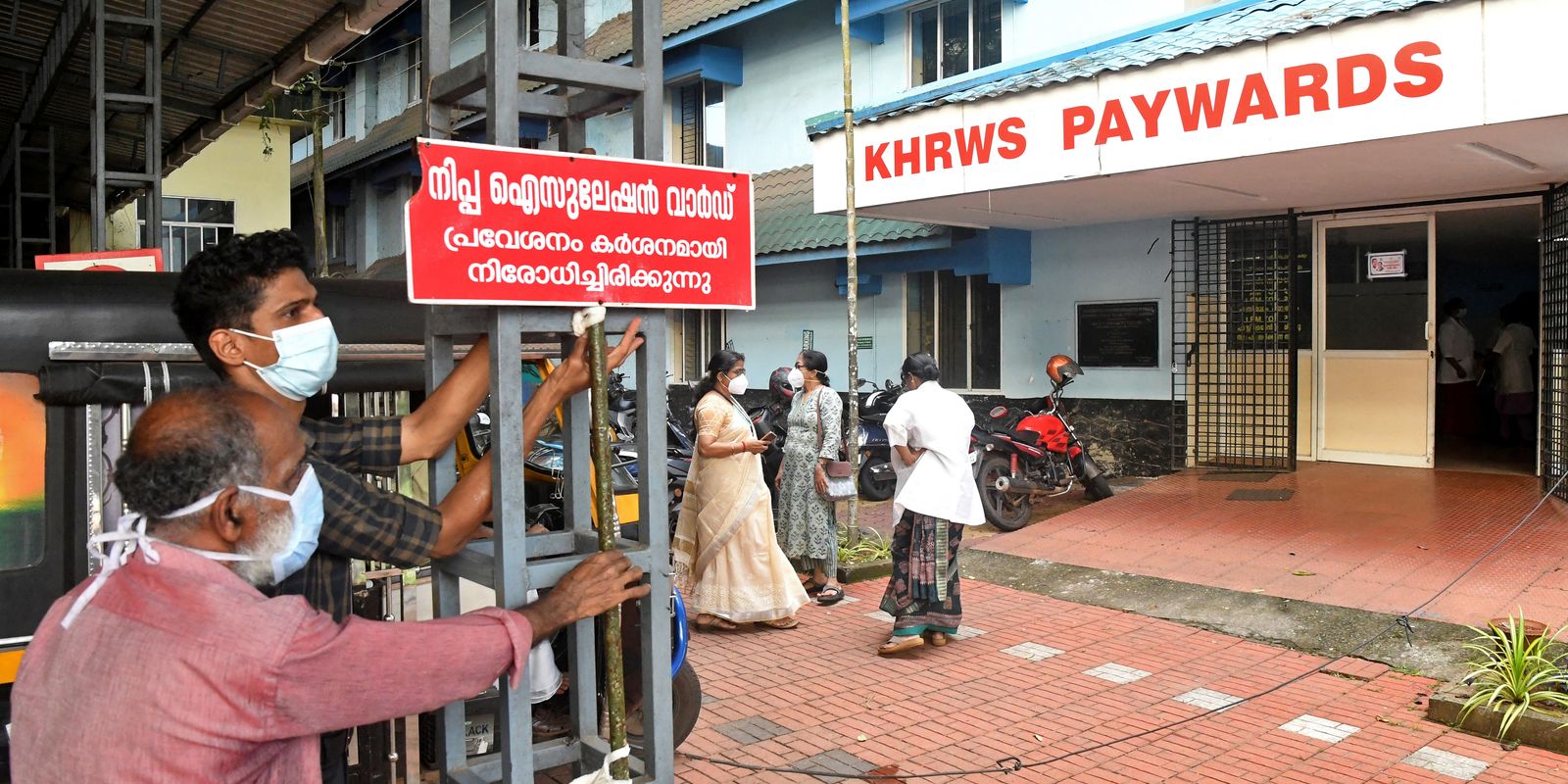
Health authorities in India have been monitoring an outbreak of the Nipah virus in the province of West Bengal in recent days, where five cases have been confirmed among healthcare workers at a hospital.
Around 100 people were quarantined in this health unit, according to the Reuters news agency, which also reported that neighboring countries ─ Thailand, Nepal and Taiwan ─ had increased precautionary sanitary measures at airports.
Nipah has been identified other times in Southeast Asia. According to the World Health Organization, it was discovered in 1999, in an outbreak among pig farmers in Malaysia, and is regularly detected in Bangladesh and India.
Consultant for the Brazilian Society of Infectious Diseases, Benedito Fonseca explained, in an interview with Brazil Agencywhich The incidence of this virus is repeated in India due to environmental and cultural factors and the forms of transmission limit its reach, compared to microorganisms that caused pandemics such as Covid-19 and influenza.
For the infectious diseases professor at the Ribeirão Preto School of Medicine at the University of São Paulo (USP), the potential for the virus to spread across the planet and cause a new pandemic is small.
The virus is classified as zoonotic, as it is transmitted mainly from animals to humans and also through contaminated food. The natural reservoir of this virus are species of bats that have been found in Asian countries, such as Cambodia, India, Indonesia and Thailand, and also in Africa, in Ghana and Madagascar.
Nipah can be transmitted through contact with contaminated bats, fluids from their bodies or fruits contaminated by them. Cases of transmission between humans, through contact with secretions and during the care of infected patients in hospital environments, have also been reported.
Environmental and cultural factors
Benedito Fonseca highlights that the virus frequently reappears in regions of India, which is linked to the presence of bats, the region’s flora and the population’s eating habits.
“At this stage of the year, the date palms that exist in this region produce a very sweet sap, which bats love. This sap is also consumed by people, who generally drink it pure, without boiling or pasteurizing.”
The researcher describes that bat saliva contaminates the sap, which consequently transmits the antigen to whoever ingests it.
“Another possibility is that bats feed on fruit, and these contaminated fruits, whether through urine, feces or saliva, fall to the ground. Other animals, mainly pigs, feed on these fruits and end up getting the disease”, he adds.
Symptoms
The World Health Organization indicates that the symptoms of the disease can be severe, such as fatal encephalitis, and that lethality can be greater than 40% of cases.
Initial symptoms include fever, headache, muscle pain, vomiting and sore throat. Worsening may be accompanied by dizziness, drowsiness, altered level of consciousness and neurological signs that indicate acute encephalitis. Some people may also experience pneumonia and serious respiratory problems.
“These people normally develop encephalitis, with a drop in general condition, fever, reduced level of consciousness and so on. And it really has a high fatality rate. Unfortunately, there is no vaccine nor is there any treatment for this virus. Treatment is simply symptomatic treatment.”
Dissemination
The infectious disease specialist points out that even though there are reports that the virus can also be transmitted through secretions from infected people, there is a lower potential for spread at a pandemic level, compared to respiratory-transmitted viruses such as Covid-19 and measles.
“Viruses normally have a very intimate relationship with their reservoir. And this bat has a large distribution in Asia, but it has no distribution in Europe or the Americas. I believe that the pandemic potential, of distribution throughout the world, is small”, he assesses. “But there is no doubt that there is the possibility of a potential or an epidemic outbreak, as is happening in India right now.”
Despite this, Fonseca advocates that the situation be monitored, because the virus’s incubation time allows an infected person to travel long distances before symptoms appear.
“From the moment of infection to the appearance of symptoms, it takes around four days. It is possible for a person to become infected in Asia and come to Brazil, for example, or to other parts of the world, and develop the disease. And they can transmit the disease.”