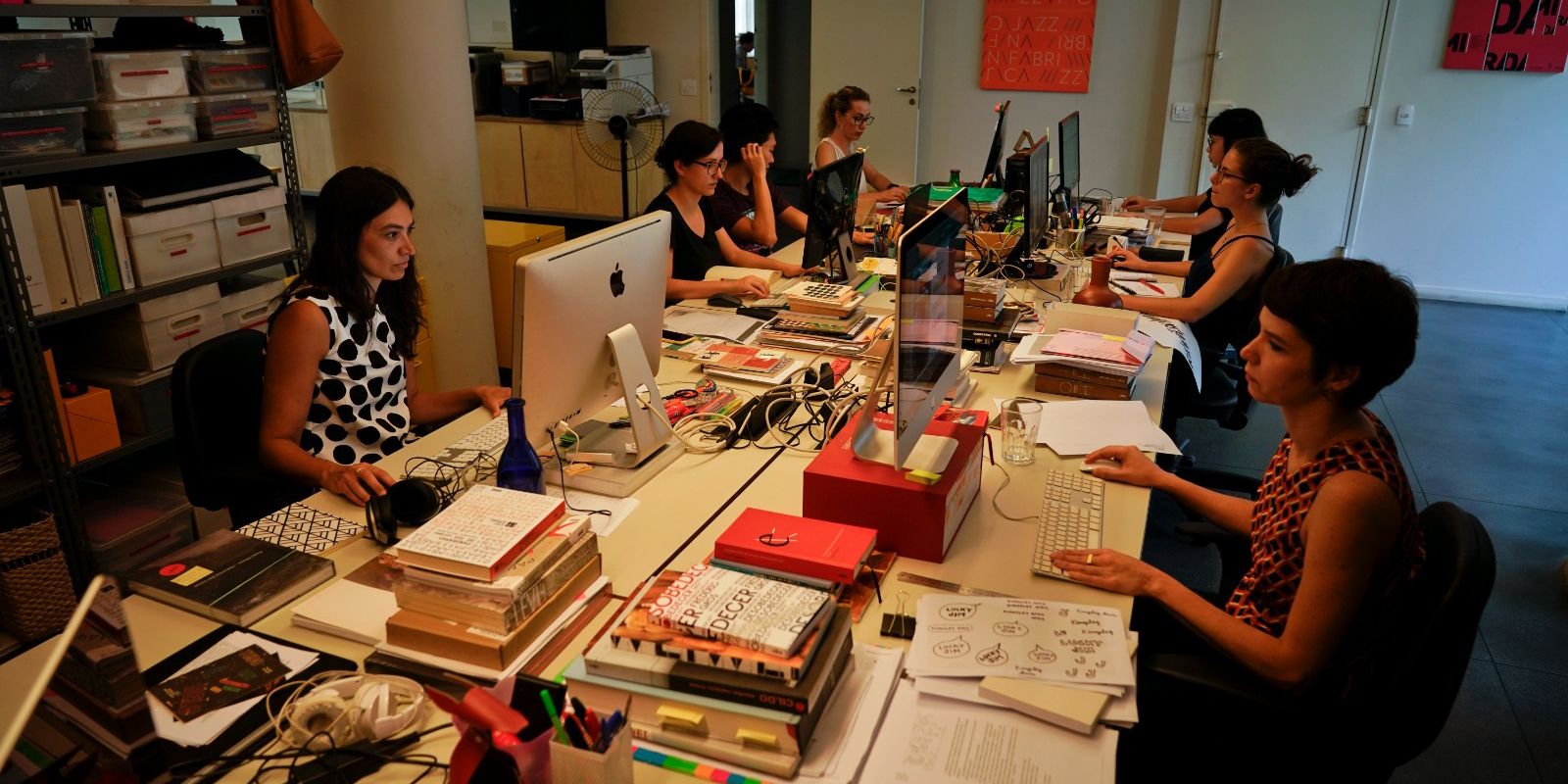
Independent publishers and street bookstores took different paths from large conglomerates and developed strategies to guarantee the quality of publications and overcome the economic challenges of the publishing and bookselling market in the country. Including larger companies, the sector generates at least 70 thousand direct jobs in the country, according to a survey by the Brazilian Book Chamber (CBL).
Professionals interviewed by Brazil Agency point to the promotion of culture in the country and the generation of jobs and income as positive impacts of these businesses. However, they mention the need for public policies aimed at disseminating reading, as well as tax incentives to maintain these entrepreneurs.
Despite the lower investment capacity, these businesses achieved results such as expanding the catalog of authors available in the country, including translations of globally recognized contemporary works that had no space in large publishers.
There was also a rapprochement with the reading public through strategies such as crowdfunding, book clubs and the use of social networks.
“Independent publishers are marginalized in the market. So, they are always trying to transform this market”, says the editor and publisher from the publisher Autonomia Literária and the magazine Jacobina, Cauê Seignemartin Ameni.
The flourishing of independent publishers began around 10 years ago, reports Cauê, who is also one of the organizers of the Festa Literária Pirata das Editoras Independentes (Flipei). “The independent sector has always been very marginal and, then, it came with force after 2015”.
After crises occurred in the book sector, such as the judicial recovery of the Cultura and Saraiva bookstores in 2018, large and small publishers were impacted and defaulted.
In recent years, however, a CBL survey showed expansion of the publishing and bookselling market in the country, especially post-pandemic, with an increase in the number of companies in the sector.
Between 2023 and 2025, there was a 13% growth in the total number of companies, with emphasis on the advancement of publishers and retail book trade. And, from 2024 to 2025, the increase was consistent in all mapped segments, highlighted the CBL.
Independent debates
Independent publishers in Brazil have raised current debates in other parts of the world, making ideas circulate, believes the publisher. Cauê points out that, before the phenomenon of independents, publications of great classics were stagnant because of “an ideological bias of large publishers and conglomerates”.
“My role is as an importer of ideas, in a way”, he summarizes.
He cites debates around China, artificial intelligence, the climate crisis, the rise of fascism in Europe, the Islamic State, Palestine.

Editor and publisher from the publisher Autonomia Literária and the magazine Jacobina, Cauê Seignemartin Ameni Photo: Cauê Seignemartin Ameni/Arquivo Pessoal
“These are crises that afflict Brazil, which is a country that, for example, receives many refugees. It is necessary to understand the origin. So, [nosso papel é] help Brazilians understand the world”, he says. “If people don’t understand, the country ends up getting into a big mess, a big mess, which was Bolsonarism. A cultural broth was created for this, and there was strong work [de autores e editoras]”.
At the time of the rise of the extreme right and anti-PTism, Cauê had a bookstore inside the Pontifical Catholic University (PUC-SP).
He says that, in the publishing market, publications began to appear related to the phenomenon of cultural olavism, which was caused by the circulation of ultra-conservative ideas by the philosopher Olavo de Carvalho, which influenced the Brazilian right. There was a struggle to explain crises like June 2013 and the Arab Spring through a right-wing perspective, he recalls.
“Left-wing reading exists, but it was stagnant in the market. As I was a bookseller, I saw that there was a strong demand, but people bought photocopies at college because the books were not reprinted”, he says.
In light of these events, Cauê realized that many internationally relevant titles, which addressed global crises, were not published in Brazil.
“We started to grow in this vacuum, holding a debate against everything that Olavism and the extreme right preached.”
With the radicalization of the far right in the country, the publisher turned to anti-fascist publications. The first book published by Autonomia Literária dealt with the rise of the Islamic State in the Middle East, by journalist Patrick Cockburn.
“This story wasn’t well told here, but it was out there. We took this book, translated it and published it in Brazil, but it was a bestseller straight away. Elio Gaspari called me: ‘I’m glad you translated this book'”.
Sales challenge
A major challenge in the book market is the sales cycle. As a strategy to remain financially healthy, without giving up its editorial proposal, the publisher Ubu created its own book club ─ which currently has 2 thousand subscribers. Editorial director and partner of the publisher, Florencia Ferrari explains that a work that is relevant to an important reflection on society is not necessarily a book that will sell a lot.
“[Os assinantes] they give us a blank check for our curation. And, by doing so, they allow us to maintain a publisher with a high-quality catalogue, which does not compromise on that quality in any way, and which does not need to go after titles that aim to sell a lot”, he says.
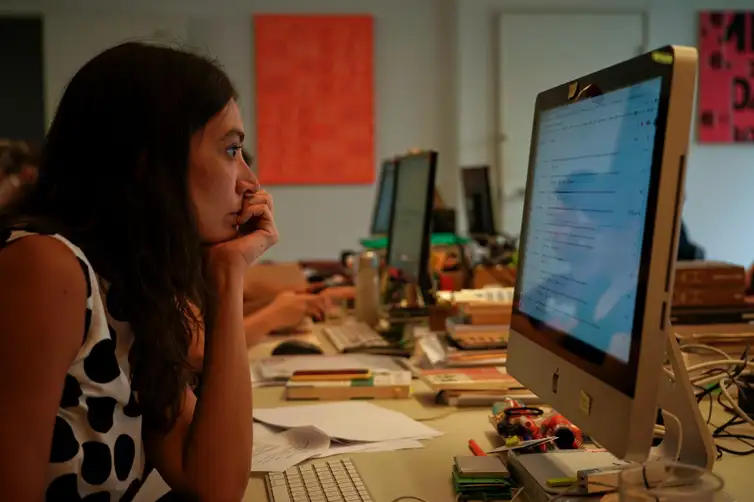
Editorial director and partner at Ubu publishing house, Florencia Ferrari Photo: Victor Caiano/Disclosure
The publisher has already produced publications in which these two aspects come together: high quality and good sales. This was the case of authors such as Nego Bispo, Vladimir Safatle, Hanna Limulja, Malcom Ferdinand and Françoise Vergès.
“Having the club is a way of guaranteeing a consistent, high-quality catalog and an equation [financeira] healthy.”
To publish a book, a publisher must initially invest in copyright, translation, proofreading, graphic design, cover and printing.
Afterwards, the copies are distributed in bookstores on a consignment basis. This means that, as books are sold, bookstores make payments to publishers, which can occur in up to 90 days, in some cases.
“The money returns to the publishers in a very trickle and slow way in relation to the initial time. Sometimes, it takes eight, ten, 12 months or two years for an edition to see a return on its investment”, he reports.
This is a common scenario for all publishers, but it mainly affects independent ones, as they have a catalog that is more of a “fund” ─ as Florencia classified it ─ and not of best-sellers, which sell thousands of copies in the first few months after launch.
A back catalog corresponds to books that continue to sell for many years, even if some have smaller print runs. They are relevant authors and works, even if they are not bestsellers. Examples of this are university catalogs and literary classics.
President director of Associação Quatro Cinco Um, the entity responsible for the homonymous magazine, publisher Tinta-da-China Brasil and Feira do Livro, Paulo Werneck emphasizes that, in a context of adversity, such businesses need to create “guerrilla strategies”.
“Independent publishers really are remarkable, they are a cultural heritage that is flourishing in Brazil, but which is very threatened by this game of concentration”, he celebrates.
“Independent publishers have to be super agile, they have to invent a new sales channel, have direct contact with the public, they have to create book fairs. They are resilient and creative businesspeople, they have to keep reinventing their own business every year”, he adds.
Independent publishers began to sell copies on their own website and use the Print on Demand (POD) model, or printing on demand. With this, books are printed according to sales, which eliminates the need for stocks and large initial print runs.
Promotion of culture and incentives
The growing presence of street bookstores has allowed the formation of small cultural centers in neighborhoods, argues Werneck, who mentioned that cities like Paris and Barcelona, for example, have tax incentives for street bookstores, as they are developments that qualify the regions.
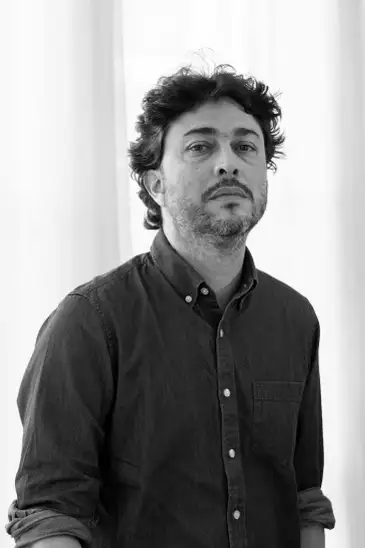
President director of Associação Quatro Cinco Um, publisher Tinta-da-China Brasil and Feira do Livro, Paulo Werneck Photo: Gabriel Guarany/Disclosure
“They transform the neighborhood, everything around it. They are one of the few businesses that have this effect”, he highlights.
The Brazilian Book Chamber brings in its survey data that relates the presence of bookstores and the development indicators of cities. Among the 1,830 municipalities that have bookstores, the Sustainable Cities Development Index (IDSC) is 3% higher than the national average.
“Just look at what’s happening here in the center of São Paulo. It’s become a cultural program to go to a bookstore. And who supports this program? The independent bookseller.”
Werneck cites incentives such as notices aimed at the sector, exemption from IPTU, access to credit and support from public entities for events offered by the enterprises.
“Bookstores offer free cultural programming, such as launches and debates. You can come in, watch and leave without buying a book, and they have no incentive to carry out this programming.”
The results achieved by the publishing sector, reinforced Florencia Ferrari, have an impact on culture, education and people’s quality of life.
“The state should pay attention, because it is a relatively low type of financing, for example, for purchasing books for the library and for students, which are public policies for acquiring copies. Sometimes, that’s all a city needs: a library with accessible books.”
Ferrari remembers that publishers bring together a diversity of professionals, as well as external service providers. An investment in the sector would also have an impact on the generation of jobs and mobilization of the economy. They are illustrators, designers, photographers, proofreaders, translators, technical proofreaders, among others.
Partner at Autonomia Literária, Cauê defends tax exemptions and benefits for bookstores, which are fundamental spaces for the circulation of works. Despite the difficulties in relation to the sales model, bookstores have an important role in expanding the target audience. The editor emphasizes that it is necessary to make the works circulate and leave the niches.
Cauê believes that the presence of works in these spaces is a way of promoting their circulation, even if there are risks in the consignment model.
“If you only work in the bubble, you won’t compete. You have to play in bookstores, you’ll have to run the risk of default, but you’ll make your book circulate on a large scale.”
Furthermore, he mentions solutions such as encouraging reading through credit for students and incentives for modernizing the sector’s industrial park.
“When we go to printers around the world, and then see them in Brazil, we say: wow, we have some printers from the 80s”.