The percentage of women who declared they were afraid of being raped increased in a survey carried out by the Patricia Galvão Institute and the Locomotiva Institute, which had new data announced exclusively this Monday (2) at Brazil Agency.
In 2020, 78% of women interviewed by researchers said they were “very afraid of being victims of rape”. This percentage grew to 80% in 2022, and reached 82% according to data obtained in 2025.
In addition to those who declared they were very afraid, 15% said they were “a little afraid”, which means a total of 97% of women who live with some degree of fear of sexual violence.
In two groups, the proportion of those who feel “very afraid” is even higher, reaching 87% in the case of young women, between 16 and 24 years old, and 88% among black women.
The content director of Instituto Patrícia Galvão, Marisa Sanematsu, highlights that in addition to fear being constant, no space is considered, in fact, safe.
“Fear haunts Brazilian women all the time, since they were little and everywhere: the house is unsafe, as is leaving and returning, waiting for transport, facing crowded driving or ordering a car via app”, he said.
“This constant fear makes them develop their own protection strategies: they avoid going out at night or wearing certain types of clothes and accessories, they always try to be accompanied and even choose longer routes to feel a little safer.”
Violence at home
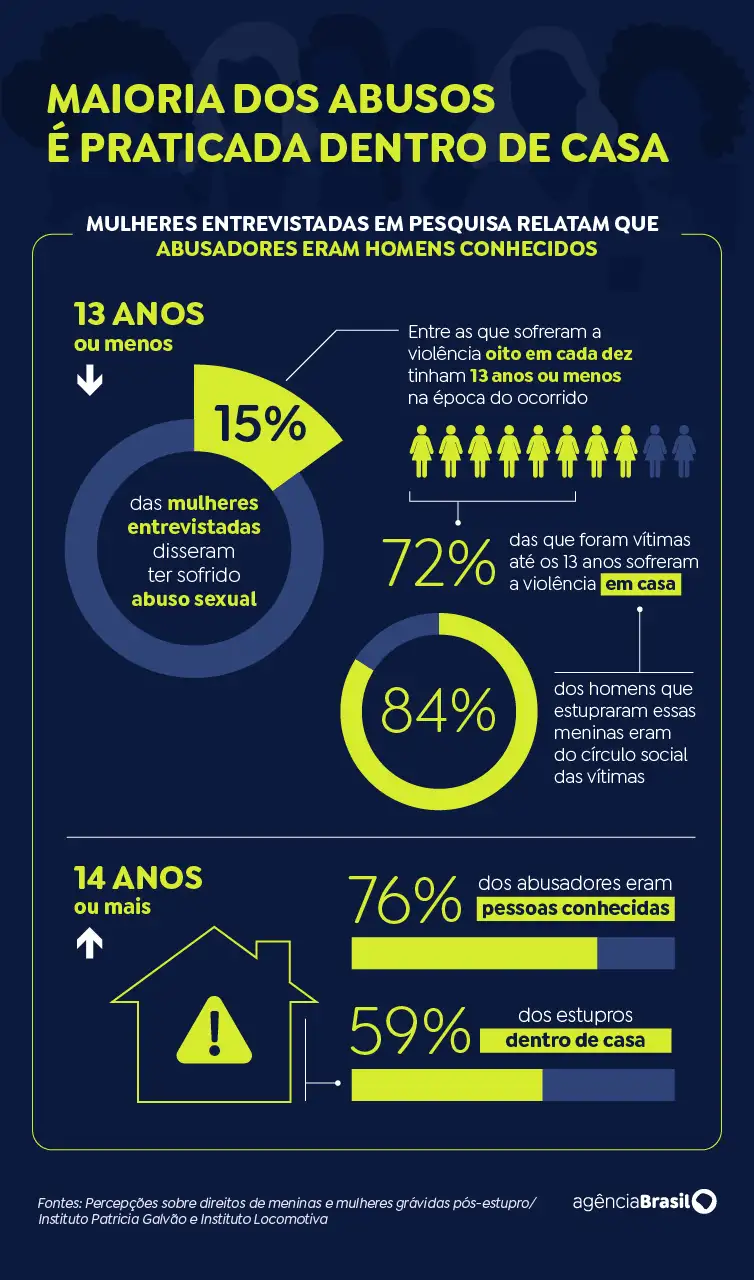
The institutes released, this Monday (2), the second wave of data from the 2025 survey. The first wave, published in September 2025, had already shown that 15% of those interviewed were survivors of rape, and eight out of every ten victims suffered violence aged 13 or younger.
The data released today adds that, Among victims up to 13 years old, 72% were raped in their own home. In half of the cases, the abuser was a family member and, in a third of the reports, it was a friend or acquaintance of the family.
In total, 84% of rapes were committed by a man in the victim’s social circle.
This percentage decreases in the case of raped women aged 14 or over, but acquaintances or family members remain the majority: 76% of abusers were known people, including friends, intimate partners, family members and ex-partners. Furthermore, 59% suffered violence at home.
Support for victims
The search Perceptions about the rights of girls and pregnant women post-rape 1,200 people participated, men and women, from all regions of the country.
In addition to asking women about their own experiences with sexual violence, the interviews also listened to the interviewees’ general perception of the subject.
In the responses, the understanding that women are afraid of rape was practically unanimous: 99% of those interviewed agreed.
Despite this, 80% of people believe that victims never, or almost never, reveal the violence they suffered to other people, mainly because they are threatened by the aggressor, because they are afraid of not being heard or because they feel ashamed.
The general results are similar to what was said by the interviewees who reported having been victims, according to the first release of the research.
About 60% of women who were victims before the age of 14 did not tell anyone about the abuse. Furthermore, only 15% were taken to a police station, and 9% to a health unit.
Support for policies to support victims was also broad: 93% agreed that the State should provide immediate psychological support for girls and women victims of rape, and the same percentage believed that city halls and governments should increase the publicity of health services that assist victims.
Testimonials
In addition to the percentages obtained from the responses, the institutes also released testimonies from women who suffered sexual violence this Monday.
A brown woman, resident of the Southeast, aged between 25 and 44, said:
“I started being abused as a child, at the age of 6, without even understanding what was happening, and the abuser made me believe that I was guilty and that, if I told anyone, no one would believe me. My abuser was my father.”
Another victim, a black woman, resident of the Southeast region, aged 45 or over, even tried to ask for help but was not welcomed.
“I was only 11 years old, it was horrible, I didn’t really understand what was happening. I tried to talk to my mother, but she didn’t believe me, she said I wanted to end her marriage. Luckily my grandmother noticed something strange and brought me back to her house.”
Pregnancy and the lack of support for adequate abortion also appear in the testimonies, such as that of a young brown woman, resident of the Southeast region, aged between 16 and 24 years old.
“I suffered abuse and became pregnant because of this act. I, at 13 years old, couldn’t be a mother and it was going to interrupt my life, I was studying, so I decided not to tell my parents and ask for help from a close friend of mine. So, she took me to a clandestine abortion and I had the procedure there.”

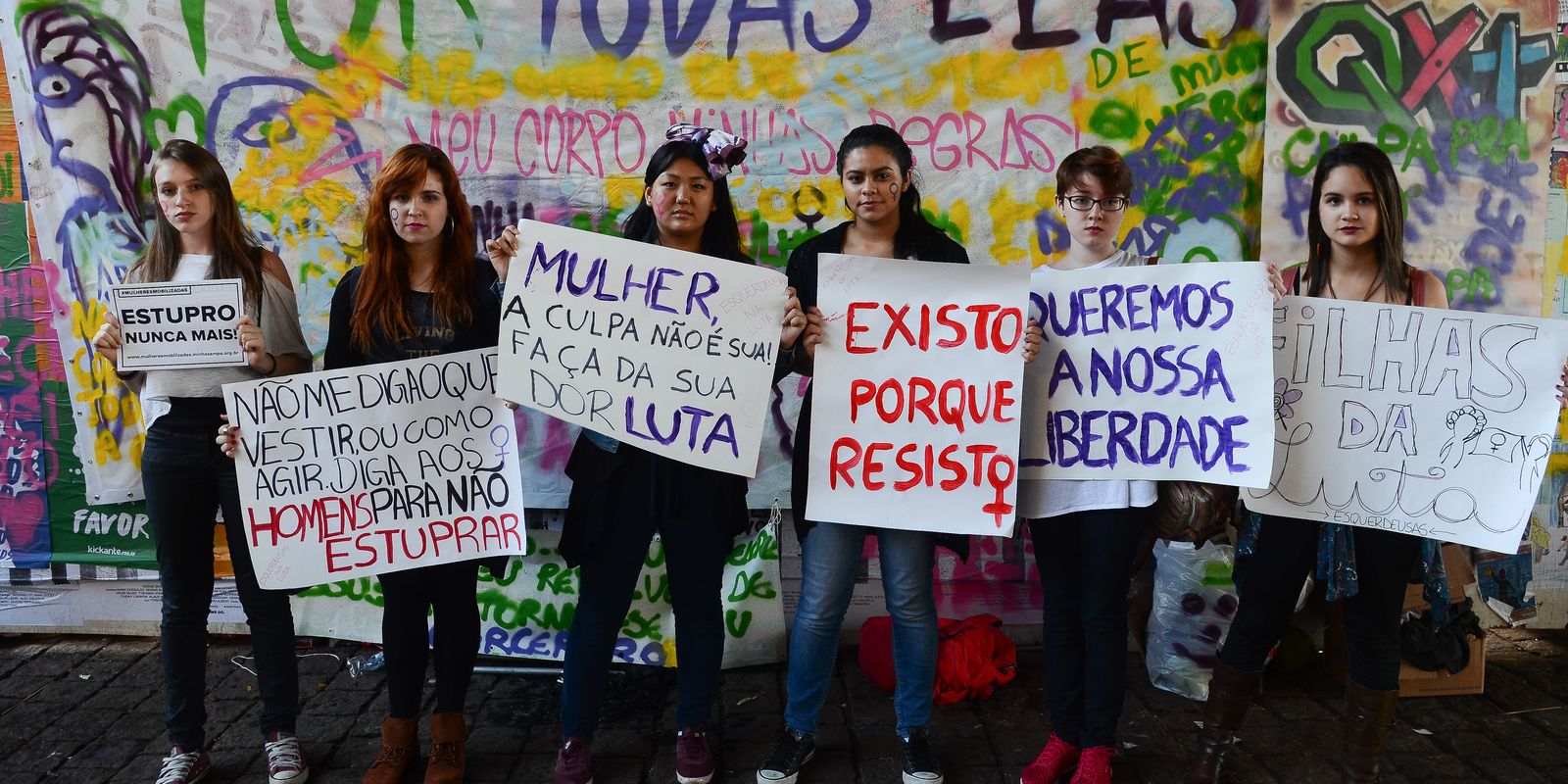
Ato Por Todas Elas brings together women in the open space of the São Paulo Museum of Art, on Avenida Paulista, for another protest against rape File photo: Rovena Rosa/Agência Brasil
Reception is guaranteed by law
The content director of the Patrícia Galvão Institute explains that Immediate and comprehensive care for victims of sexual violence in all hospitals of the Unified Health System (SUS), without requiring a police report, has been guaranteed by law in Brazil since 2013.
“It is essential that the State, at all levels of government, invest in disseminating information about the rights of rape victims and how they can access them to protect their physical and mental health, so that these girls and women can resume their lives after the trauma of violence”, adds Marisa Sanematsu.
The vast majority was also in favor of services that carry out pregnancy termination in cases provided for by law, such as rape. Nine out of ten respondents agree that all victims should be informed, at police stations or medical services, about protocols to avoid sexually transmitted infections and unwanted pregnancies.
Furthermore, 86% believe that there should be public services in all cities to terminate pregnancy in cases of rape. However, only half of those interviewed know of any service that promotes this service.
According to the research director at Instituto Locomotiva, María Saruê Machado, the research highlights the need to expand and better prepare reception services.
“There is broad public support for rape victims to have access to the rights guaranteed by law, but this information still does not reach those who need it most.”
“Rape is violence that is close to the reality of most women, and breaking the silence through information is a fundamental step to guarantee protection and access to rights for all women”, he argued.
Rights under constant threat
According to social communicator and activist Angela Freitas, co-director of the “Nem Presa Nem Morta” campaign, compliance with legislation that provides care and protection for victims still depends on the willingness of political managers.
“Most municipalities do not have this service, people have to travel long distances and not everyone can do this. It is a huge shortage. Brazil has gone through a process of democratization, created its Constituent Assembly, created the Unified Health System, the Unified Social Assistance System, created public policies, but all these advances are under constant threat of setback. They have not yet been consolidated as rights that are given and that no one contests.”
Angela Freitas was also one of the organizers of the “Child is not a mother” campaign, against the bill that intended to equate abortion with the crime of homicide, even in cases provided for by law. She adds that these deficiencies are particularly harmful to children and adolescents who become pregnant after violence.
“For the most part, these episodes are not revealed immediately. Especially because they are not prepared to understand that their bodies must be respected, including by people in their family and community life. There is a lack of dialogue and information and a great deal of condescension towards these situations.”
“As a result, the pregnancy is often not noticed by the child or the family members around them. It will only be noticed very late and, when these girls arrive at the health service to seek care, and the right to terminate that pregnancy, they encounter difficulties within the system itself.”