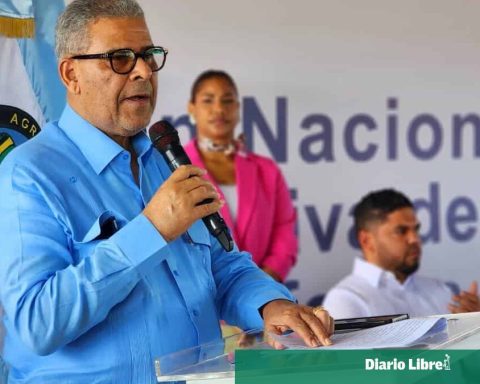
SANTO DOMINGO.- The director of the National Institute of Drinking Water and Sewage (INAPA), Wellington Arnaud, reported that the drinking water service in a large part of the country is practically restored, after the damage caused by the Hurricane Melissa.
During his intervention in LA Semanal with the press, led by President Luis Abinader, Arnaud explained that of the 53 aqueducts that had gone out of operation due to the rains and river floods, only 32 remain out of service, which represents significant progress in the recovery process.
“We are almost back to normal. Of the 53 aqueducts that were out, currently only 32 remain, for a total of about 250,000 people who continue without service. In the next two or three days we will be at 100%,” the official indicated.
The head of INAPA highlighted that most of the systems were paralyzed preventively to avoid further damage, given the increase in the flow of the rivers and the heavy rains generated by the atmospheric phenomenon.
Arnaud assured that the institution’s technical teams continue working uninterruptedly to resume supply in the communities still affected, especially in the southern provinces and Cibao, where the highest accumulated rainfall was recorded.
“Everything is now returning to normal. We appreciate the patience of the population, because in a matter of days the drinking water service will be completely restored,” he stated.
The director also highlighted that, despite the intense rains, no major structural damage was recorded in the plants or distribution systems, which has allowed the reconnection and cleaning work to be accelerated.
INAPA worked in coordination with the Emergency Operations Center (COE) and other institutions of the Water Cabinet, applying preventive measures before and during the passage of Hurricane Melissa.
These included the temporary closure of aqueducts that receive water directly from rivers or open sources, with the aim of guaranteeing the safety of the communities and preserving water quality.
Arnaud reiterated INAPA’s commitment to the continuity of service and the protection of water sources, highlighting that the rapid recovery is the result of planning and investment in maintenance carried out in recent years.