Following the approach of the President of the Republic, Nicolás Maduro, on the need to create the conditions to consolidate the communal State, the United Socialist Party of Venezuela (Psuv), the main political arm of the Bolivarian Revolution, took the initiative to make a change in its operating structure, to give greater preponderance to the decisions of the bases and militancy, through three key elements: national popular consultations, the creation of the Comprehensive Base Bolivarian Committees (Cbbi) and the Bolivarian community commands.
Firstly, until the month of November, four national popular consultations have been held, in which the communal circuits have voted for the main solutions in terms of public services by the central government.
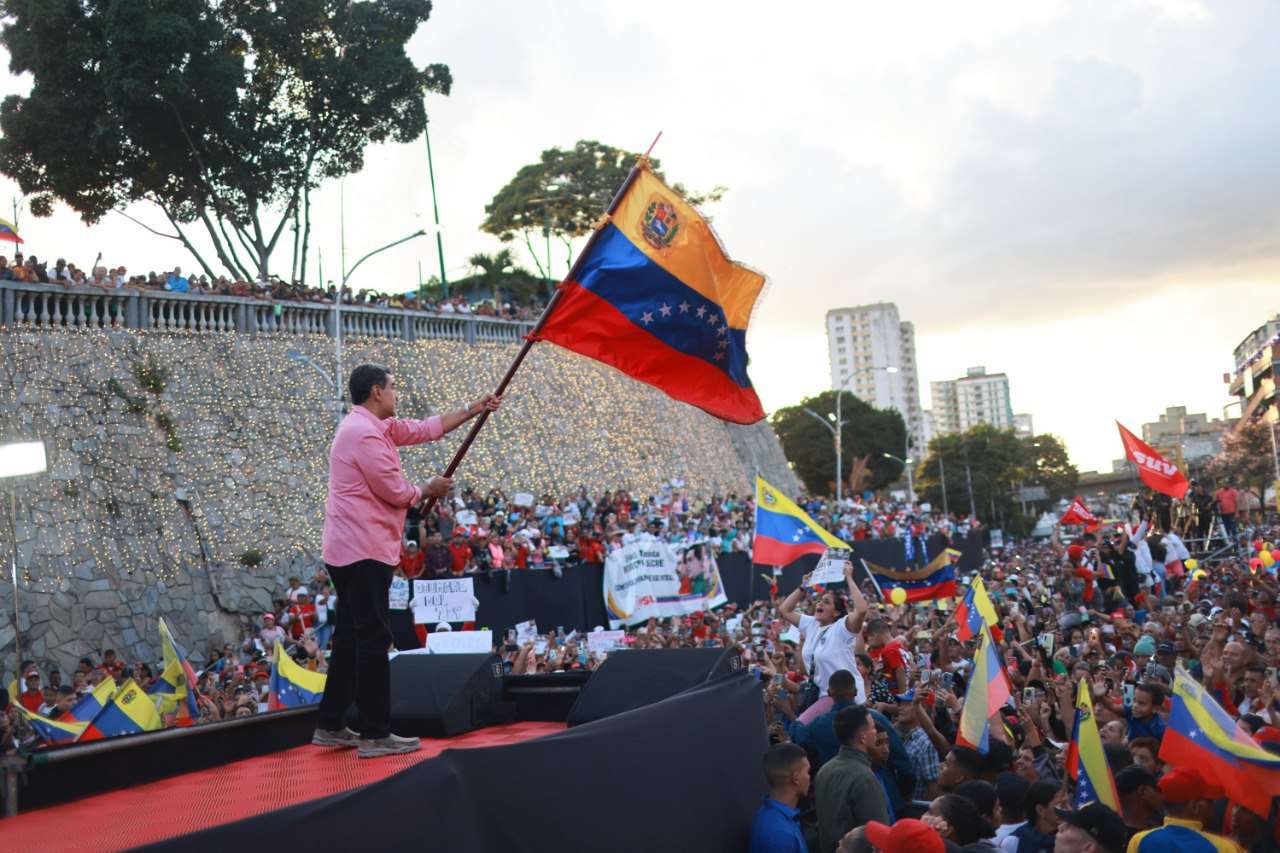
The president of the political organization, Nicolás Maduro, stated that “this structure is committed to developing values, leadership and preparation for the defense of the Homeland. “I invite you to participate!” he expressed in a mobilization.
Integral-based Bolivarian committees
This new structure will have the following characteristics: The most significant change is the implementation of the Comprehensive Base Bolivarian Committees, which represent a qualitative leap in grassroots organization.
The Cbbi replace or transform previous figures such as Street Bosses, to assume a broader and more comprehensive role.
Each of the Cbbi are elected by the residents of the street through popular assemblies and are made up of a team of nine militants (in some cases, with a leadership that can be fixed, rotating or renewed). This seeks collective direction and authentic street leadership, without interference from public officials or “imported leadership.”
Comprehensive scope: Unlike previous structures focused on the electoral (such as the 1×10 electoral), the Cbbi assume a set of broader and more diverse tasks, such as the organization of the party at the street level, defense of sovereignty and the homeland, implementation of the 1×10 System of Good Government (direct attention to problems of public services such as water, education, health, gas, electricity and telecommunications), articulation with the plan of the Seven Transformations (7T), operation of the communal circuit and communal government and preparation for popular consultation processes.
Strengthening popular power and local governance: the creation of the Cbbi and the holding of national popular consultations reinforce a model of participatory and leading democracy, which will impact the structure of the party, with coordination with the communes as a priority. The Cbbi are designed to operate within the framework of the communal circuit and are placed at the command of the communes, to consolidate the structure of communal government and popular power.
Priority in problem management: the structure is oriented towards the solution of the immediate problems of the population, so that the base structure is an engine of public management.
Change at higher levels
It is mentioned that the figure of the community head is also in transition towards the formation of Comprehensive Bolivarian Community Commands, and thus raise the level of collective organization.
Reorganization process at other levels: Although the main focus is on the base, the reform implies adjustments throughout the pyramid: The Bolívar-Chávez Battle Units are maintained, while the new structures (Cbbi and community commands) constitute the commands at the community level.
Internal reorganization
The national leadership of the PSUV announced the reorganization of the municipal, state and national directorates, which include the functioning of its vice presidencies.
In this context, the party leader, Nicolás Maduro, swore in last Monday the Political Bureau of the Psuv, by appointing 12 new members to lead the red awning, ratified Diosdado Cabello as general secretary, while Jorge Rodríguez will be the general undersecretary and head of propaganda.
The other members are: Héctor Rodríguez (social movements, Popular Power and Great Patriotic Pole), Nahum Fernández (street mobilization), Pedro Infante (parliamentary affairs), General Francisco Ameliach (security and defense), Cilia Flores (strategy), Gabriela Jiménez (comprehensive political training), Tania Díaz (international affairs and world victory), Delcy Rodríguez (production and finance), Carmen Meléndez (organization) and Grecia Colmenares (youth).
Militancy will be grouped into community commands
In the process of forming the Comprehensive Base Bolivarian Committees, the United Socialist Party of Venezuela decided to complement this figure with a higher level, the Comprehensive Bolivarian Communities Commands, which began their functions last Thursday.
With this process, the former street leaders begin to form the base committees, and the community leaders are formalized as community commands, integrated into a large network with their own communication system and work codes, as explained at the time by the general secretary of the party, Diosdado Cabello.
The key objective of this new instance will be to deepen territorial work, promote the unity of the people to respond to political and social challenges, in addition to consolidating base structures for the mobilization and implementation of programs such as the Seven Transformations Plan (7T).
These commands also seek to guarantee the active participation of the popular base in political and social life, and take on street work, as well as mass mobilizations and events.
Militancy is expressed
Carlos Rada, a member of a communal council that covers the northern part of Baralt Avenue, in Caracas, considers that this is a great step for communal power to be strengthened even further, not only through popular consultations, which have allowed the people to express themselves directly about the key needs in their community, but also the commitment to act in an organized manner in street activities, both in partisan mobilizations and in defense of the Homeland.
“It is the confirmation of participatory and leading democracy,” he said.
For her part, Angimar Guerrido, community leader in the San Agustín parish, expressed the following: “We have prepared ourselves to work together with the community and we are also multipliers of all the training we have received at the Psuv.”
Meanwhile, Zoraida Ramírez, who is head of the Bolívar Chávez Battle Unit (UBCh) on Lecuna Avenue, in Caracas, stated that: “Now we will have more important responsibilities, including the defense of our Homeland.”