With the economic crisis that thins pockets every day and enthrones deficiencies, many Cuban workers are unable to do the most basic thing: collecting their salaries on time.
This was confirmed this week by a report from the official press, according to which, although “the deadlines and the number of people affected have been reduced, the structural causes persist and generate social unrest.”
“Not paying a worker on time is a crime,” denounced one of the workers. interviewed by the newspaper workers, who, like others, claims to feel unprotected in the event of non-compliance with the deadlines established in the Collective Bargaining Agreement.
Complaints are repeated: families who are unable to buy their children’s school snacks, guarantee food, and cover other basic needs.
The workers consulted affirm that the administrative justifications—file errors, electrical failures, lack of accounting personnel or absence of directors to sign—do not compensate for the anguish of those who depend on that income to at least “ensure the minimum.”
With this, they regret, their families are left helpless in the face of daily emergencies and the weight of the crisis.
A violation of the law
The Cuban Labor Code establishes in its article 114 that the salary must be paid at least once a month for expired periods. Any modification requires 15 days’ notice and a union agreement. However, the letter of the law contrasts with reality.
“Payment is sacred and it is a right that workers have,” José Antonio Pérez Pérez, member of the Organizing Commission of the 22nd Congress of the Cuban Workers’ Union (CTC), reminded the media.
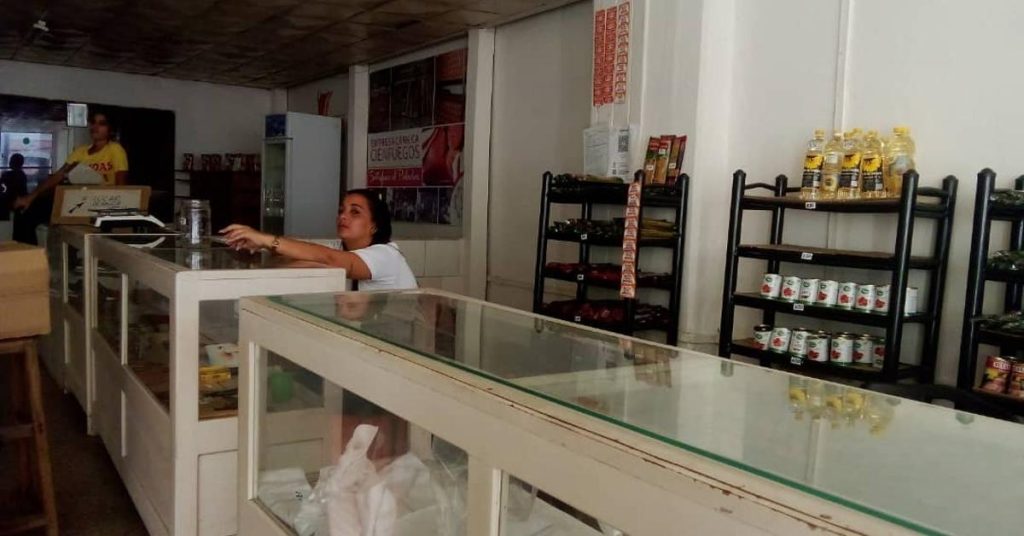
In practice, sectors such as sugar, agriculture and commerce accumulate delays that fuel workers’ discomfort and, with it, work demotivation.
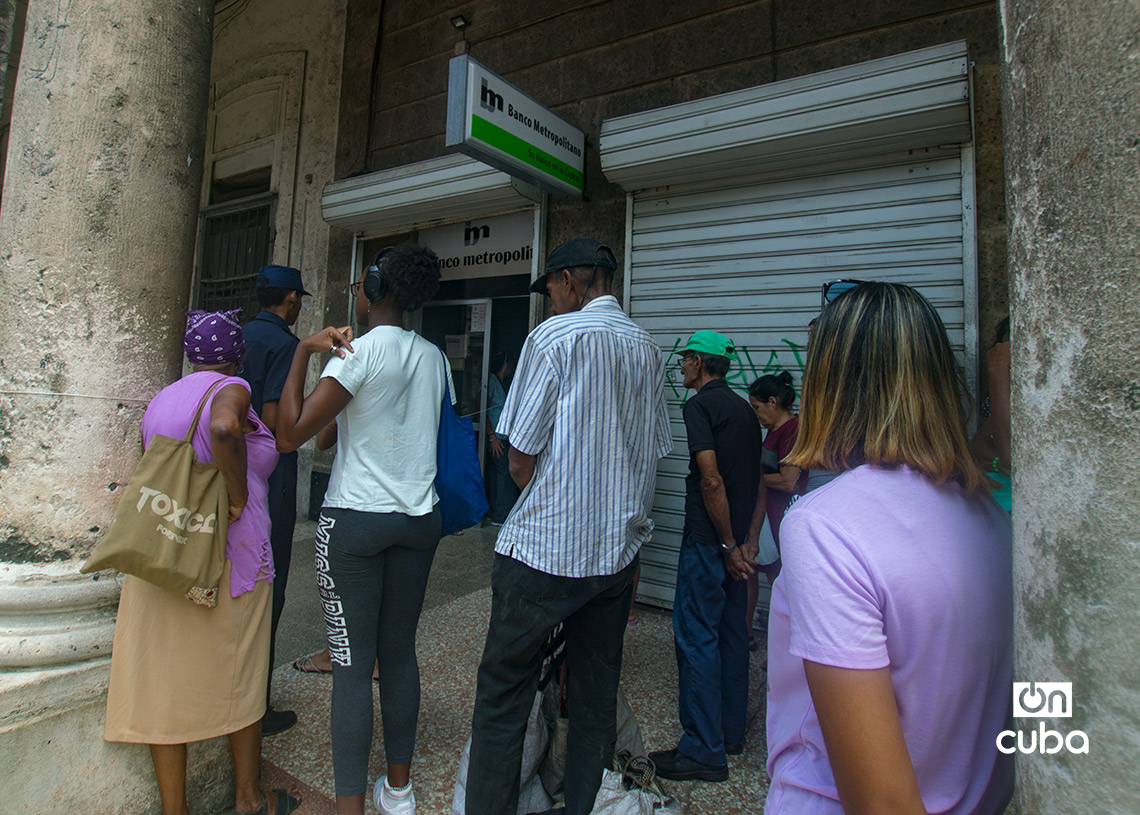
Although the gap between state salaries and the real value of the basic basket in Cuba is increasingly unsustainable, the delay in payments, which should be credited on magnetic cards three days before the official date, has become a persistent problem in almost the entire island.
The “damned” fact of the Cuban economy: the cost of the basic basket
Companies in crisis and stories of despair
In Isla de la Juventud, at the end of 2024, delays were recorded in hydraulic resource companies, property maintenance, commerce, public buses, forestry, flora and fauna, port services, tobacco, music and shows, and workshops, he says. Workers.
In Camagüey, around 675 workers suffered delays equivalent to 116 months accumulated between 2024 and 2025.
The Provincial Community Services Company, the Domestic Trade Business Group, the Ministry of Agriculture and the Ministry of Construction Materials are among the most affected entities.
According to local authorities, the lack of liquidity, raw materials and accounts receivable explain the situation. The stories of those affected, however, speak of desperation and real problems that cannot be resolved with justifications or promises.
Ernesto Bárzaga Sánchez, administrator of the Construction Materials Company in Camagüey, related: “In my 71 years I never thought that the day would come when I would not have money to buy food.” After six months without salary, he survived thanks to the help of family members.
His colleague Ramón García Chicoy, close to retirement, lives with a sister with an intellectual disability and admits to having gone through “black moments” due to lack of income. Both remain in the company out of a sense of belonging, although they recognize that many colleagues have left.
The Camagüey Construction Materials company accumulated significant salary debts to 302 workers at the end of 2024. Today there are only 120 employees left, insufficient to fulfill the mission of producing materials with clay, concrete and wood. The lack of fuel and electricity has paralyzed the Nuevitas cement factory, worsening the crisis.
Accounts receivable exceed one million 200 thousand pesos in municipalities such as Florida, Vertientes, Esmeralda and Céspedes, where some workers have not been paid for more than a year. The relocation to communal services, including tasks such as the construction of niches and sarcophagi, has been a partial exit.
From where to look at the social unrest in Cuba? Conversation with psychologist Patricia Arés
Impact on the field
The problem takes on a critical dimension in rural areas. The payment of salary or advance payment in the basic cooperative production units (UBPC) is a fundamental obligation, but it has been affected by the lack of production and economic efficiency.
José Antonio Pérez pointed out that the causes include debts, a shortage of accounting personnel and competition from the private sector, which attracts professionals with better salaries.
The impact on families is direct in a scenario of permanent inflation and loss of purchasing power. Entities persist with delays of five, eight and up to 12 months, which erodes trust in institutions and causes migration to private or urban sectors.
Meanwhile, lack of motivation in the countryside translates into abandonment of land and an increase in idle areas.
The situation also hits the sugar sector and is especially serious in sugar mills such as Bartolomé Masó and Roberto Ramírez, in Granma, and Argentina and Brasil, in Camagüey.
“How to achieve permanence in the countryside and stimulate food production?” union leaders ask. Transitional measures include emerging funds from the Ministry of Finance and Prices, relocation of workers to secondary activities and union control.
But the definitive solution, they warn, is in producing and providing services. “The salary has to be supported by the creation of goods and services and its non-payment cannot remain in union reports,” emphasized Enrique Cisneros Morris, head of the Economic Department of the CTC.
“Mass exodus” of workers hits the coffee harvest in Santiago de Cuba
Illegalities, indiscipline and lack of sustainable solutions
Provincial authorities have resorted to working capital loans to finance productive activities, such as planting and harvesting. However, the instructions do not always arrive on time. Workers like Bárzaga have had to take on additional tasks, including using vacation time to collect outstanding debts.
The Organizing Commission of the 22nd Congress of the CTC recognizes that non-payment of wages affects thousands of workers and generates illegalities, social and labor indiscipline. Although the number of those affected was reduced from 20 thousand to 3 thousand in 2025, several entities still accumulate months of non-payment.
The lack of liquidity, raw materials and economic solvency is repeated in provinces such as Las Tunas, Granma and Santiago de Cuba. Commerce also registers incidents due to the instability of offers and inputs, adding pressure to a weakened labor system.
The delay in the payment of salaries in Cuba reflects structural problems that go beyond administrative management. In the midst of a food crisis that does not subside, rural workers are among the hardest hit, while the lack of union protection and the lack of sustainable solutions deepen precariousness.
“The definitive solution is to produce and provide services. Thus it would be worthy to defend a salary backed by the creation of wealth,” Pérez concluded.
In the Ministry of Finance and Prices concerned about “aging” of non-payments in the business sector
A long-standing phenomenon
The exercise of non-payment to Cuban state workers is not new. It’s even pre-pandemic.
“Although the conditions of salary payment must be agreed upon in a Collective Agreement where workers have a voice, said obligation, contained in the Law, is frequently violated,” denounced in the already distant month of January 2019. newspaper Escambray.
Quoted by the media, the only Master in Labor Law and Social Security in the province of Sancti Spíritus, Osmani Faustino Rodríguez Martínez, then considered non-compliance with the payment of salaries inadmissible and warned that, although the problems usually originate in balance sheets and accounting closings, companies must adjust and comply on the agreed date.
The expert said that companies are obliged to cover their expenses with their income and, in recurring cases, resort to bank loans or workload studies, also recommending the search and training of suitable personnel, since – he emphasizes – late or non-payment can never be an alternative and the solution must be real.
“How to understand, then, the passivity in the face of violations of this type in current Cuban society? Where is the defense of the rights of the workers who are affected?”, asked the media from Sancti Spiritus..
“If all or almost all of us agree that the salaries of a good part of Cubans are so insufficient that they border on the symbolic, let us also aspire, with the same vehemence, to be paid in accordance with the law,” the publication then demanded.
Almost seven years later, with the grip of the Monetary Regulation and the worsening crisis pressing much harder than in 2019, the questions and demands of Escambray They maintain all their validity and reason.