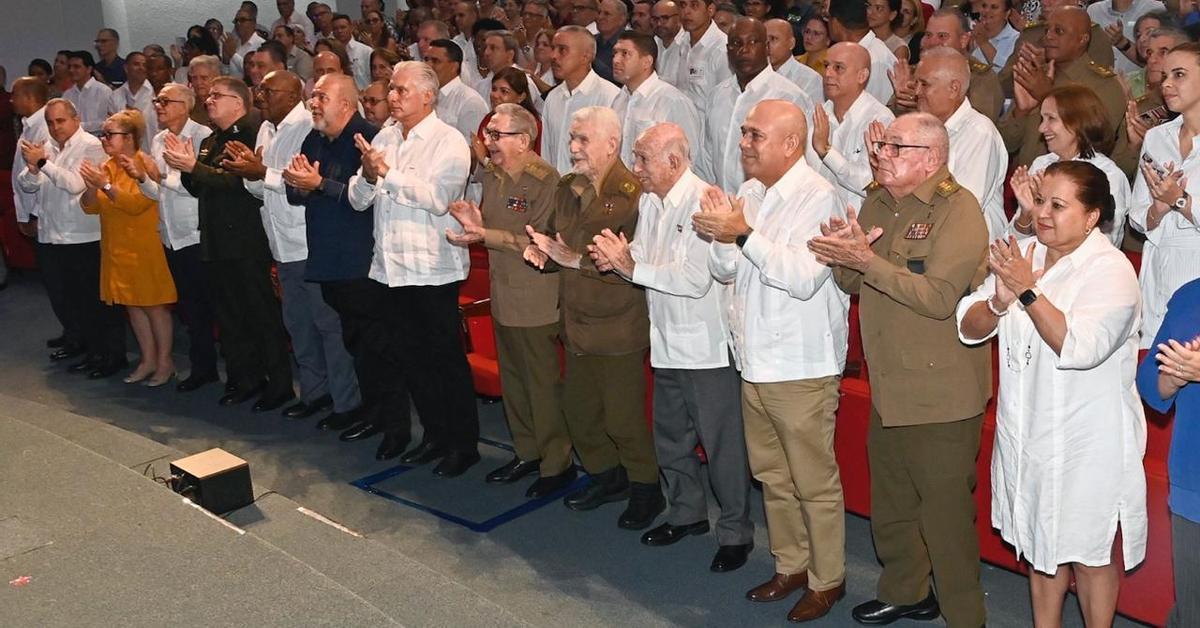
Havana/With the publication this Friday of their Chosen worksRaúl Castro intends to go down in history, in imitation of his brother, not only as a political leader, but as a thinker. In nine volumes, one of the editors valued, Cubans can approach “Raúl’s personality, capacity and sensitivity.” However, the general did not appear in the Presentation of the booksalthough he did in the celebration of the 60th anniversary of the creation of the Central Committee of the Communist Party, supporting Miguel Díaz-Canel and banning for the umpteenth time the rumors of his death that spread in September.
Castro’s books are, as expected, some privileged within the few Cuban publications. According to Cubadebatethe volumes have “a quality according to the historical transcendence they collect”, its edition was very careful and each one has analytical indices and “QR codes that refer to images corresponding to the treated stage, thus incorporating contemporary technological resources”.
Soon, the environment said, they can be consulted in libraries and funds from institutions which will allow access to “more than 500 documents” and “2,000 specific situations and contexts.” They are also available Digital versions on the official party site. If this editorial feat was possible on a paperless island and with few functional polygraphics, it is because China financed 3,000 runs.
He editorial blackout In Cuba it is represented in numbers: while in 2023 more than 6 million copies left Cuban printing, in 2024 that figure dramatically descended to 1,355,500. Scarcity is not only paper, but of political will. However, the legacy of the “historical” of the revolution has always had priority.
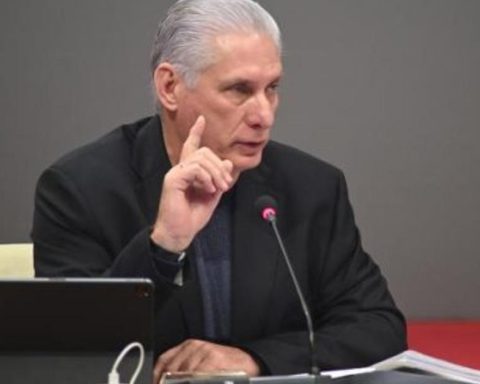
The ‘chosen works’ are also extended by Díaz-Canel, which attended the presentation at the José Martí Memorial
In the words of Abel Prieto, director of Casa de las Américas, with these books Ediciones Celia makes available to Cubans “70 years of an exemplary and heroic life, which we now have as a formidable guide for ethical behavior in revolutionary action.”
The Chosen works They are also extended by Díaz-Canel, who attended the presentation at the José Martí Memorial of the Plaza de la Revolution along with other senior PCC positions: the Secretary of Organization of the Central Committee, Roberto Morales Ojeda; Vice President Salvador Valdés Mesa and Prime Minister Manuel Marrero Cruz.
In the books unpublished documents, speeches, letters and the campaign diary that Castro wrote in the Sierra Maestra, divided by years in each volume.
In Prieto’s hand, books became a “compass” so that “teachers, students and student organizations” fight the “phenomenon of idiotization and erase of memory.” Castro, he said, constantly treats the issue in those pages, which warn against the “misrepresentation of history.”
“Prieto specifically referred to counterrevolutionary materials that circulate in social networks, where artificial intelligence is used to show an embellished Havana with symbols as a ‘giant McDonald’s’, in case the revolution was defeated,” he says Cubadebatethat cites the director of Casa de las Américas when he describes that phenomenon as “sick” or “primitive fascism.”
Prieto also urged communicators to spread the ideas of the book. “You, the communicators, have to work hard, see what ideas of these you can take to small audiovisuals to place them on the networks”
“The ethical meaning covers the entire book, from the first pages, when Raul was very young, to the last. I discovered Raul again with this collection and I greatly appreciate it. He was in all the battles: in the construction of the party, in the FAR,” said the official.
Prieto also urged communicators to spread the ideas of the book. “You, the communicators, have to work hard, see what ideas of these you can take to small audiovisuals to place them on the networks. You have to work with the networks” and make a “daily vindication of Cuba,” he ordered.
The leader raised even more the tone: “We are in the midst of a very serious cultural and ethical crisis … the main victims of these offensives are the new generations. They work to erase their memory, national identity, their origins, their sense of belonging to a culture. Therefore, texts such as that Raul’s diary and, in general, these Chosen works They are weapons in this contemporary war, ”he insisted.
Raúl, on the other hand, did not attend the presentation of the books. Your attention was aimed at Communist Party celebrationswhere its frequent presence is intended to calm down – in addition to rumors of deaths and diseases – the discontent towards the government.