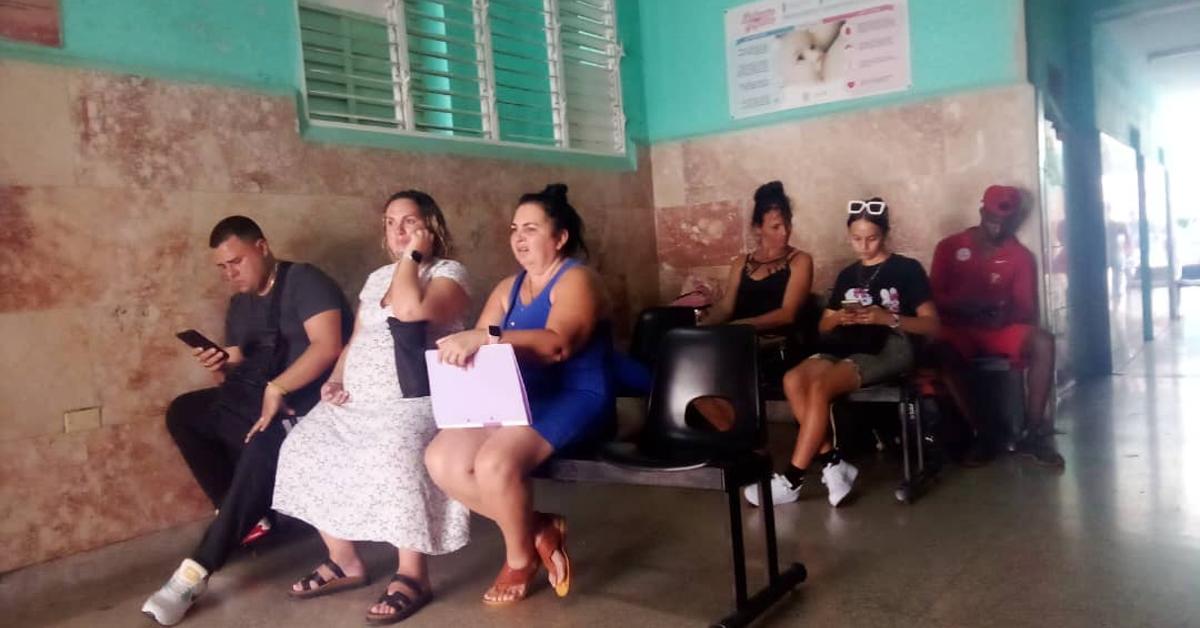
Matanzas/“Complete yellow,” Yamila wants to dressed her baby from the provincial gynecobstric teaching hospital José Ramón López Trabane, in Matanzas. There is still enough time for that day, but the 22 -year -old girl does not have a minute to lose and, while waiting for her turn, reviews the problems she must overcome in the main maternal hospital of the city due to the lack of human and material resources.
Despite the prestige that, in the past, also accumulated the maternity of Matanzas, now the situation that exists in his consultations, halls and corridors is very different. Pregnant women who arrive in search of attention know that, if they do not have a personal recommendation or a gift for the doctor, they are resigned to ask for the last turn and sit in a plastic chair that barely relieves tiredness.
In the waiting room, that Monday morning, the air was thick and the leaves of the medical records became improvised fans
In the waiting room, that Monday morning, the air was thick and the leaves of the medical records became improvised fans. Among the women who sweated was Yamila, with 15 weeks of pregnancy. “In Ceiba Mocha, where I live, the family doctor’s office has been closed for two years,” he told 14ymedio. “I am first, I come from the countryside and I do not know any obstetrician who attends to me.”
While waiting, his mental list of earrings grows: he already started buying syringes, suture threads, gauze and some Gifts For medical staff. “A friend gave birth to last month and had to bring to the gloves for childbirth. There is nothing here,” he says while observing a woman who crosses the hall carrying a cube and a home water heater. “I wish I don’t need a caesarean section. I’m afraid,” he confesses.
The preparation of the bag for childbirth, a long tradition among Cuban women, has become every year more complex. If diapers were included before, the clothes with which the baby would leave the hospital, blankets and cotton, now you have to add cash and a wide range of objects that include from a pillow to the food. Fans, covered, a palangana to bathe, … the supply “looks like a silent”, the young woman emphasizes.
Yamila is not alone in the hall, almost dark, where he waits for a consultation. A few steps, Yanelis and his partner have been waiting for two hours. They suspect an unwanted pregnancy and want to know if there is still time to interrupt it. “My cousin made ultrasound, but went to work as a waitress because the public health salary is very bad,” he laments. In that waiting period they have seen cockroaches climb through the stained walls, camilleros smoking in the windows and doctors who let them pass before those who arrive loaded with jabs. “When that door opens, let’s go in. To see who prevents it,” she says, determined.
The deterioration is not just material. Leticia, with a risk pregnancy for her diabetes, warns: “From this morning I had a bleeding. I told a doctor waiting for me to attend quickly and here I’m still sitting.” Hold on the desire to go to the bathroom because the only health service “does not download.” For her, who lives her second pregnancy, “everything depends on what you can give, if you have resources they serve you faster.” His brother, from abroad, has already promised to send monthly money to expedite medical reviews.
His brother, from abroad, has already promised to send monthly money to speed up medical reviews
This health crisis occurs in a province where fewer and fewer children are born. In recent decades, Matanzas went from registering almost 8,000 births a year after 4,000 in 2024 and is the fifth province with the worst birth rate (6.6 per 1,000 women). Experts indicate among the main causes migration, especially young women, and an economy that discourages motherhood: lack of housing, high prices of basic products and salaries that they barely reach. According to the National Statistics Office (ONEI), birth rate in Cuba has been less than two children per woman since 1978, insufficient to maintain population size in a country that also does not receive migrants that help alleviate the situation.
Selective migration, which empties the age ranges between 20 and 35 years, sharpens the imbalance: less births and more older adults. Even when programs such as Maternal Child Care (PAMI) promote health campaigns and support for couples with difficulties in conceiving, maternal hospital rooms show the other face of the crisis: pregnant women without priority care, deliveries that demand supplies brought from home and overflowing or demotivated professionals.
Amid the heat, future mothers wait for their turn while the sheets of paper continue to beat as fans. Between fear and resignation, they all know that here giving birth is not just to bring a life to the world, it is also to survive an increasingly deteriorated health system.