In 2024, 11 people were killed per day by police in nine Brazilian states, and at least eight of them were black. The data is part of the Pele Target bulletin, released this Thursday (6) by the Security Observatory Network for the states of Amazonas, Bahia, Ceará, Maranhão, Pará, Pernambuco, Piauí, Rio de Janeiro and São Paulo.
The nine federation units surveyed totaled 4,068 deaths last year, of which 3,066 were black or brown people. The researchers point out, however, that the color or race of the dead person was not included in more than 500 records. In 2023, the total number of deaths reached 4,025.
Racial disparity also appears in the indicator that measures mortality rates per 100,000 inhabitants of black and white people. In general, the study concludes that black people are 4.2 times more likely to be killed by the police than white people.
In Bahia, the rate among black people was 11.5 killed by the police for every 100 thousand residents, while, among white people, it was 2 per 100 thousand.
Another state that stands out in terms of inequality, Pará had a mortality rate for black people of 8.1/100 thousand, compared to 3.2 for white people. In Rio de Janeiro, there are 5.9 black and brown people killed for every 100,000, while white people had a mortality rate of 1.3.
Furthermore, In all states, the proportion of black people among the dead was higher than their proportion in the general population.
In Bahia, for example, where 79.7% of the population is black or mixed race, this proportion of those killed is 95.7%. Rio de Janeiro is the state with the biggest difference: while the proportion of black and brown people in the population is 57.8%, people from these groups accounted for 86.1% of those killed.
Half of those killed were young
The bulletin also highlights that 57.1% of those killed were young people, aged between 18 and 29, totaling 2,324 victims. Additionally, 297 people were teenagers, aged 12 to 17 when they were killed, an increase of 22.1% compared to 2023.
For Security Observatory Network researcher Francine Ribeiro, the data proves how the security forces of these states have acted in “war mode”, and there is no investment in prevention, nor in integration with other sectors, to reduce violence.
“The police, in all states, have followed a similar logic, of lethal confrontation, with the justification of combating drug trafficking and crime. When investments are withdrawn from prevention, we see a lack of interest in solving the root problem.”
“Without structured prevention policies, connected to other public policies, this modus operandi It won’t change and we will continue to see these numbers increasing or remaining very similar, without an effective reduction”, adds Francine.
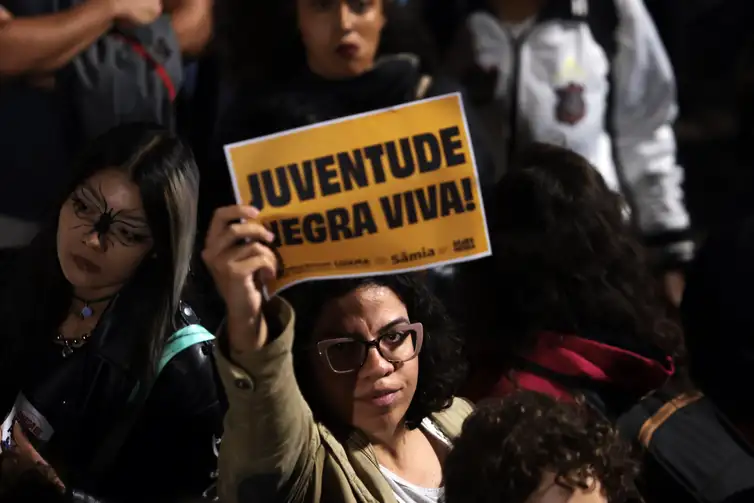
People on Avenida Paulista during a demonstration against the Contação police operation in Rio de Janeiro. Photo: Paulo Pinto/Agência Brasil
ADPF of Favelas
The Security Observatory Network has been monitoring these states since 2019 and, in six years, while lethality in Bahia grew by 139.4%, in Rio de Janeiro deaths due to police intervention fell by 61.2%.
Francine Ribeiro credits the reduction in mortality caused by the police in Rio de Janeiro is related to the Allegation of Failure to Comply with Fundamental Precept 635, better known as ADPF das Favelas, an action by the Federal Supreme Court that established measures to reduce police lethality in Rio.
“It was important to create limits on operations in the favelas, having a positive impact on reducing deaths. But this was not sustained in the last week, as, with more than 100 people killed (in Operation Containment), 2025 will be comparatively more lethal than 2024”, highlights the researcher.
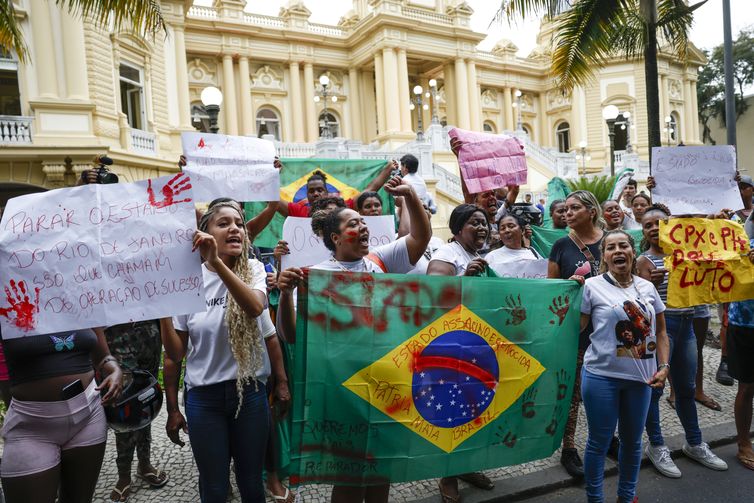
Protest against the police operation that left more than 119 people dead in Complexo da Penha, in front of Palácio Guanabara, headquarters of the State government. Photo: Fernando Frazão/Agência Brasil
High in São Paulo
The study also highlights that lethality in São Paulo has been increasing in a worrying manner since 2022with an increase of 93.8% in three years.
Francine says that the state experienced a phase of reduction in numbers, with the use of body cameras by police officers, but this was reversed, after changes to the program that allowed recordings to be made by activation, and not continuously.
“Added to this was the promotion of violent operations that left many people dead in a short space of time. The numbers returned to 2019 levels, before the expansion of cameras”, he adds.
Bahia has higher lethality
But the most lethal police among the states analyzed continues to be Bahia, with 1,556 deaths, which represents 38% of the total. Since 2021, the state has recorded more than 1,000 cases per year, and almost all of those killed are black men.
The bulletin assesses that part of the increase is related to the authorities’ response to the intense conflict between criminal factions recorded in the state in recent years and classifies the situation as “a social emergency”.
Recommendations
The researchers responsible for the study leave recommendations to the authorities:
- Make the use of body cameras mandatory for all units and in all operations, including specialized forces;
- Eliminate the “not informed” section for the race/color of the victims, classifying failure to fill in as a serious error;
- Publicly disclose the operational protocols of police forces throughout the national territory.
- Urgently review the police education, training and evaluation model, prioritizing the reduction of violence and respect for human rights;
- Establish a National Police Mental Health Care Program with continuous and transparent monitoring.
- Develop state and municipal plans with clear goals, result indicators and execution schedules to reduce lethality;
- Link the performance of police forces to the achievement of these goals, with institutional evaluation and accountability mechanisms;
- Link federal security transfers to adherence and success in implementing lethality reduction policies;
- Ensure reparation and support for families in cases of proven abuse and guarantee the participation of family members in the investigation processes.
“Public Security Policy is challenging in a country like Brazil, but repeating strategies that have not worked and discouraging actions that have worked is counterproductive and leads to continued insecurity among the population”, concludes researcher Francine Ribeiro.