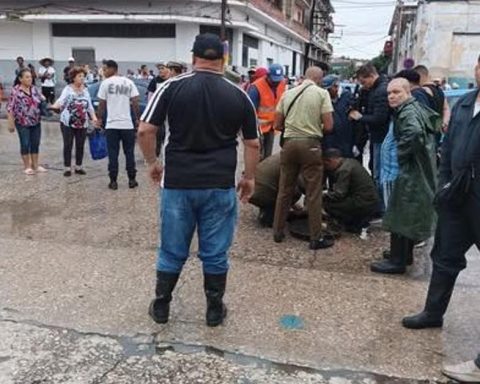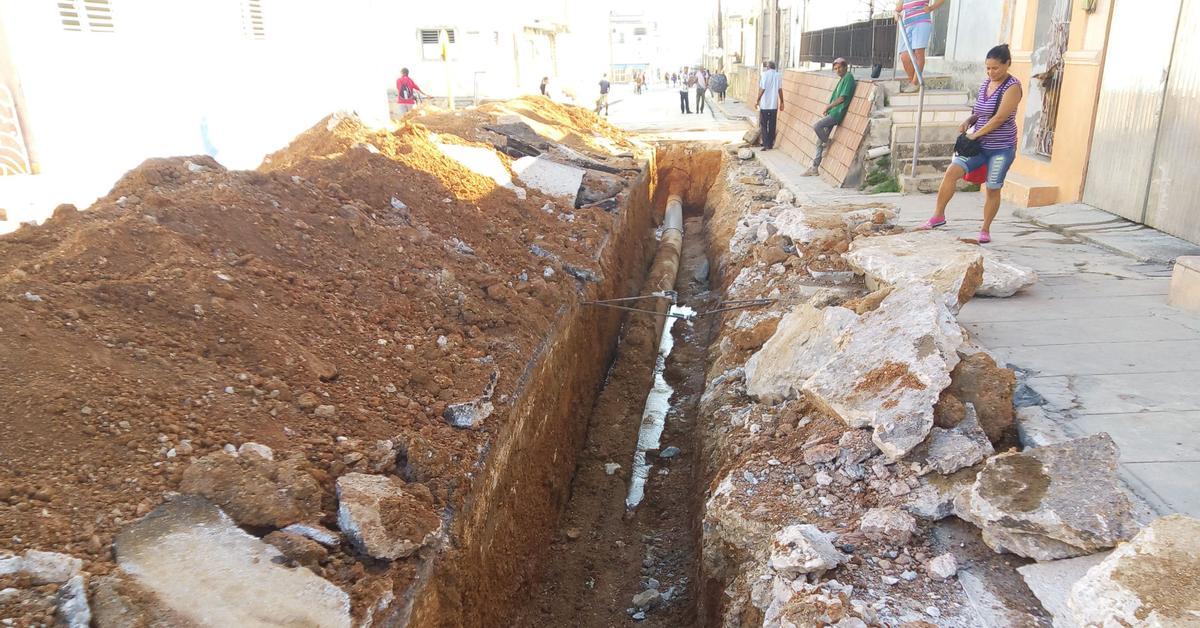
Manzanillo (Granma)/With orders from the municipal Acueducto company, a backhoe opened a long trench in the central Martí Street, in the port city of Manzanillo. The objective: install a new central connection to replace the old one, with multiple outlets. But the remedy – the neighbors now assess, given the crack that has made the street impassable – has been worse than the disease.
As it passed, the vehicle’s shovel not only tore up the pavement and the remains of the old pipe, but also destroyed the secondary connections that carry water to the houses. Asked about 14ymediothe Acueducto workers ignore it: “Those connections are not a priority, then we will see what to do with them,” they allege.
According to the workers, “a lot of water is lost in the main pipes,” which is why the directors of the state company have set their replacement as their objective. “We are aiming to eliminate leaks so as not to lose water in the pumping process,” they explain.
Commenting on the shortage, the official Mesa Redonda program assured this Wednesday that the water cycle – the frequency with which it is pumped to homes – is 10 days. The reality, however, is that the water is arriving once a month. The interval is painful and forces families to carry water or, if their pockets allow, buy it. The replacement of the Martí connection and other streets in the city center complicates the situation and has caused multiple complaints in the neighborhood.
/ 14ymedio
“They destroyed the pipes in all the houses,” denounces Orlando, 47, while pointing out a kind of small tunnels on both sides of the ditch. The connections to each home passed through there and in many of them fragments of the pipes can still be seen. “I don’t know what problem they solved. The water keeps coming out of the teacher and it doesn’t reach us even if there is,” he laments.
In fact, puddles accumulate under the new plastic tube, which are already beginning to fill with foam, stones and weeds. The neighbors know what they have to do until the repair is finished: “Load water,” says Magaly, a housewife and also a resident of Martí Street. What many fear, he adds, is that the State will delay the solution to the problem and, in the long run, those who live there will have to solve it.
Nearby, at a neighbor’s house with a well, a group of boys gather around the pump to fill gallons and tanks, which they then transport back to their homes in construction carts.
“They have not told us when they are going to rebuild what they have destroyed. As prices are today, it is impossible for us to be able to fix this with our own means,” he warns. Others look askance at the plastic structure and predict little future for it. “There are still leaks there,” they insist, among the mountains of excavated earth that have been blocking traffic through Martí for several days.

/ 14ymedio
The water situation, fueled by the terrible state of the pipes and the inefficiency of the Government, goes from one end of the Island to the other. The crisis does not keep any leader awake, to whom – desperate due to the lack of supply – the neighbors turn first. In Santa Feone of the poorest neighborhoods in Guanabacoa, in Havana, officials do not agree to justify the shortage. From the drying up of dams to water pollution, no excuses are spared to rally to those who demand an explanation.
In the mouths of leaders in whom no one believes, multiple causes are attributed to the same phenomenon. The hard way, families have learned that leaders only react when the same vessels they use to conserve water resonate for a while. cacerolazo.
The hope of many is the pipes, which the State sends sporadically and without the necessary equipment to pump into the tanks that families usually install on the second floors. The elderly people of the neighborhood go to the tanker truck, which lacks hoses, and load what they can as best they can, because they do not want to resign themselves – the neighbors told this newspaper – to “drinking water even from the puddles.”
In the case of Santa Fe, water comes more frequently but the service is unstable. It is “abusive,” the neighbors explain, that the State sends only one pipe for an entire block. From Santa Fe, on the outskirts of Havana, to the eastern municipality of Manzanillo, the feeling is unanimous: “They have one very tired.”