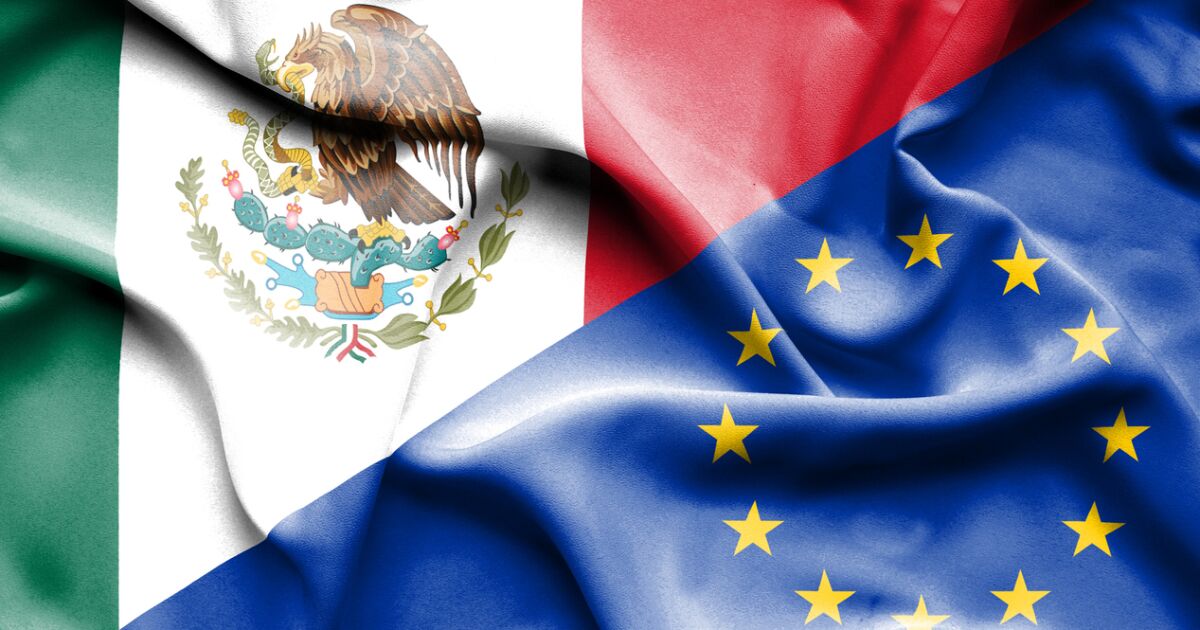
Mexican exports to the European Union are concentrated in sectors with high industrial content. Among the main products that the bloc imports from Mexico are machinery and appliances, mineral products, chemicals, transportation equipment and basic metals.
For the European Union, Mexico is already its second most important trading partner in Latin America, only behind Brazil, a position that reinforces its strategic nature in the region.
After concluding in 2025 the negotiations to modernize the bilateral Global Agreement, known as TLCUEM, a process that began in 2016, the European Union is preparing to move towards signing the modernized pact. This step is part of a broader dynamic of simultaneous closures of trade agreements considered a priority by Brussels.
In recent weeks the European Union has rushed to close agreements, for example, after more than 25 years of negotiations, the agreement between the European Union and Mercosur closed its final texts in December 2024. At the beginning of 2026, the Council of the European Union formally authorized its signature, which began the ratification phase in the different parliaments.
It also made progress in Asia. On January 27, 2026, the European Union and India closed an agreement described as historic after 18 years of negotiations. Days later, the bloc elevated its relationship with Vietnam to a comprehensive strategic partnership, the highest diplomatic level between external partners, as a sign of trade recalibration in the face of tariff pressures from the United States.
Against this background, the Mexican ambassador to Belgium, Luxembourg and the European Union, Rogelio Granguillhome Morfín, recently held a meeting with the president of the International Trade Commission of the European Parliament, Bernd Lange. At that meeting, the scope of the modernized agreement and its impact on trade, investment, sustainability and political cooperation were addressed.
Granguillhome Morfín stressed the need to move quickly towards the signature and stated that the agreement will be a strategic pillar to build a stronger European Union-Mexico partnership in the changing global landscape. In accordance with what was initially proposed by the Ministry of Foreign Affairs, the signing was scheduled for this month, although the calendar was later extended to the first four months of the year. The truth is that current conditions explain the urgency for the modernized agreement to come into force.